It looks like PrivacyTests.org is finally back after a long stretch of radio silence, and they’ve come with a much-needed fresh batch of results that are worth paying attention to.
The site ran 12 desktop browsers through a huge list of privacy checks, all on default settings, and published everything in Issue 96. They didn’t make any tweaks or config changes for the tests, so the results are as they would be if most people were using them as is.
For those unaware, the project had gone quiet for a while, which the team admitted in their post on X. “It’s been a long hiatus since the last update. Thank you to everyone for your patience!” they wrote.
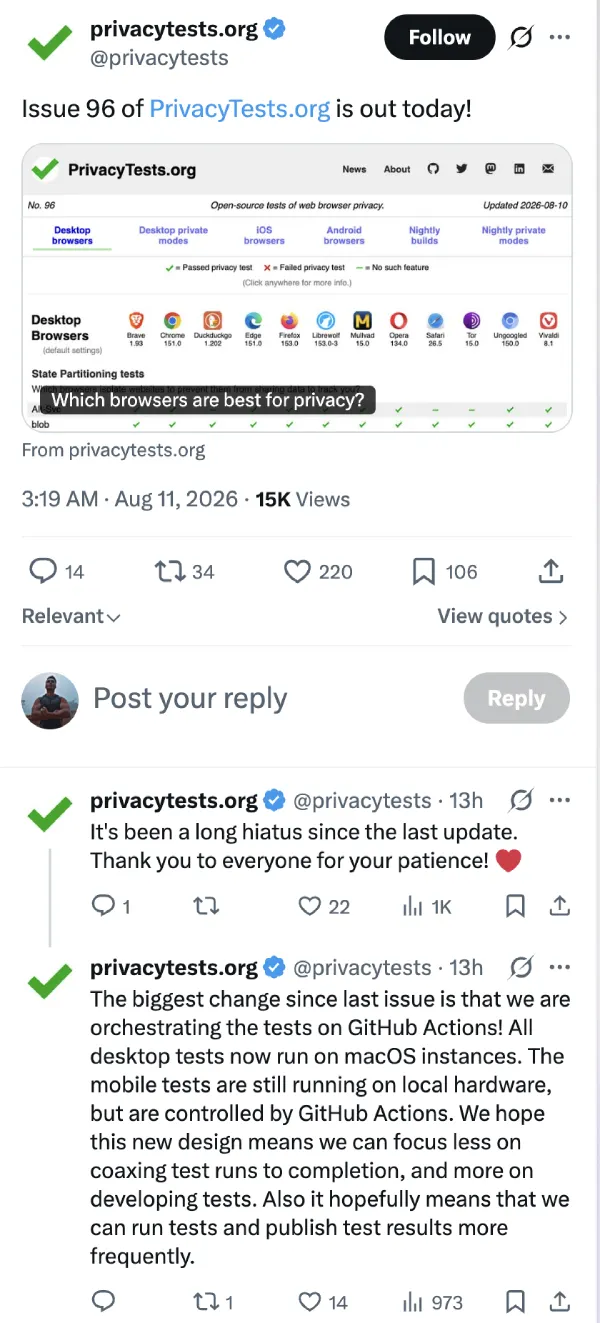
Part of what took so long is a rebuild of how the tests run, and they’re now automated through GitHub Actions so results should come out more often from here. Meanwhile, browser makers are also ramping up their privacy features. Google, for instance, only recently started testing Global Privacy Control in Chrome Canary, so a testing site that updates regularly is genuinely useful.
But let’s get back to the results now.
Desktop browsers privacy test results
If you follow this space, the winners won’t shock you. On desktop, it’s the hardened Firefox forks that run away with it. Mullvad Browser was the standout, passing 132 of the 146 tests and failing just three, and even those three are on purpose. LibreWolf came in a close second at 126. Brave was the best of the Chromium-based bunch with 109 passes, which is a solid result for something you’d actually want to use all day.
One look at the table tells you most of what you need to know. Where the mainstream options are covered in red, Mullvad and LibreWolf are a wall of green. The drop-off is steep too. DuckDuckGo managed 71, Firefox 62, and then Chrome, Vivaldi, and Opera limp in at the bottom with fewer than 31 passes each. Opera came dead last.
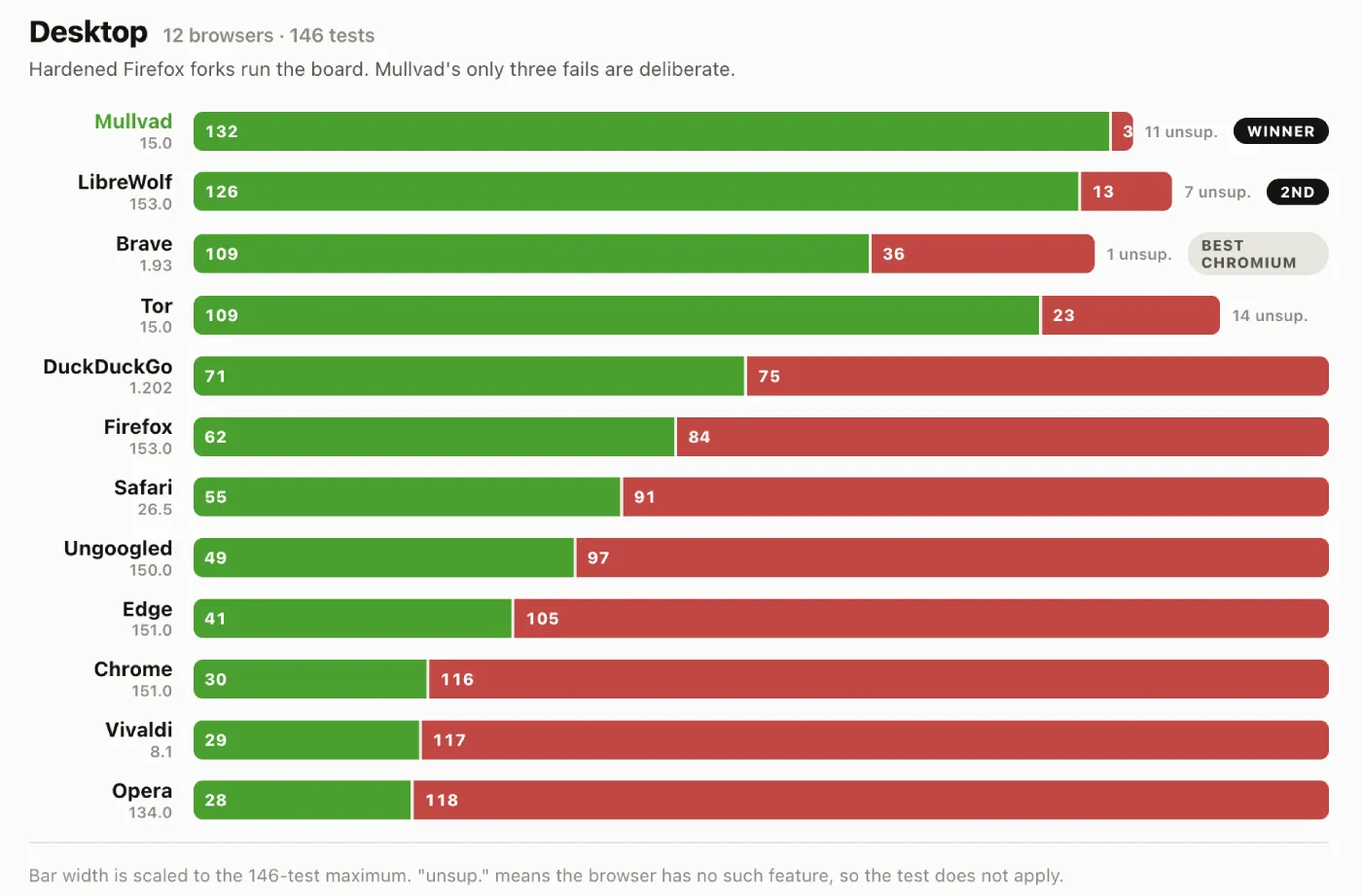
Brave’s one real weak spot is worth calling out, since it does well otherwise. It doesn’t separate its HTTP caches between browsing sessions the way the Firefox forks do, so it drops the cross-session cache tests that Mullvad and LibreWolf pass. Small thing for most people, but it’s the reason it can’t quite catch the leaders on desktop.
As for what the tests cover, well, there’s cross-site tracking, where the site checks if one website can quietly hand your data to another. There’s cookie handling, which is still the oldest trick in the book. And there’s a whole section on encrypted DNS, which decides whether your internet provider can peek at the sites you’re visiting. That last one had some interesting misses, with a few browsers leaking DNS in certain regions and setups.
It’s worth remembering that passing a bunch of tests doesn’t make you invisible, though. A lot of privacy protection is about making tracking harder, not impossible, which is something we dug into when we explained how browser fingerprinting actually works. Even Brave, which does well here, has had to push back on viral claims that it was secretly tracking people, when the truth was a lot more boring.
Now, if you’re looking for a privacy-respecting browser on your phone, the tests have you covered there too.
Android browsers privacy test results
On Android, Brave came out on top, passing 86 of the 115 tests. Firefox Focus was right on its heels at 83, so the two are basically neck and neck for the top spot. Tor sits a little lower, but that’s mostly because it doesn’t support a bunch of the APIs being tested rather than failing them outright.
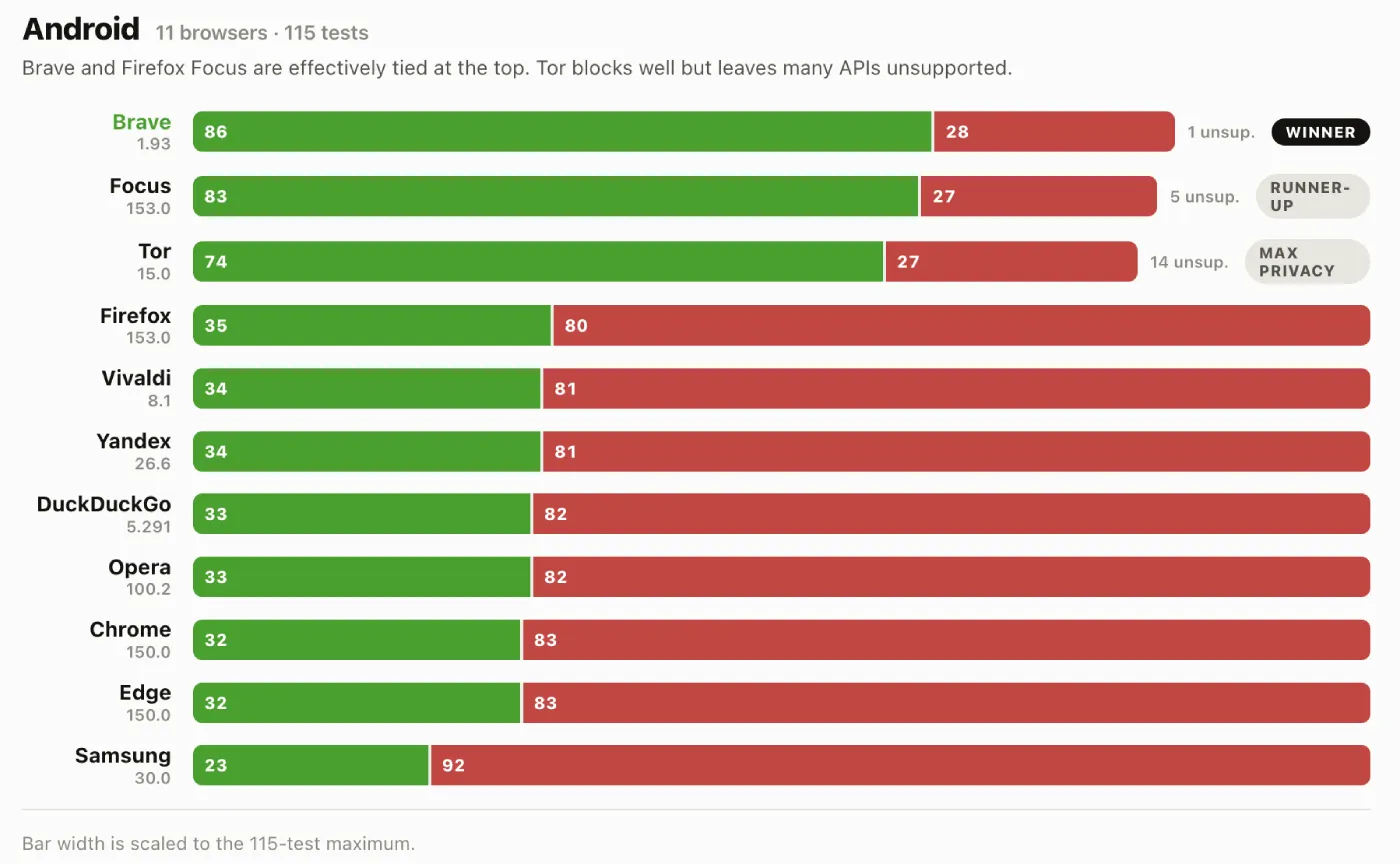
If you want maximum protection and don’t mind giving up some functionality, Tor is still the pick. After that top group, though, the field drops off hard. Firefox managed 35, Chrome, Edge, and Opera hovered in the low 30s, and Samsung Internet came in last at 23.
iOS browsers privacy test results
iOS is the interesting case because Apple forces developers to use its own WebKit engine underneath. So whether you’re running Chrome, Firefox, or Brave, they’re all built on the same foundation as Safari.
That flattens the differences, and it’s why even the best iOS browsers fail the cross-session cache tests that Brave passes on Android.
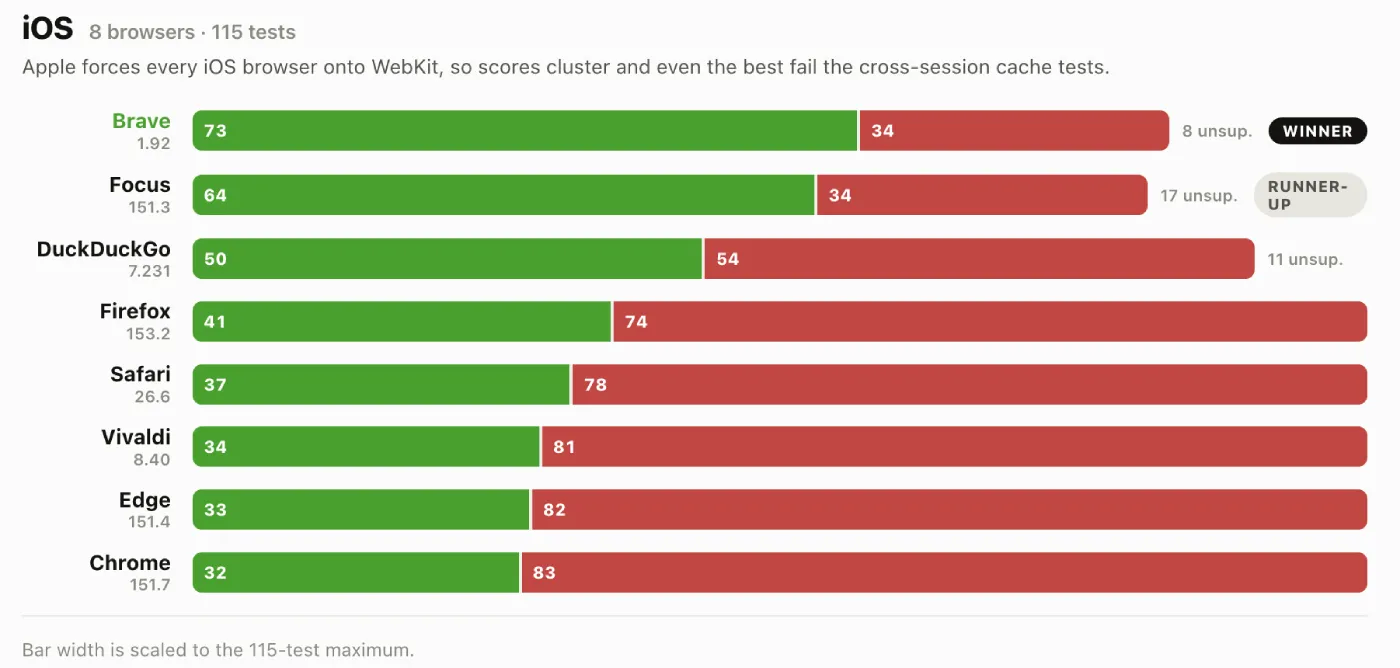
Brave still led on iOS with 73 passes, followed by Focus at 64, with DuckDuckGo a distant third at 50. One neat detail is that Focus actively strips tracking junk from links, like the fbclid and gclid tags advertisers use to follow you, which is something DuckDuckGo misses. So on both platforms the takeaway is the same. Brave is the one to beat, with Focus as a strong backup.
What you need to know
That said, one key takeaway from the tests is that if you’re someone who doesn’t want to fiddle with your browser’s settings to get the best protection, you’re better off using browsers like Firefox, Brave and Mullvad. Moreover, Brave’s own product manager has said as much, recommending Mullvad or Tor for anyone who wants privacy above all else.
Another thing to remember is that the test doesn’t cover every single browser out there. So if your favorite browser isn’t listed, it doesn’t automatically mean that it’s terrible.
In fact, smaller names are getting serious too, with the Helium browser just adding Global Privacy Control in its latest update. Then there are other hardened browsers like Psylo on iOS. If you want to see where your own browser landed, the full Issue 96 results are live on PrivacyTests.org.


Dwayne Cubbins
3101 Posts
I cover fast-moving stories across apps, online platforms, and everyday tech — phones, wearables, consoles, and whatever else people are fighting with this week. Bugs, rollouts, scams, policy enforcement, and the occasional internet-culture rabbit hole are all fair game. My goal is simple — make confusing tech news readable. When I'm not working, I'm working out or chilling with my dog. Got a tip? You can find me on X @dcubbins.
Next article View Article