
A screenshot posted on X this week was seen by a few hundred thousand users and kick-started a wave of arguably false information about Brave.
The image came from user Stella (@newstarcore), who had been looking through the domains most frequently blocked by their DNS app. Sitting at the top of the list was brave.com, ahead of domains like gstatic.com, google.com, xiaomi.com, and youtube.com.
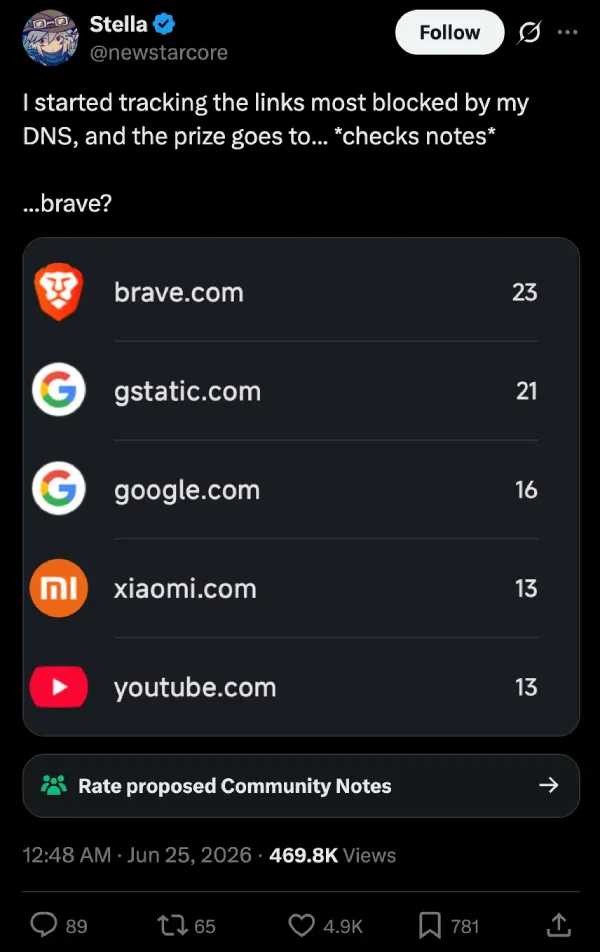
The post itself didn’t accuse Brave of anything. It simply joked that Brave had taken the top spot.
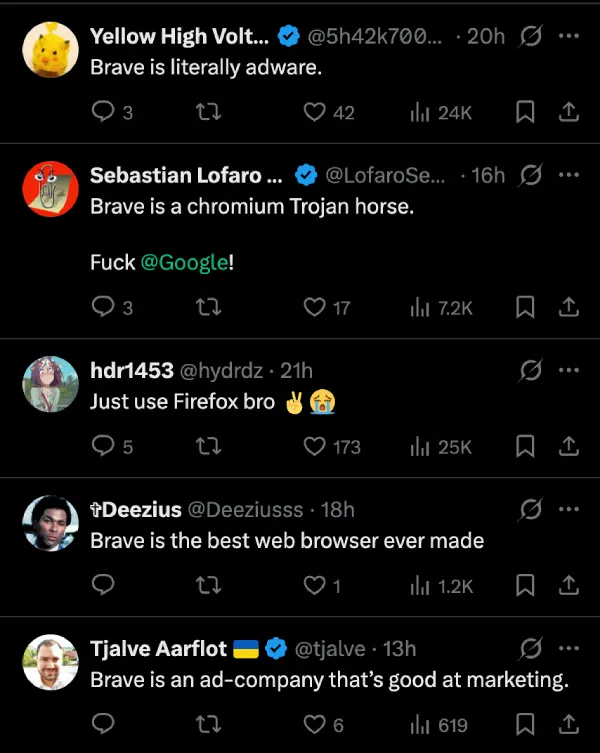
People in the replies quickly started treating the screenshot as proof that the browser was tracking users behind the scenes. Some called Brave “adware.” Others suggested switching to browsers like LibreWolf or Vivaldi. Within a few hours, the discussion had drifted well beyond what the original post was actually saying.

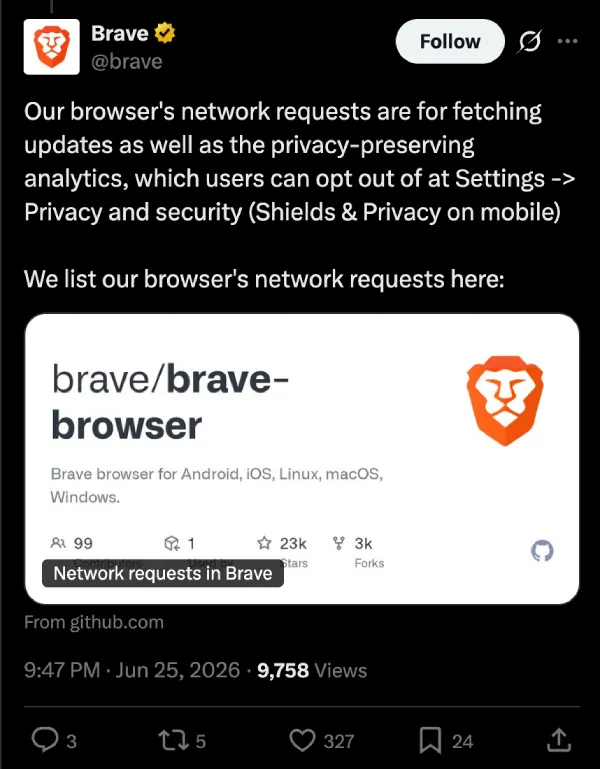
Brave eventually had to step in to clarify what was actually going on. In the comments of the post, they said the requests shown in the DNS log were expected background connections used for things like browser updates and their privacy-preserving analytics. They also pointed out that the analytics feature can be turned off in the browser’s privacy settings if users don’t want it enabled.
Brave also linked to documentation listing the network requests its browser makes, arguing there wasn’t anything unusual about what people were seeing.
Once you read the documentation, you’ll understand the logic behind it. But it’s an easy detail to miss if you’re only looking at a screenshot.
A DNS blocker can tell you that an app contacted a domain. It can’t tell you what information was exchanged, or even whether any user data was sent at all. Browsers regularly connect to their own servers for updates, component downloads, certificate checks, and similar background tasks. Those requests often show up whether you’re actively browsing or not.
So while the screenshot confirmed that Brave was making network requests, it didn’t establish that the browser was tracking users.
Even the person who posted the image appeared surprised by where the conversation ended up.
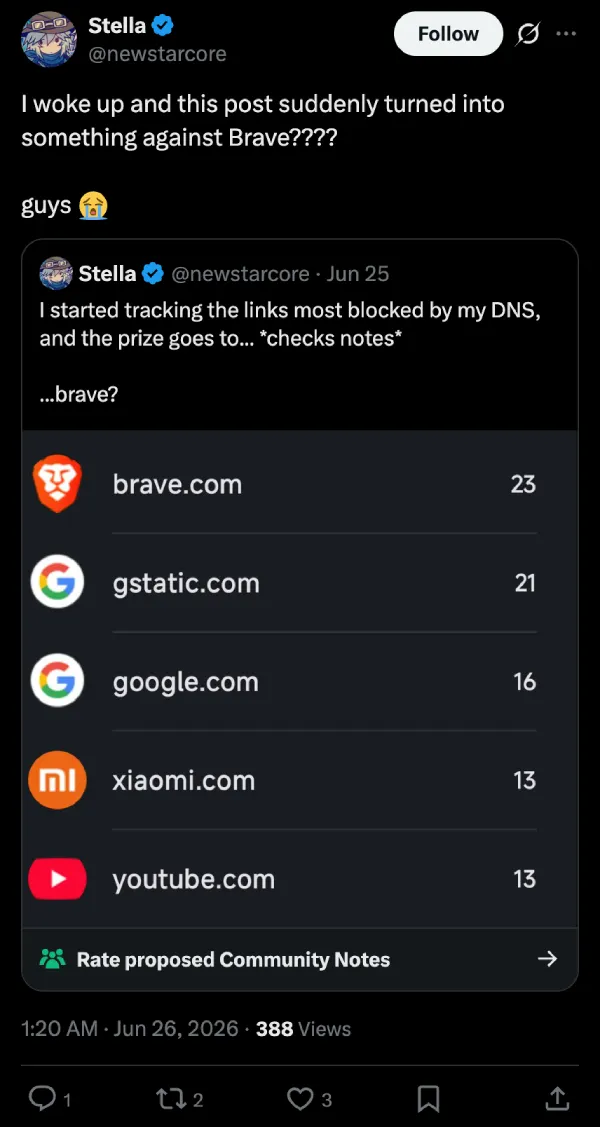
“I woke up and this post suddenly turned into something against Brave???? guys 😭,” Stella wrote the next day, after seeing the replies fill with claims the browser had been caught tracking people.
Brave’s PM also responded to a comment from a user who posted about the data tracking claims, noting that it was a “lie.”
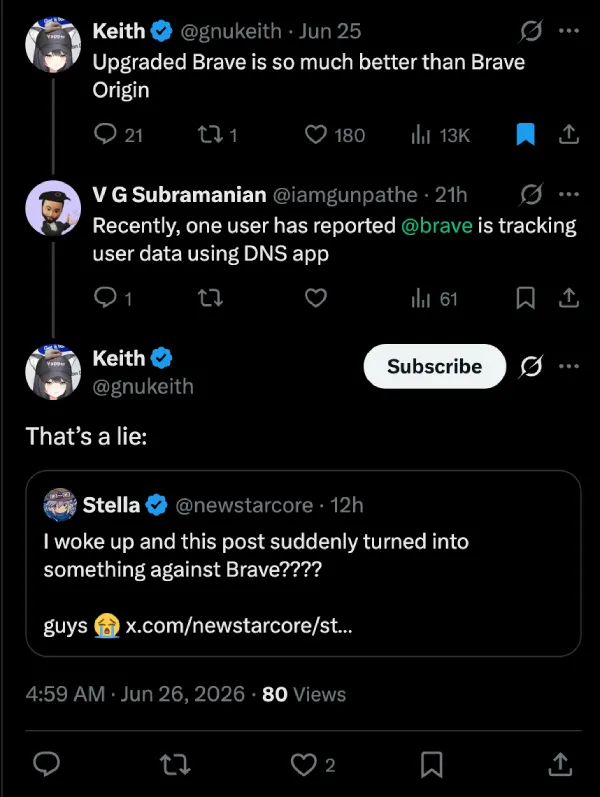
So in short, what started as a simple screenshot ended up being interpreted far beyond its original intent, with people drawing conclusions that the post itself never actually made.
That said, this is happening at the same time that Brave appears to have dropped support for Manifest V2 from its latest beta builds. Meanwhile, the team is also testing an optional account login system to streamline the syncing process without compromising privacy (at least that’s the goal).


Dwayne Cubbins
3073 Posts
I cover fast-moving stories across apps, online platforms, and everyday tech — phones, wearables, consoles, and whatever else people are fighting with this week. Bugs, rollouts, scams, policy enforcement, and the occasional internet-culture rabbit hole are all fair game. My goal is simple — make confusing tech news readable. When I'm not working, I'm working out or chilling with my dog. Got a tip? You can find me on X @dcubbins.
Next article View Article