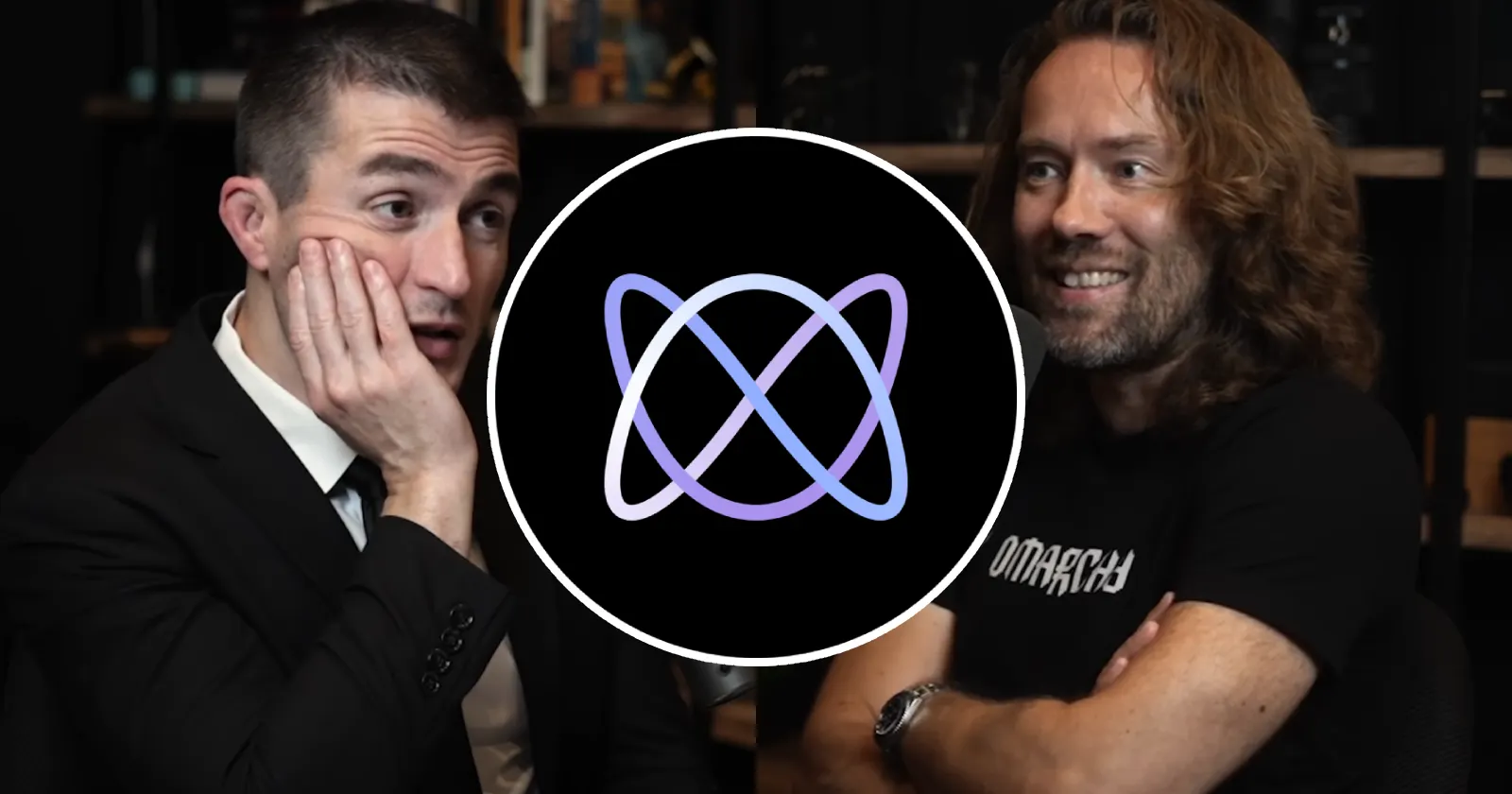
You’d likely be familiar with Lex Fridman’s recent five-hour podcast interview with David Heinemeier Hansson if you listen to tech podcasts. Although the conversation covered a wide range of topics, including Linux operating systems and the future of programming, one rather surprising moment caught our attention.
Around the four-hour mark of the podcast, the conversation turned to just how difficult it is to build massive software from the ground up. It was at this point that DHH mentioned Ladybird browser.
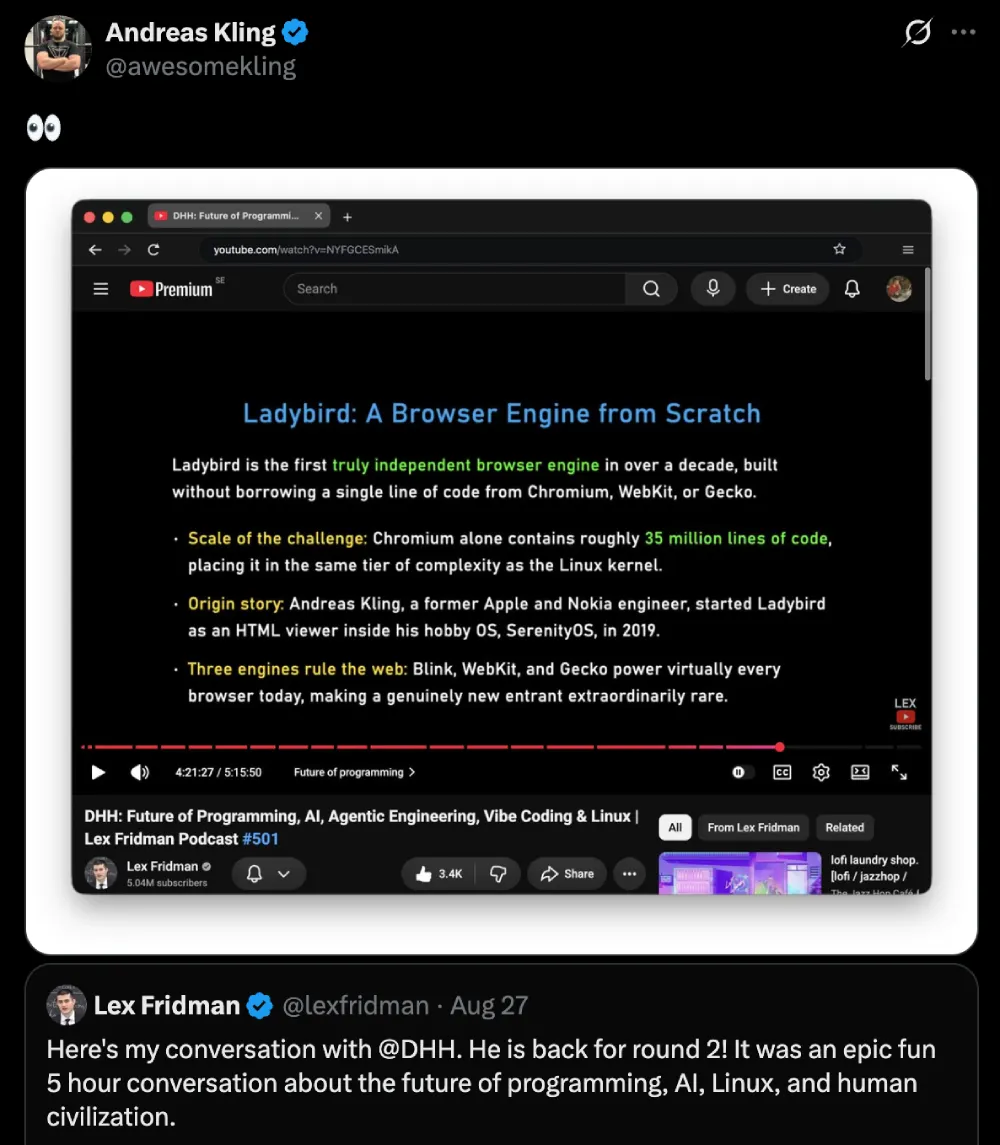
For those who haven’t been following its development, it’s a relatively new browser engine project that is taking an unusual approach to browser development, being the first to build something truly independent from Blink, WebKit, or Gecko in over a decade.
Project founder Andreas Kling even shared a screenshot of the video from the podcast, showing some key highlights of Ladybird.
DHH spoke briefly about the scale of the undertaking and the sheer difficulty of the task ahead, saying that “the browser’s basically the second most complicated software system in the world, the first one being the Linux kernel.”
He also noted that “it was very audacious actually to begin such a mission with a small team like Andreas did before we had agents.”
DHH even pointed out the potential impact that AI agents could have on future indie browser engine development, saying that while reading through the countless specifications of CSS, HTML, and JavaScript would normally take humans years to complete, “if there’s one thing agents are already exceptionally good at, it is to read specs and implement them.”
That said, AI is also incredibly useful in helping developers fix pesky bugs and vulnerabilities in the code. Google even admitted to using AI to ship bug fixes way faster than they would have otherwise.
The attention on Ladybird comes at an exciting time for the browser engine, which is rapidly approaching some key milestones, including the first public alpha release.
The project has been quietly making steady progress on a variety of systems-level features, including the decision to drop their custom content blocker and instead use Brave’s ad-blocking engine.
Maintainers also paused accepting public pull requests early this summer to avoid review fatigue and to allow the core team to focus on cleaning up the existing codebase.
The project has since then been adding day-to-day features such as private browsing windows and multi-profile support, while also focusing on a large rewrite of styling and layout components in Rust.
This rewrite seems to be paying off too, since Andreas Kling shared on X that development on the project has been moving at an astonishing pace, joking that a build from only a month ago would already be embarrassing to show, but that the first public alpha release is on track to happen within the next four months.

It is exciting to see such an ambitious project get this much attention and recognition, and we’ll be sure to keep an eye on Ladybird as they continue to work towards the first alpha release later this year.
You can watch the full podcast or the part where Ladybird is mentioned below (the video auto-plays in the part where DHH talks about the browser):


Dwayne Cubbins
3073 Posts
I cover fast-moving stories across apps, online platforms, and everyday tech — phones, wearables, consoles, and whatever else people are fighting with this week. Bugs, rollouts, scams, policy enforcement, and the occasional internet-culture rabbit hole are all fair game. My goal is simple — make confusing tech news readable. When I'm not working, I'm working out or chilling with my dog. Got a tip? You can find me on X @dcubbins.
Next article View Article