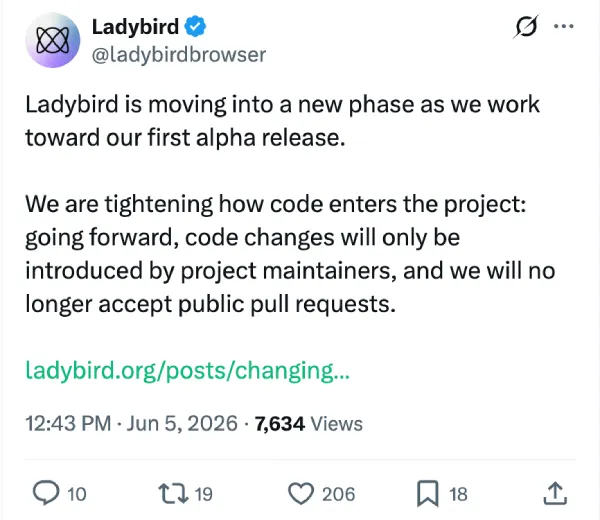
Ladybird developers stopped accepting new public pull requests this week to stabilize the code ahead of their first alpha release. The independent browser project closed its public contribution queue on GitHub so the core team can focus on polishing existing features.
Project leader Andreas Kling and the core team are currently gearing up for an alpha launch scheduled for later in 2026. The browser needs to be stable before it rolls out to early adopters and developers on Linux and macOS. Processing a non-stop wave of external pull requests creates massive code review overhead. Pausing those entries lets the maintainers review what they already have without chasing moving targets.
This decision follows a stretch of development momentum for the browser. Maintainers recently added vertical tabs to give users a modern sidebar layout for managing multiple pages. They also swapped out their original content filtering code to bring in Brave’s open source engine for better ad blocking.
Building a web browser engine from scratch means the team can’t rely on pre-existing solutions from Chromium or Gecko. Every line of code for layout, JavaScript execution, and network handling has to be built and maintained in-house. Casual contributions from the public often introduce code that lacks long-term ownership. Maintaining that code turns into a liability for the core team if the original contributor disappears after submission.
Apart from that, the security concerns also contribute to the decision, especially since the team is currently migrating core parts of the browser from C++ to Rust to handle untrusted web data safely.
The team also recently finished rewriting the basic tools that read web pages and links to stop security glitches and crashes. Double-checking all this new code takes massive concentration. Core engineers simply can’t deal with outside submissions while they try to make sure the foundation is safe.
People who want to test the software can still clone the repository and compile the browser locally. It’s still open on GitHub for anyone who wants to explore the architecture or run local experiments. Only the public pipeline for merging new code into the master branch is turned off for now.
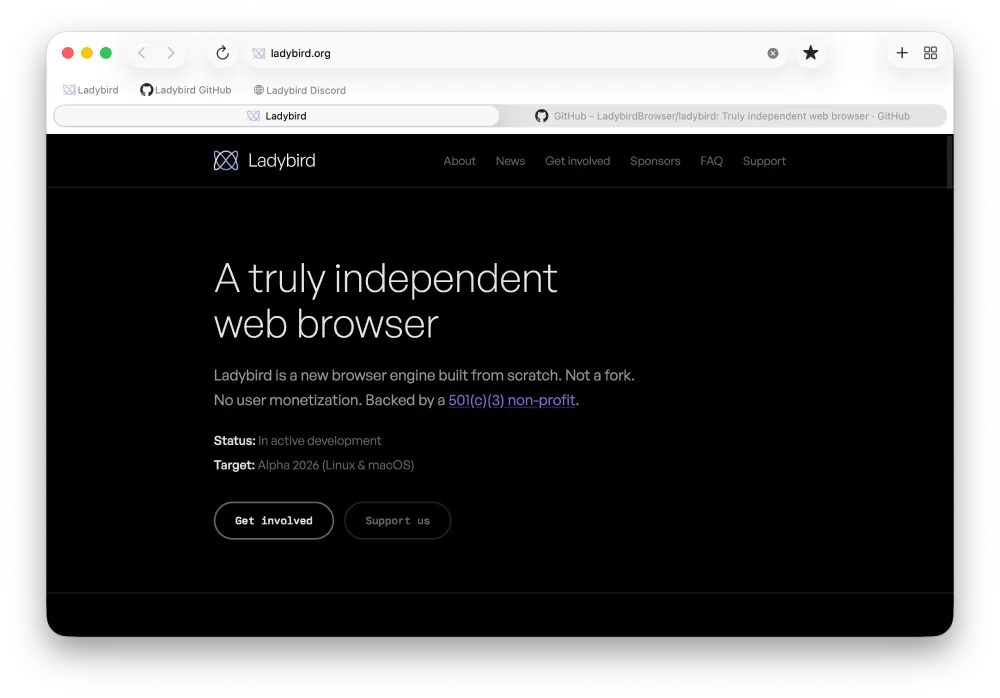
The upcoming alpha version aims to serve as a capable daily driver for web developers and technical users before a broader beta release follows in 2027. The project plans to hit a fully stable version for the general public by 2028.
You can read the full blog post here.


Dwayne Cubbins
3078 Posts
I cover fast-moving stories across apps, online platforms, and everyday tech — phones, wearables, consoles, and whatever else people are fighting with this week. Bugs, rollouts, scams, policy enforcement, and the occasional internet-culture rabbit hole are all fair game. My goal is simple — make confusing tech news readable. When I'm not working, I'm working out or chilling with my dog. Got a tip? You can find me on X @dcubbins.
Next article View Article