
Ladybird is dropping its custom content blocker and switching to Brave’s open source engine instead. The project is bringing in adblock-rust to handle ad blocking.
Andreas Kling, who leads the project, announced the change on X. He also threw some shade at the old code, calling it “crappy,” and said Brave’s version has delivered strong results so far.
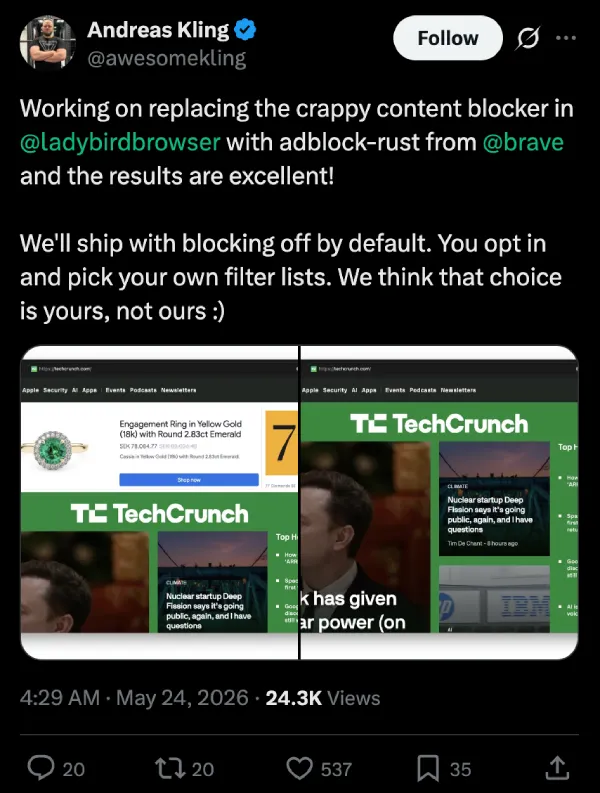
The browser is being built entirely from scratch with no reliance on Chromium or Gecko at all. Using a ready component for this part frees up time for the bigger challenges in the engine itself and lets the team stay focused on what they set out to do.
That said, nothing gets blocked by default when the feature arrives. The team wants it off so users can turn it on and add whatever filter lists they prefer on their own. Kling sees it as the right call to leave that choice in people’s hands instead of deciding for them.
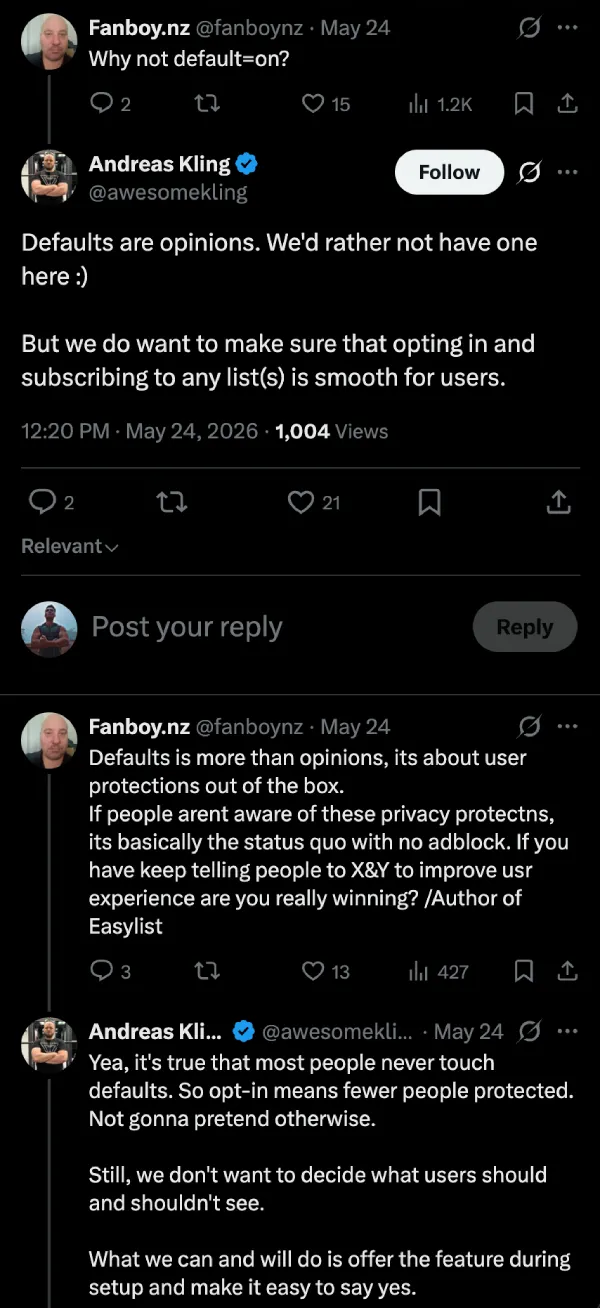
Whether or not that’s the correct decision is up for debate, but having a choice is always welcome.
Waterfox made the same change in March after working on its own blocker for a while. It replaced the native code with Brave’s engine once the licensing issues became clear. The code from uBlock Origin runs under GPLv3, and that license creates real problems for some projects. Brave’s engine uses MPL2, which let it slot in cleanly with no extra work or delays.
But that’s not all. Mozilla has already added the library to Firefox 149 as part of ongoing tests. The code came in through Bugzilla bug 2013888 and stays hidden from ordinary users. Anyone who wants to try it has to open about:config, flip the right preference, and paste in the URLs for lists like EasyList and EasyPrivacy by hand.
Perplexity’s Comet browser relies on the same Brave engine under the hood as well.
Building a capable content blocker from nothing is heavy work that never really ends no matter how careful you are. Ad methods change constantly, and the lists must load fast, or they drag down page speeds for everyone using the browser.
Brave keeps a paid team on the library because its own users depend on it working well every day without issues or surprises. Other teams have started pulling the code in rather than repeat all that effort themselves from scratch and then maintain it forever on top of everything else they are building.


Dwayne Cubbins
3125 Posts
I cover fast-moving stories across apps, online platforms, and everyday tech — phones, wearables, consoles, and whatever else people are fighting with this week. Bugs, rollouts, scams, policy enforcement, and the occasional internet-culture rabbit hole are all fair game. My goal is simple — make confusing tech news readable. When I'm not working, I'm working out or chilling with my dog. Got a tip? You can find me on X @dcubbins.
Next article View Article