


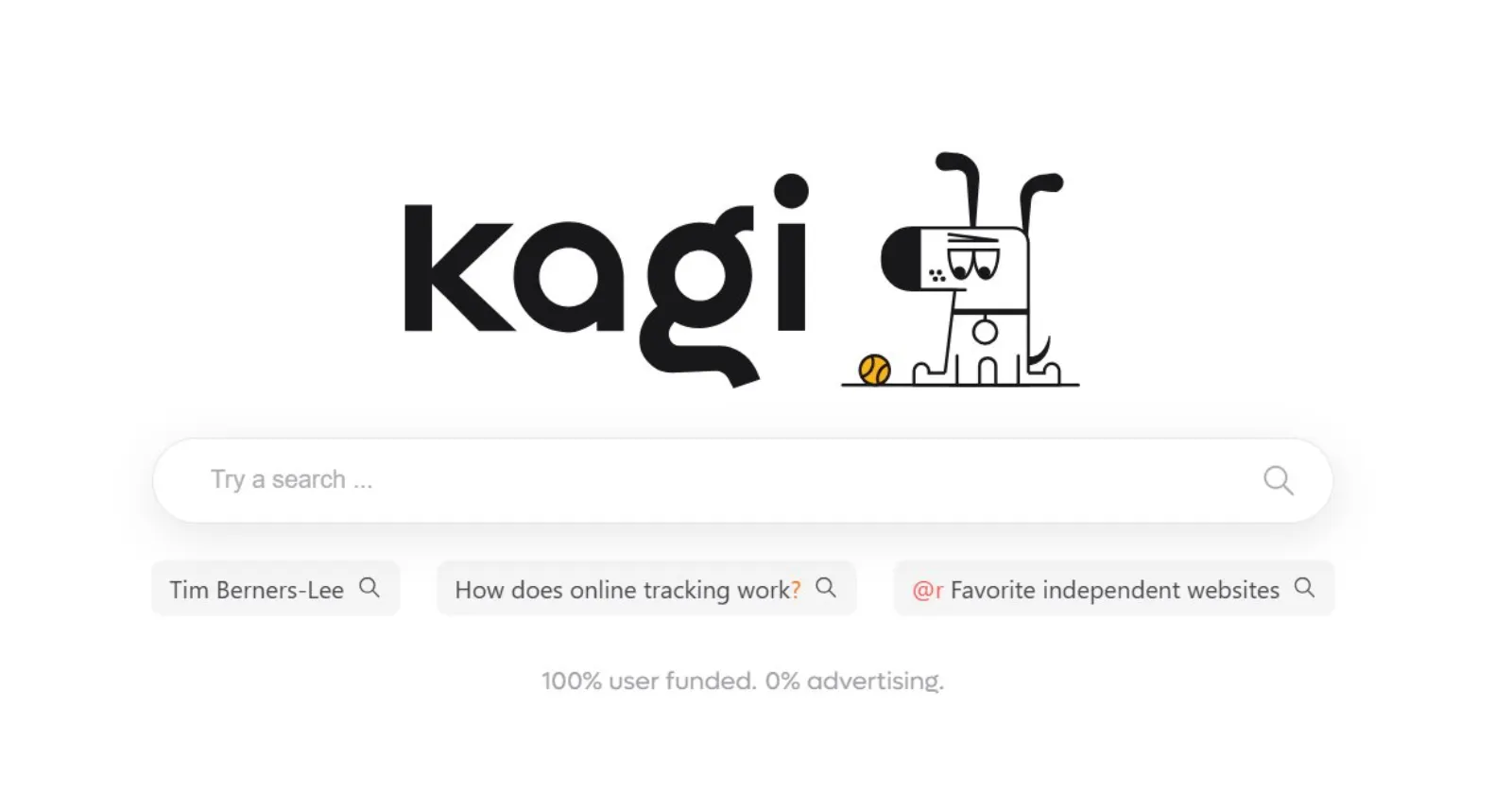
If you’re one of the many people looking for an alternative search engine to Google Search, then you’re in luck. Privacy-focused engine Kagi just dropped its mandatory sign-up wall, letting anyone test its ad-free web search right out of the box without creating an account.
We think this might be a calculated move by Kagi. On Tuesday, The New York Times reported that while Google will let K-12 schools restrict AI tools next year, districts that block AI completely will lose student access to Google Search.
Chris Phillips, Google’s vice president for education, defended the catch by noting that “Search and A.I. are deeply integrated,” adding that students at schools with total AI bans “will not have access to search, and they’ll see a message from their school that indicates it’s not available.”
Holding basic web search hostage to force AI into classrooms is a bonkers decision, even for a company that already broke open web browsing and started offering select publishers payouts just to keep feeding its AI overviews.
It seems like this Kagi is trying to target folks who are growing frustrated by these moves from Google. In a post on X, the company announced that anyone can now visit its homepage and “search your day away with no ads, no spam, no nonsense” without making an account.
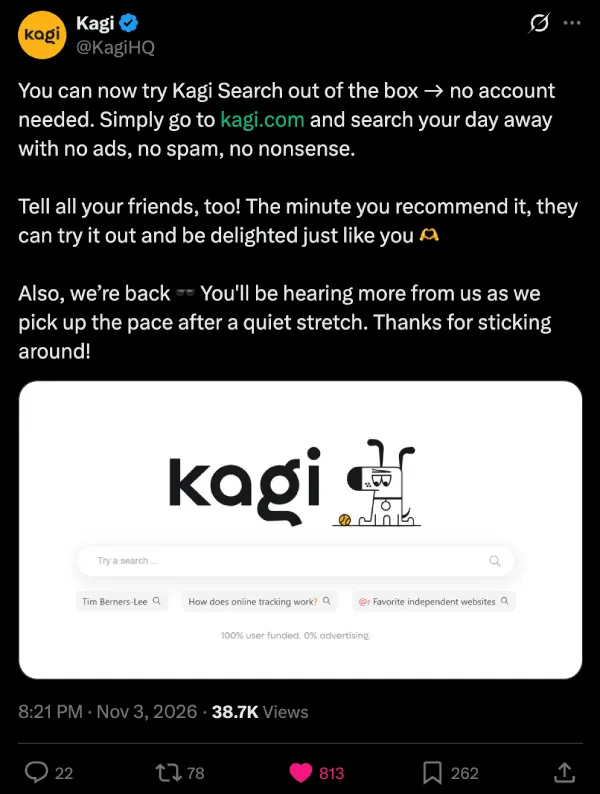
Up until now, hitting a registration wall before running a single query was enough to make most curious users close the tab and go right back to Google.
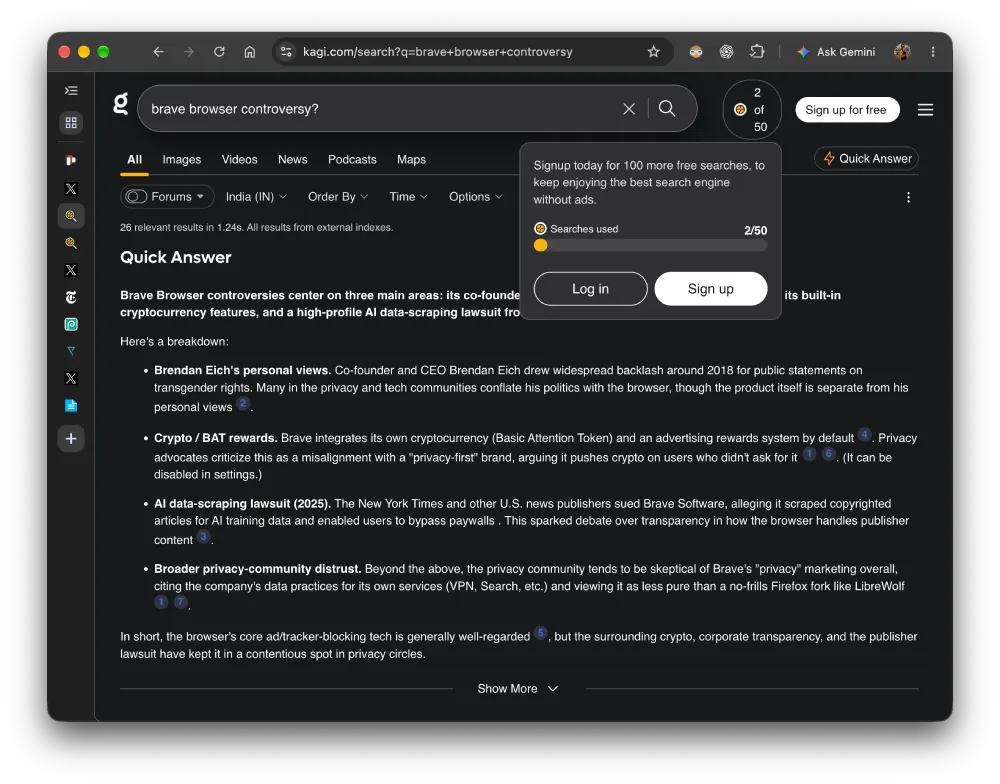
We checked if there were any catches with Kagi’s offering and found at least one. While you don’t need an account to get started with searching on Kagi, you only get 50 free searches. Once those run out, you can sign up for a free account to unlock 100 more searches before Kagi asks for a monthly subscription.
Of course, paying to search might seem like a strange concept for most people. However, as Kagi argues on its official blog, free search engines make you pay with your time and privacy while you scroll past sponsored links and SEO spam.
Unlike Google, Kagi keeps all of its AI tools strictly opt-in and lets you hide AI-generated images by default. You can also pin sites you trust to the top of your results or permanently block spammy domains you never want to see again.
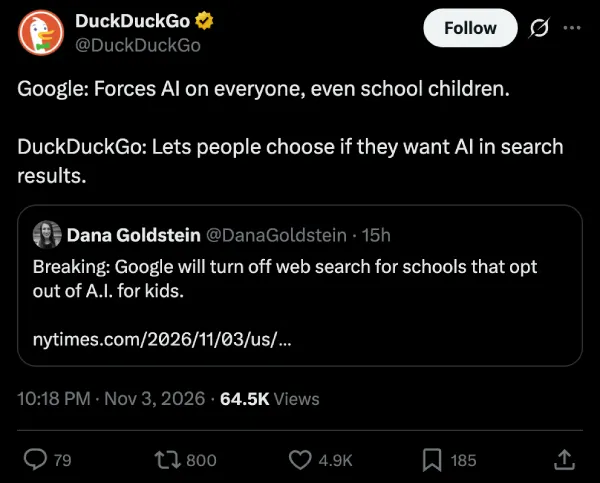
That said, Kagi isn’t the only company trying to fill the gap Google left. DuckDuckGo called out Google on X for forcing AI on schoolchildren, which tracks with how DuckDuckGo’s No AI page visits tripled earlier this year after Google pushed conversational summaries deeper into its main layout.
Google, for its part, tried doing some damage control following the Times report with a statement on X, insisting the update gives schools “more choice, not less” because Gemini, Gemini Notebook, and Search will be turned off by default so administrators can enable them individually.
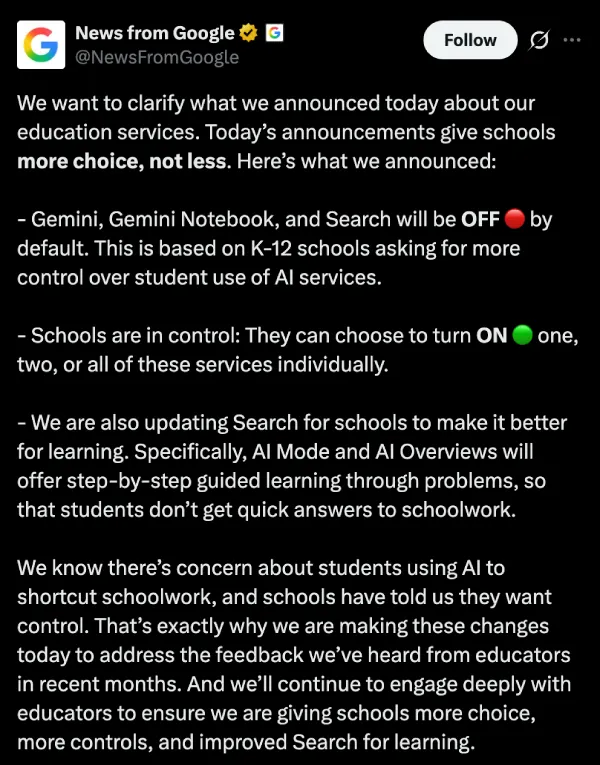
The company also noted that AI Mode and AI Overviews in classrooms are designed to support step-by-step learning rather than simply provide quick answers. However, a Community Note on the post quickly pointed out that schools still have no way to enable basic Search without also bringing those AI features along.
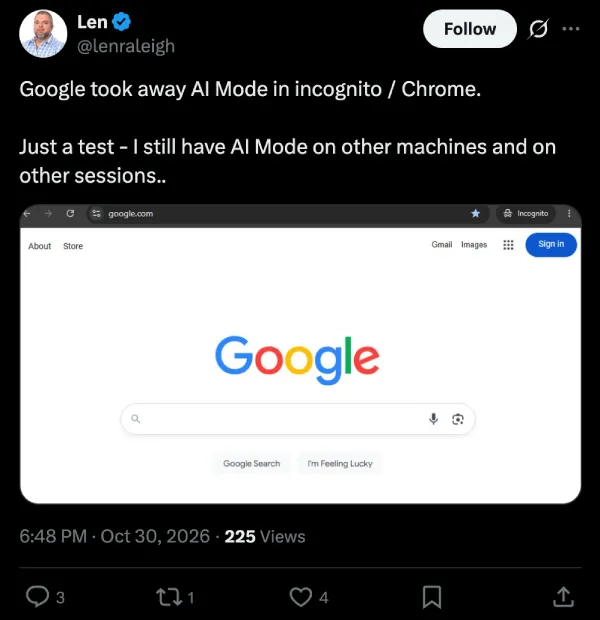
Interestingly, though, amid all of this, Google was spotted testing the removal of the AI Mode button from its search bar for a tiny subset of Chrome Incognito users. But that could simply be routine testing rather than a change of heart.


Dwayne Cubbins
3176 Posts
I cover fast-moving stories across apps, online platforms, and everyday tech — phones, wearables, consoles, and whatever else people are fighting with this week. Bugs, rollouts, scams, policy enforcement, and the occasional internet-culture rabbit hole are all fair game. My goal is simple — make confusing tech news readable. When I'm not working, I'm working out or chilling with my dog. Got a tip? You can find me on X @dcubbins.