DuckDuckGo recently published an opinion piece describing how Google is still monopolizing search. It has been nearly two years since a federal court ruled that Google illegally monopolized search, but the company’s practises haven’t really changed much.
For those unaware, the court also declared that Google secured its position at the top by paying billions to become the default search engine on web browsers, preventing users from actively choosing alternatives.
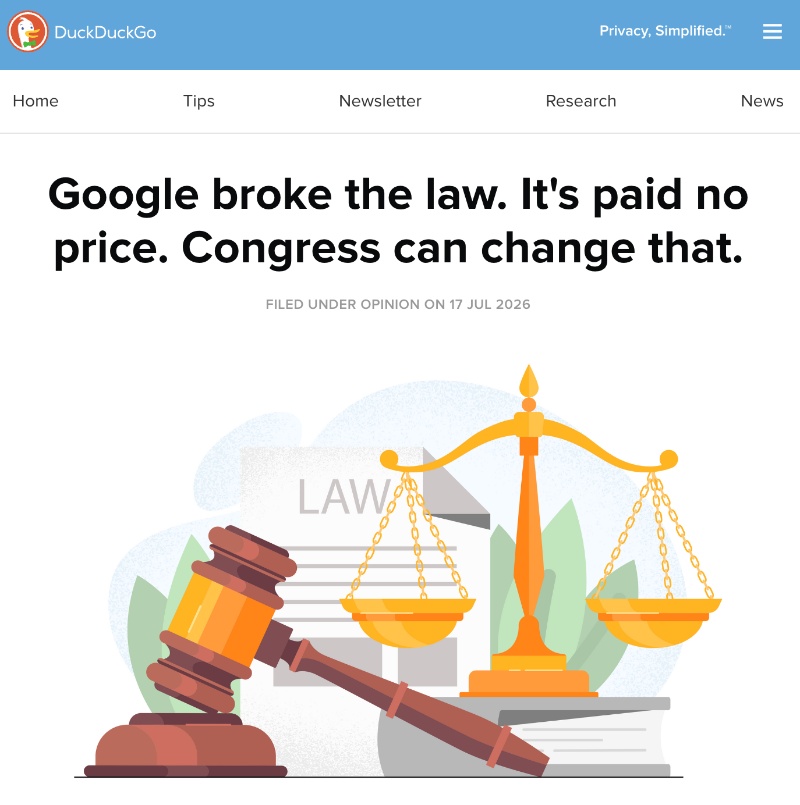
The suggested solutions didn’t exactly level the playing field because of continuous appeals from both parties. Strong measures to disrupt the monopoly keep getting endlessly delayed.
As a result, Google remains at the top, following the same operations that were deemed “illegal.” It wasn’t the turning point that people expected it to be. Some of the strongest solutions that were proposed aren’t implemented yet, and could take years. The monopoly applies to both distribution and scale.
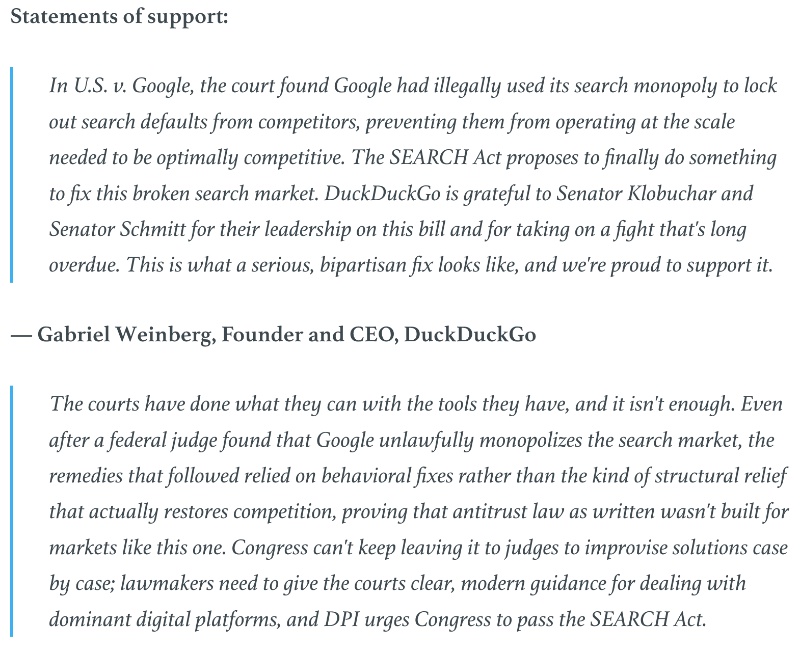
Fortunately, Congress has a proposed solution now. On July 17, 2026, Senator Amy Klobuchar and Senator Eric Schmitt introduced the SEARCH Act (Securing Enforcement of Americans’ Right to Competition at Home). This would prohibit Google from paying for preset defaults.
It also requires Google to share search results and other data with rivals. This allows startups and other AI firms to compete on privacy, design, and experience. Furthermore, the bill also addresses the problem with Google’s AI monopoly/exploitation.
DuckDuckGo is now actively endorsing this bill in the opinion piece, urging that the bill be passed swiftly. It’s also supported by Bull Moose Project, Digital Progress Institute, and Public Knowledge.
In other DuckDuckGo news, it recently got a built-in Ad Blocker for YouTube and other video platforms. We covered that here.


Sudhanshu K
315 Posts
I have been a consumer technology enthusiast for over 5 years. Thanks to my experience in software beta testing and product reviews, I've understood and learnt a lot about what bugs and issues bother people, and I spend time trying to simplify their solutions. I cover smartphones, software, social media, apps, AI, and most consumer tech gadgets. Actively pursuing a Computer Science bachelor’s degree. I'm mostly active on Twitter/X (@TechWhirlUlt), drop a DM or tag me if you want to share info or connect!
Next article View Article