



Brave CEO Brendan Eich has openly admitted that using Brave on Apple devices can still be a headache, especially when it comes to basic tools like password autofill and spellcheck.
In a recent exchange on X, Eich agreed with a frustrated user that the browser does not always play nicely with Mac and iPhone systems, and promised his team will work on fixing those weak spots.
The conversation kicked off while Eich was telling people to use Brave to protect themselves after the AdFection zero-click spyware threat showed how shady ad networks can infect devices without a single click. We covered the whole ordeal earlier today.
That post, however, got a user to bring up a few valid concerns about using Brave on Apple hardware and why they find it difficult to migrate from Safari to Brave.
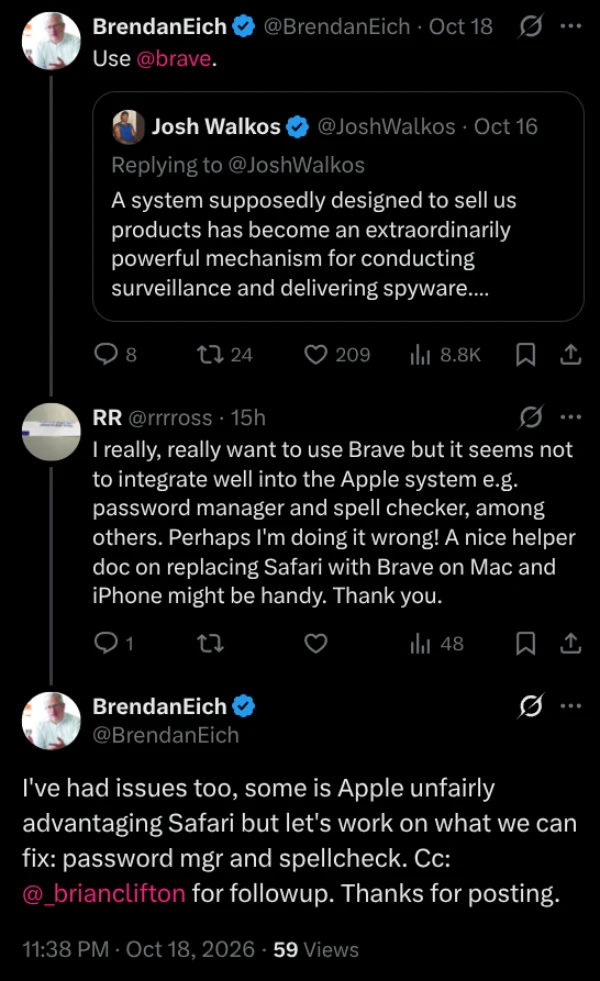
“I really, really want to use Brave but it seems not to integrate well into the Apple system e.g. password manager and spell checker, among others,” the user wrote, adding that a simple guide on replacing Safari across Mac and iPhone would be handy.
Anyone who has tried moving away from Safari on an iPhone or MacBook probably knows that annoying feeling where autofill randomly stops cooperating or red squiggly lines fail to catch obvious typos.
Instead of brushing off the complaint, Eich replied that “I’ve had issues too, some is Apple unfairly advantaging Safari” before adding “let’s work on what we can fix” regarding the password manager and spellcheck. He also tagged Brave engineering executive Brian Clifton right in the thread to follow up on the problems.
That said, this isn’t the first time we’ve seen the folks at Brave disgruntled with Apple. Just a few months ago, Apple forced Brave to remove its free offline YouTube playlist downloads on iOS just to stay in the App Store, wiping out one of the browser’s best perks.
Other browser makers have been vocal about how tough it is to compete on iPhones too. Not long ago, Mozilla pushed back on Apple’s regional browser rules because maintaining separate versions of Firefox just to get around Apple’s restrictions would practically double their iOS workload.


Dwayne Cubbins
3126 Posts
I cover fast-moving stories across apps, online platforms, and everyday tech — phones, wearables, consoles, and whatever else people are fighting with this week. Bugs, rollouts, scams, policy enforcement, and the occasional internet-culture rabbit hole are all fair game. My goal is simple — make confusing tech news readable. When I'm not working, I'm working out or chilling with my dog. Got a tip? You can find me on X @dcubbins.