






A few months ago, Brave hinted it might add mobile extensions. Back then, the company had said “TBD” when asked about extensions support for Android. Now, we can confirm that development on this feature has started.
Developers are now adding code to prepare for native mobile extensions on Android. Brave developer Sergey Zhukovsky has created a new task on the browser’s GitHub to add Chromium’s extension API to the Android app.
This feature will first appear as an experimental flag, so only users who enable it in the Canary channel will have access at the start. Zhukovsky says this will let Brave users install extensions from Chrome’s official store or directly using the unpacked manager or crx files.
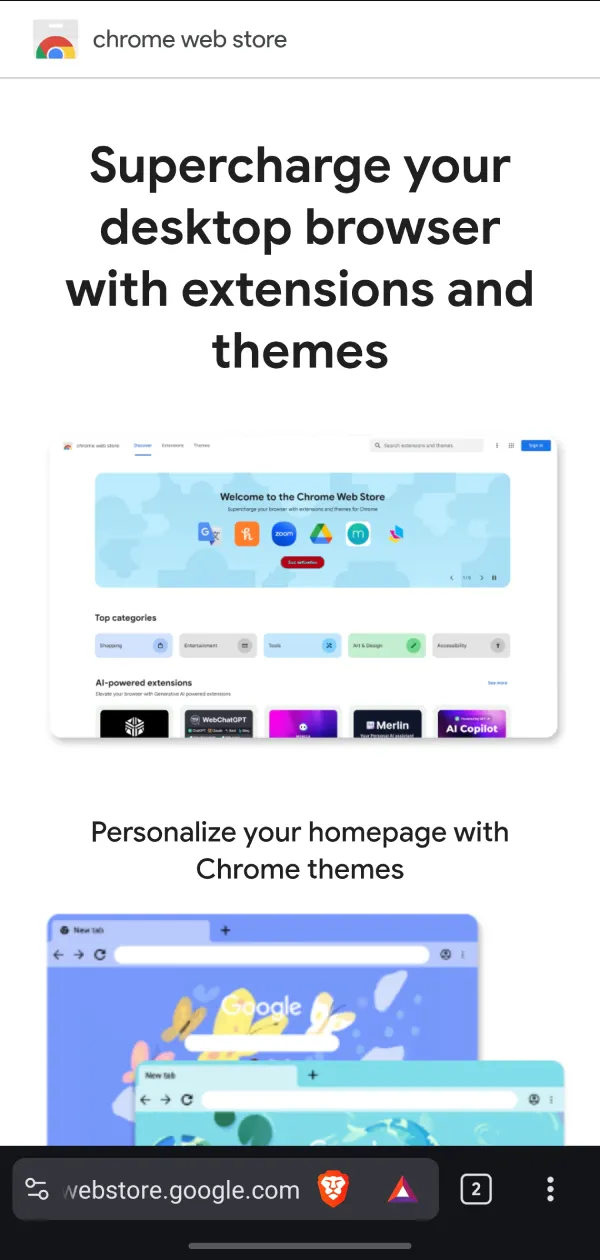
The update will support both Manifest V3 and Manifest V2 extensions. This will be a win for power users who want extensions like uBlock Origin.
That said, Brave is still playing catch-up with other browsers like Helium and Vivaldi, both of which recently added extension support on Android. But, like the saying goes, better late than never.
Beyond the obvious limitation of lacking a touch-friendly interface, the main challenge for developers may be adapting extensions for larger screens.
According to Zhukovsky, this will be reflected in the fact that “tablets and foldables use upstream’s toolbar extensions UI”. This means that on devices with extended display capabilities, extensions will have standard buttons in the toolbar.
Meanwhile, for smartphones, the developer notes that “phones get working extensions but no UI entry point”. So, for now, users will need to use experimental flags and the unpacked manager on these devices.
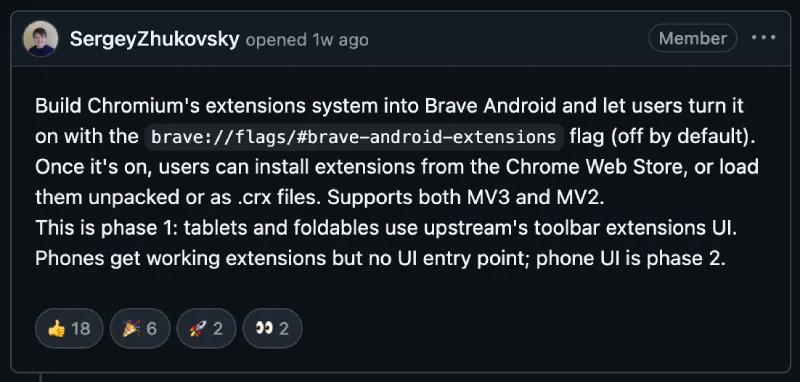
Zhukovsky said a dedicated mobile interface for extensions will come later, since the needed UI components won’t be ready in the second phase of development.
Nevertheless, the fact that this long-awaited feature is now officially in the works and code is being prepared is undeniably impressive. It has been several years since the initial request was made on Brave’s GitHub. Now, it’s just a matter of time before Brave users can enjoy their favorite extensions in the browser.
Users with tablets, or those willing to experiment with early-stage features in the branch’s development, will be the first to test this functionality.


Dwayne Cubbins
3071 Posts
I cover fast-moving stories across apps, online platforms, and everyday tech — phones, wearables, consoles, and whatever else people are fighting with this week. Bugs, rollouts, scams, policy enforcement, and the occasional internet-culture rabbit hole are all fair game. My goal is simple — make confusing tech news readable. When I'm not working, I'm working out or chilling with my dog. Got a tip? You can find me on X @dcubbins.