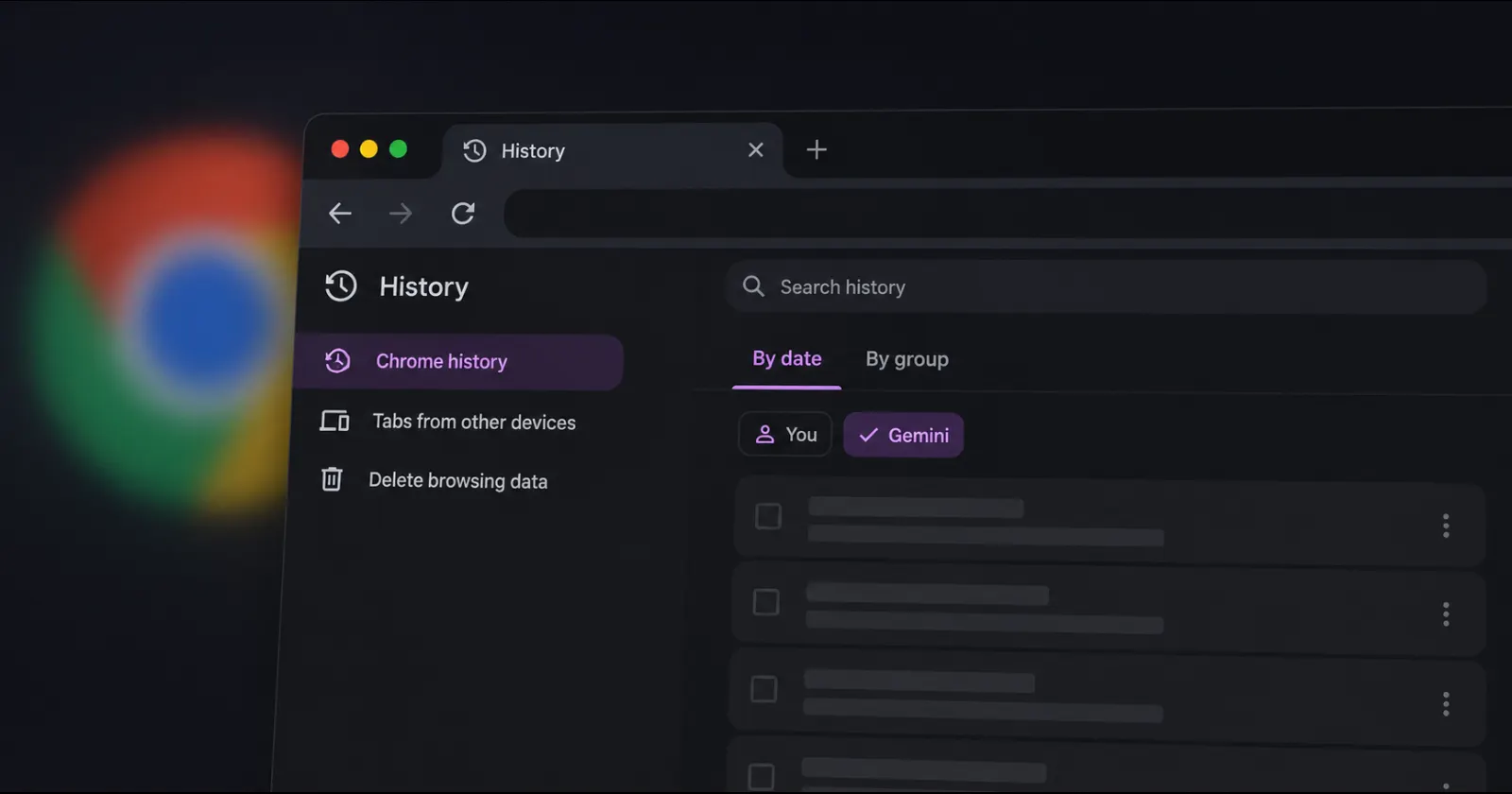
Google has been gradually rolling out experimental support for Global Privacy Control settings within Chrome, but there is one particularly noteworthy limitation to how this feature is set to work. The ability to easily opt out of data selling practices by toggling a universal switch inside the browser could potentially be unavailable to users based on their location.
As we first reported yesterday, Google continues to move towards enabling first-party GPC support by introducing an opt-out toggle switch within the Chrome Settings. However, an inspection of the recent commits in the Chromium repository suggests that Google could be planning to make this setting region-restricted.

Helium browser developer who goes by ‘wukko’ on X noted that the upcoming privacy feature in Chrome is actually a region-locked alternative to GPC. The developer stated that it is “paraphrased GPC and it’ll only be available in regions where google is forced to do it by legislation” and “for whatever reason google will make it unavailable for the rest of the world” in the discussion about Chromium’s upcoming changes.
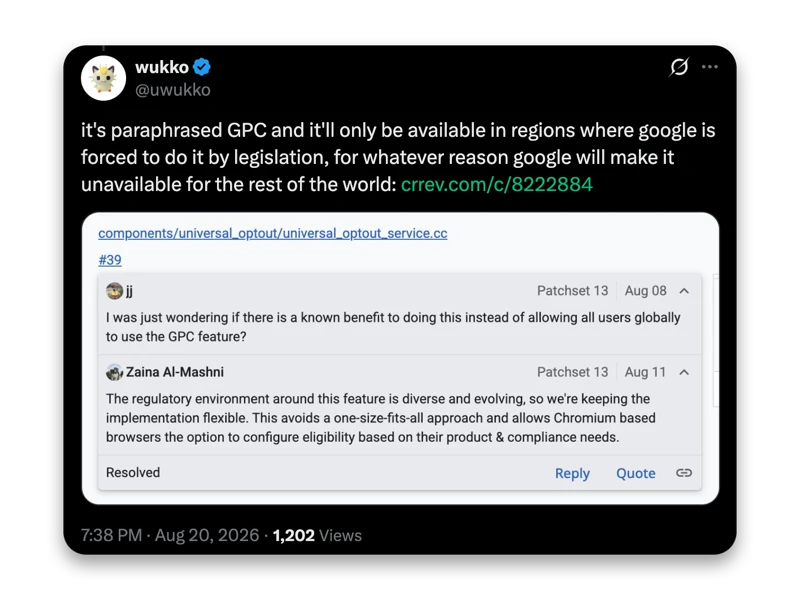
Looking closely at the Chromium code review that wukko highlighted, a developer questioned Google about this decision, asking if there is any known benefit to doing this instead of allowing all users globally to use the GPC feature.
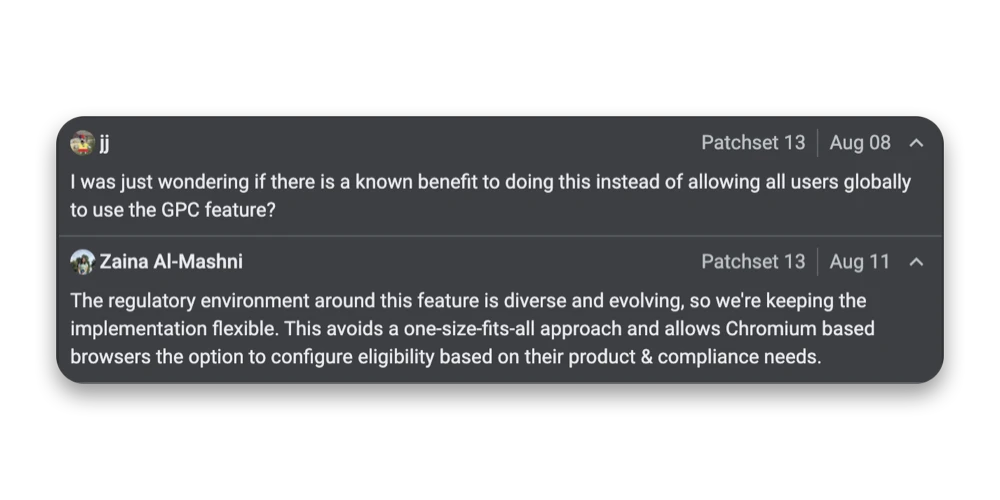
In response, Google engineer Zaina Al-Mashni explained that the regulatory environment around GPC is diverse and evolving, which is why they are keeping the implementation flexible. She noted that this avoids a one-size-fits-all approach and gives Chromium based browsers the option to configure eligibility according to their own product and compliance needs.
In contrast to Google’s cautious approach, alternative browsers such as Brave have been openly supportive of GPC and provided the necessary tools for opting out of data selling across all regions. It seems that smaller independent browsers are also more inclined to adopt GPC as a default privacy feature. In fact, even Helium browser recently introduced Global Privacy Control as an opt-in setting.
It was only a few weeks ago that Chrome Canary got a new developer flag which allowed users to force Chrome to send out the Global Privacy Control signal. This update gave users high hopes about Chrome’s future privacy-centric updates, but it appears that, for now at least, Google is only interested in bolstering its credentials as a privacy-preserving browser within the regions where data-selling legislation is particularly strict.
If you are a Chrome user based in California, you might soon be able to use the new built-in opt-out toggle to prevent websites from selling your personal data. On the other hand, if you are using Chrome outside of California, you might still have to rely on browser flags or even third-party extensions to broadcast your GPC signal.


Dwayne Cubbins
3036 Posts
I cover fast-moving stories across apps, online platforms, and everyday tech — phones, wearables, consoles, and whatever else people are fighting with this week. Bugs, rollouts, scams, policy enforcement, and the occasional internet-culture rabbit hole are all fair game. My goal is simple — make confusing tech news readable. When I'm not working, I'm working out or chilling with my dog. Got a tip? You can find me on X @dcubbins.
Next article View Article