Chrome’s final push against Manifest V2 extensions is basically complete. Chrome 150 quietly removed the flags that let users keep uBlock Origin running, and Chrome 151 is closing off the last remaining workarounds. After that, there’s no easy way for regular users to keep the classic ad blocker alive in Google’s browser. Only enterprise deployments and people willing to dig into DLL patching will have any real options left.
Edge has already started disabling the extension. A few other Chromium-based browsers might also follow as they pull in the upstream code from versions 150 and 151. Opera said its position hasn’t changed for now, and it still plans to support MV2 for as long as it’s technically reasonable, but it also confirmed its extension store will eventually go MV3-only. So even Opera’s stance is more of a delay than a commitment.
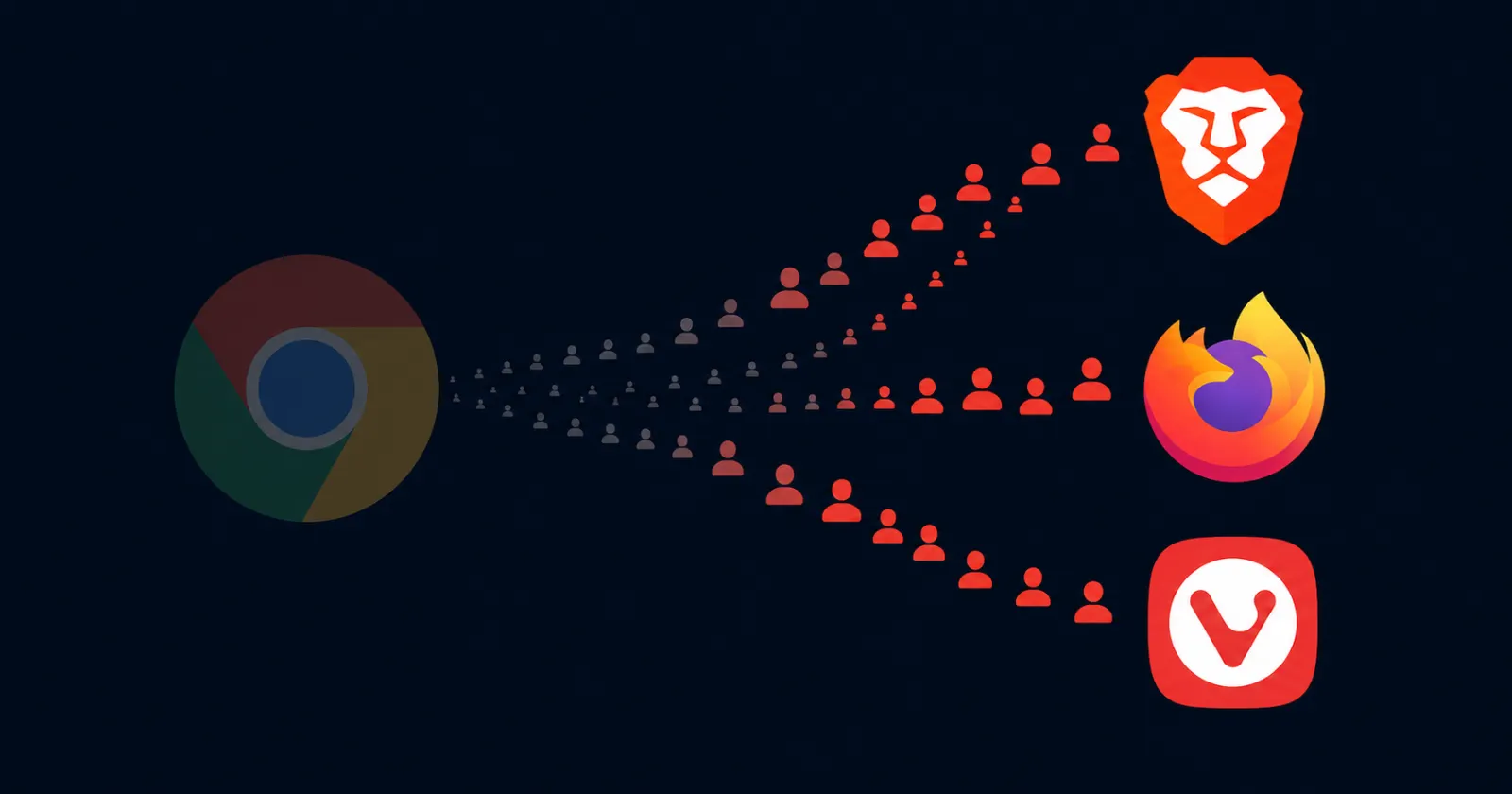
The confusion this has caused is real. A lot of Chrome users are under the impression that Brave is equally affected because it’s Chromium-based. It isn’t, and Brave has been pretty vocal about correcting that.
Brave Shields was never an extension
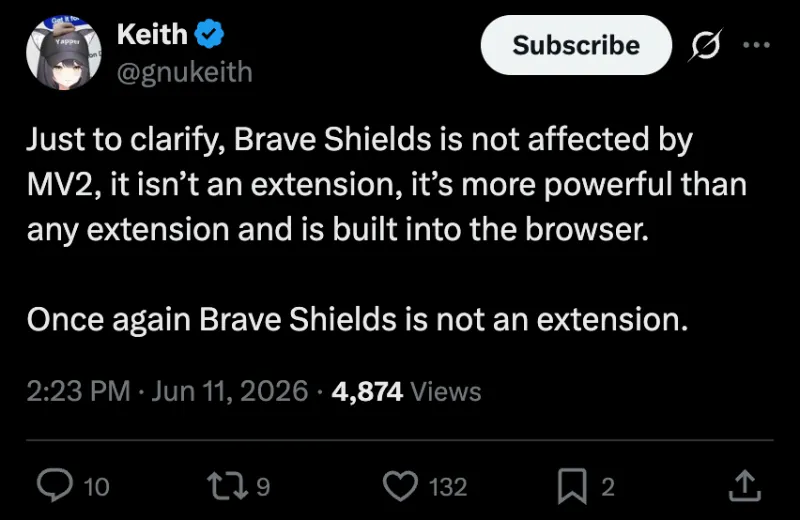
Brave CEO Keith Guertin addressed this in a post on X. Brave Shields is built into the browser itself, not layered on top as an extension. Google’s MV2 changes only affect what extensions can do. They don’t touch anything that’s native to the browser. So even if Google pushed a change that broke Chromium’s extension support entirely, Brave’s ad blocking would still work.
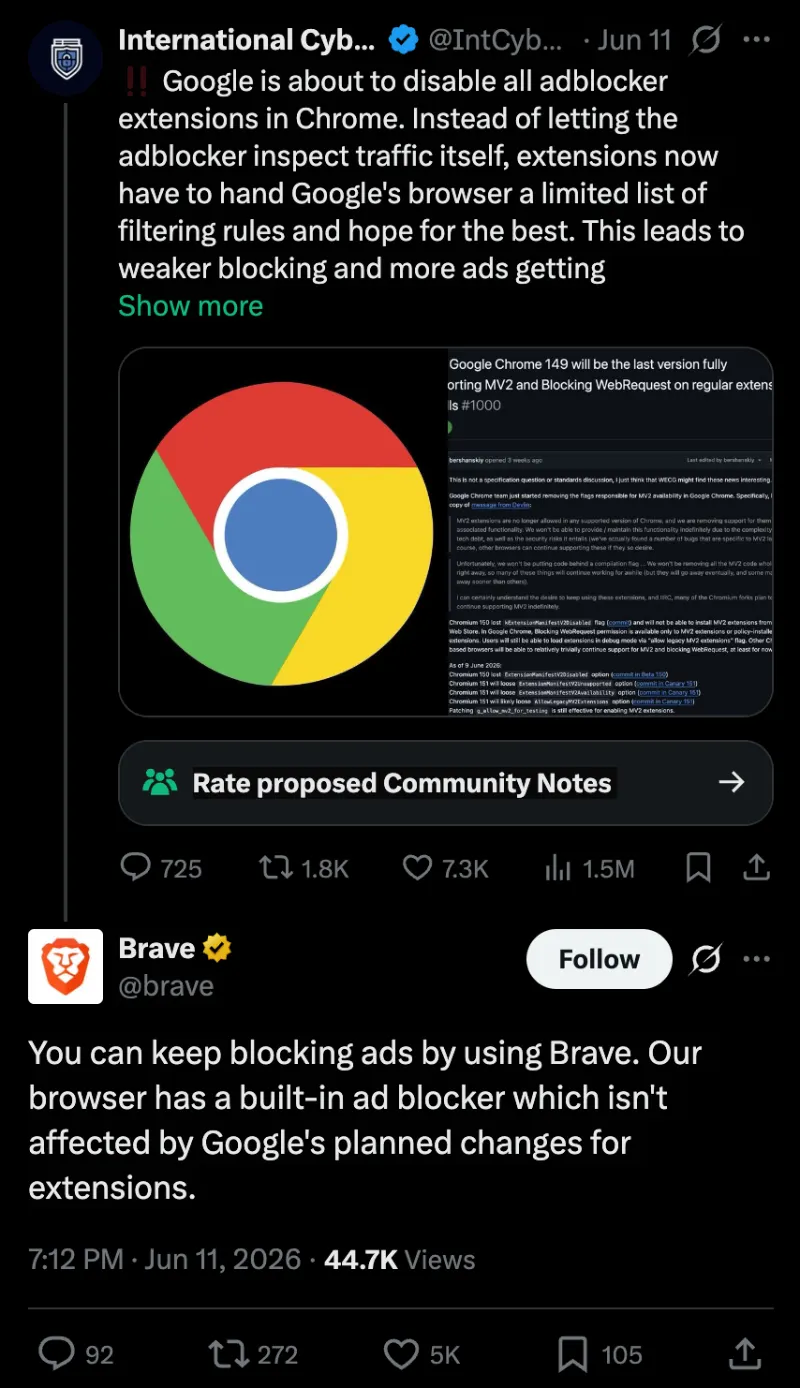
The browser’s official account made the same point when users pushed back. It doesn’t matter that Brave is built on Chromium. The ad blocking engine doesn’t depend on extension APIs at all, which is exactly why MV2 deprecation is a non-issue for it.
Brave isn’t the only one with this kind of setup. Vivaldi has its own built-in ad blocker too. Ladybird recently ditched its own content blocker to adopt Brave’s open-source adblock-rust engine instead. Other independent browsers are moving in the same direction. The extension-based approach to ad blocking is increasingly looking like a liability.
Firefox and others aren’t going anywhere
Firefox is in a different position from all of this. Mozilla confirmed back in 2024 that it has no plans to drop MV2 support, and that hasn’t changed. Firefox runs its own extension platform and isn’t tied to whatever Google decides to do with Chrome. uBlock Origin works on Firefox today and will keep working.
The team even posted Neowin’s report to boast about their MV2 extension support on Bluesky.
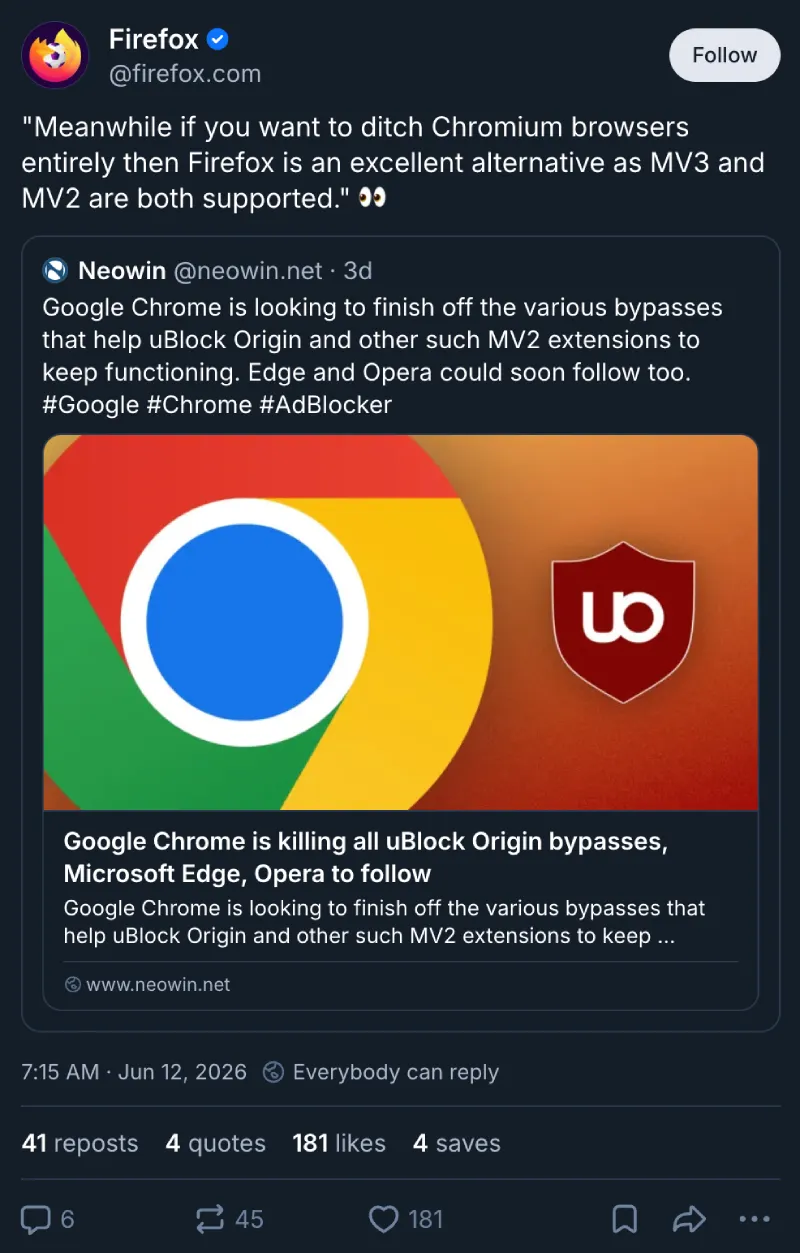
Mozilla’s CEO also recently hinted at a native ad blocker coming to Firefox, which would put it in the same category as Brave and Vivaldi. So essentially, browsers that don’t need an extension to block ads at all.
Helium is another one worth mentioning. The independent browser confirmed it’s not affected by Chrome’s MV2 changes and will keep uBlock Origin and other MV2 extensions working, at least for the foreseeable future. The developer also mentioned that most Chromium-based browsers aren’t actually forced into this situation if they choose not to be.
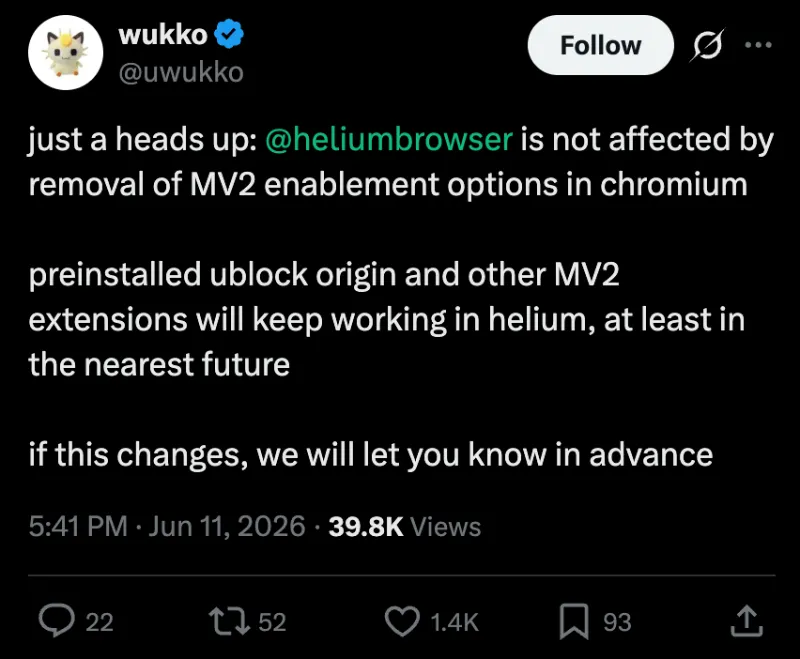
In fact, Helium even shipped MV2 extension support on its Android app.
That’s the part that doesn’t get said enough. Google is making this call for Chrome. Other browsers built on Chromium can — and some have — decided not to follow. The ones that are following, like Edge, are doing so by choice.
For users still on Chrome who relied on uBlock Origin, the options are limited. Switch to Firefox and keep using it as an extension. Switch to Brave, Firefox, or Vivaldi and let the browser handle blocking natively. Or stay in Chrome and accept that ad blocking there is going to get meaningfully weaker from here.


Dwayne Cubbins
3058 Posts
I cover fast-moving stories across apps, online platforms, and everyday tech — phones, wearables, consoles, and whatever else people are fighting with this week. Bugs, rollouts, scams, policy enforcement, and the occasional internet-culture rabbit hole are all fair game. My goal is simple — make confusing tech news readable. When I'm not working, I'm working out or chilling with my dog. Got a tip? You can find me on X @dcubbins.
Next article View Article