


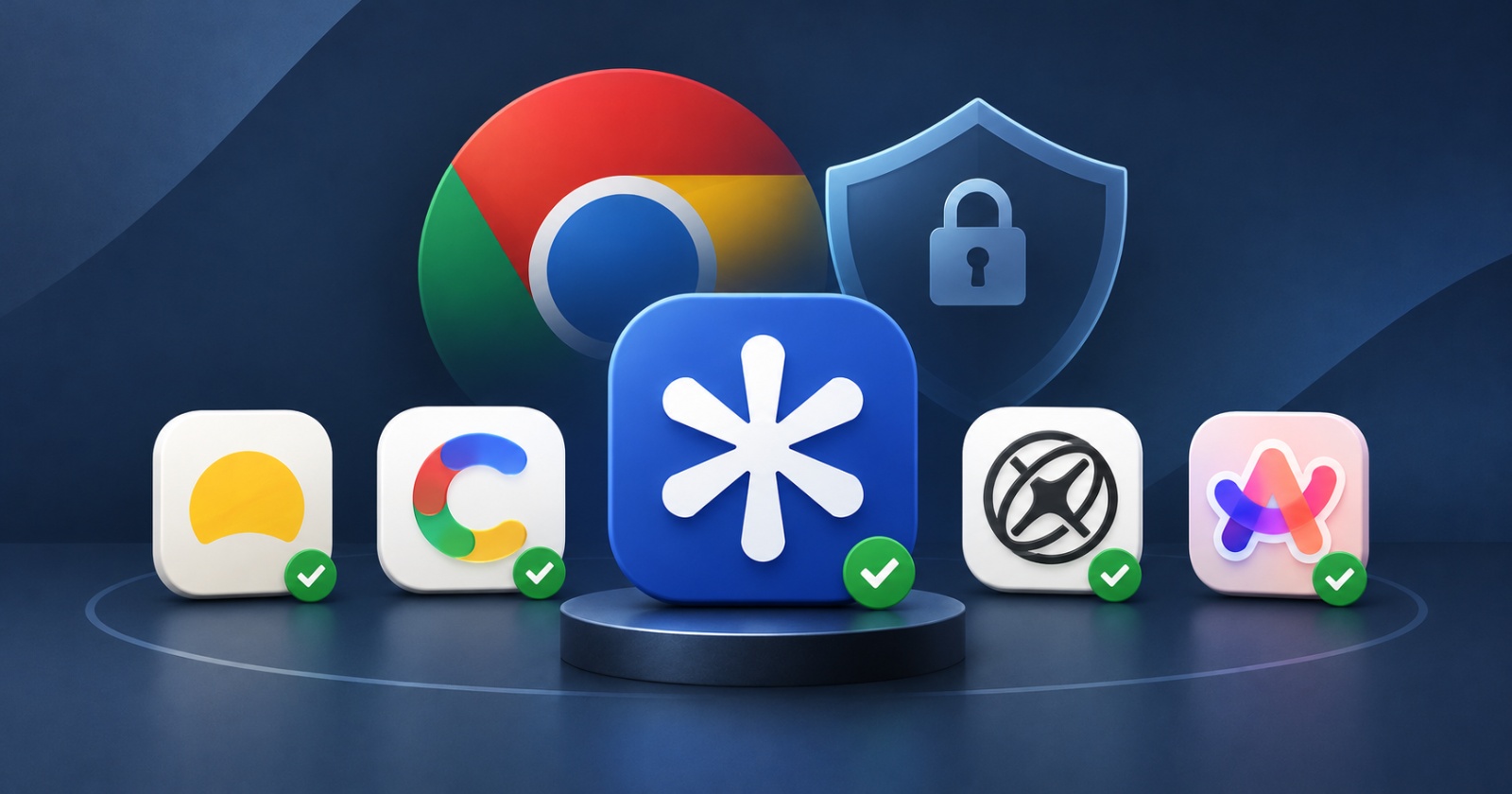
Update: Chrome shipped a critical security fix on Nov 23. Here's who patched it, and how fast:
— Gilga (@GilgameshODs) November 27, 2026
• @heliumbrowser: 1 day. Excellent work again
• @diabrowser: 1-2 days (I'm a user, saw it land)
• @AsideAI: 2 days. Huge improvement; a few weeks ago, they were the slowest
•… https://t.co/ADnoRfdQc0 pic.twitter.com/QqPL1ypnqq
You might have seen various posts online about the developers of the Helium Browser taking security quite seriously, and that’s because the developers have proved themselves once again recently. Google shipped an emergency security update for Chrome on November 23, and Helium shipped the patch in just one day.
For some backstory, the emergency vulnerability was “critical,” and sat in the browser’s code for nearly 3 months. It was tracked as CVE-2026-134401. The flaw is an improper input validation bug; Chrome uses a specific system to fetch and apply remote feature experiments.
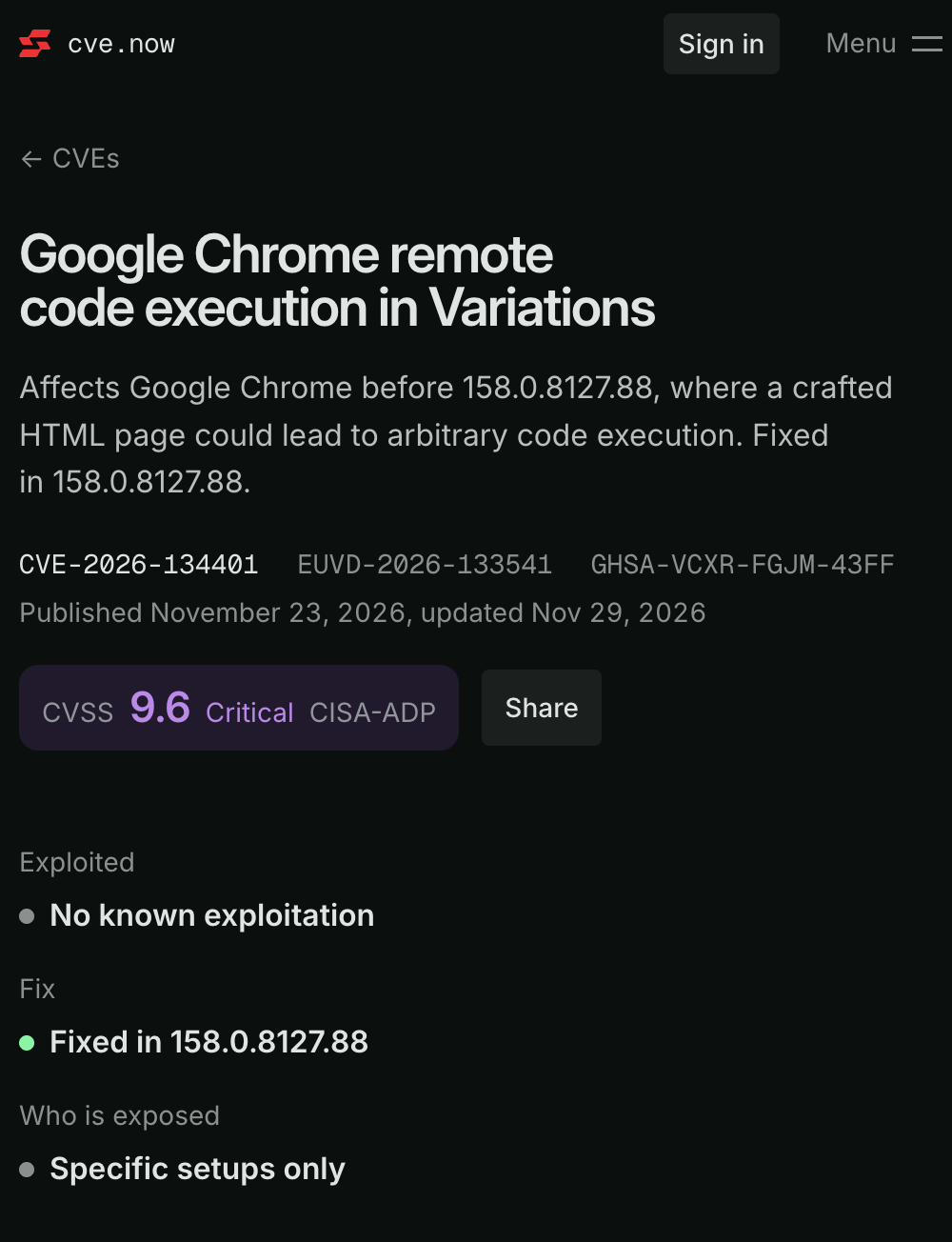
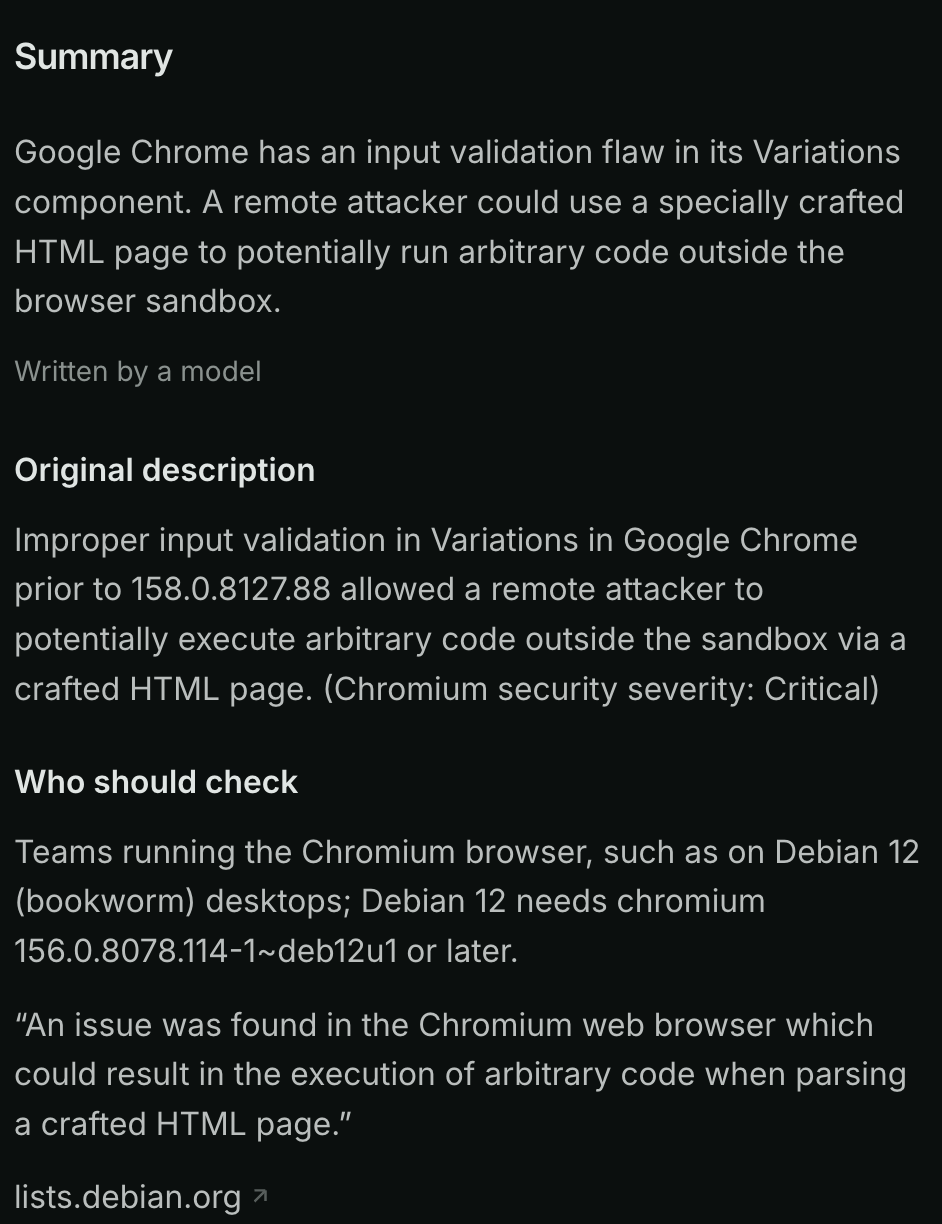
According to Chrome Releases (& the CVE record), a remote attacker could potentially execute arbitrary code outside the browser’s sandbox. And to do that, the user just had to load up a specially crafted HTML page. Google rated the issue as critical because it’s very easy to get someone to open a webpage. No exploitation has been confirmed at the time of writing, but it’s still risky to remain on the older patches that continue to have this issue.
A lot of browsers we use are Chromium-based forks, especially the recent wave of Arc alternative browsers. People are considering jumping to the popular ones like Ardia, Cra, Search, or Crest, but the security concerns still hold many people back. The speed at which they inherit these Chromium patches is a major deciding factor.
A public tracking post on X, from @GilgameshODs, compared the speeds at which the fix was issued. Helium shipped the patch in just one day. Dia followed within two days (typically, this also includes Arc), and both Aside and Cra landed it in two days. Unfortunately, Ardia and Crest didn’t patch it even three days after Chrome’s release. It has been patched at the time this article goes live, but it wasn’t when the post on X was made.
People responded rather positively to Helium, since the company fixed it quite fast despite the browser being a niche one led by a small team. The developer, @uwukko, quoted the post himself, emphasizing further that Helium takes security patches more seriously.
we really do care about security patches for @heliumbrowser https://t.co/u8xFSqGCE4
— wukko (@uwukko) November 27, 2026
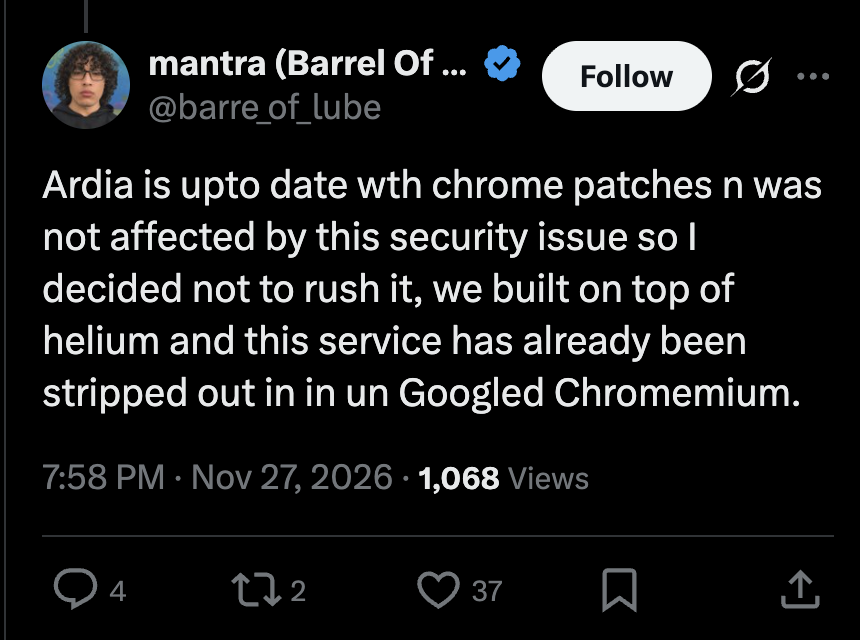
Ardia’s maintainer offered an explanation for the delay. In a reply to the main post, he stated that Ardia was “not affected” by this issue, since it’s built on top of the Helium Browser. The claim makes sense technically, but we don’t have clear information on whether it actually matters or not. Ultimately, Ardia did end up properly patching it in a later update.
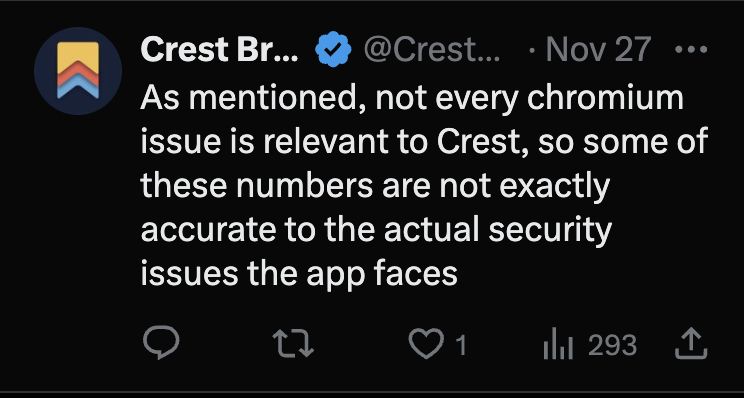
On the other hand, Asida and Cra patched it within expected time frames, and the official Crest Browser account later went on to claim that not all Chromium issues are relevant to Crest.

We stand out from the tech-media crowd because we break news stories; we mainly bring you stuff that you won’t find anywhere in the mainstream tech media. Our stories have been picked up by some of the world’s most popular websites and media outlets—more info is available here.

Sudhanshu K
414 Posts
I have been a consumer technology enthusiast for over 5 years. Thanks to my experience in software beta testing and product reviews, I've understood and learnt a lot about what bugs and issues bother people, and I spend time trying to simplify their solutions. I cover smartphones, software, social media, apps, AI, and most consumer tech gadgets. Actively pursuing a Computer Science bachelor’s degree. I'm mostly active on Twitter/X (@TechWhirlUlt), drop a DM or tag me if you want to share info or connect!