


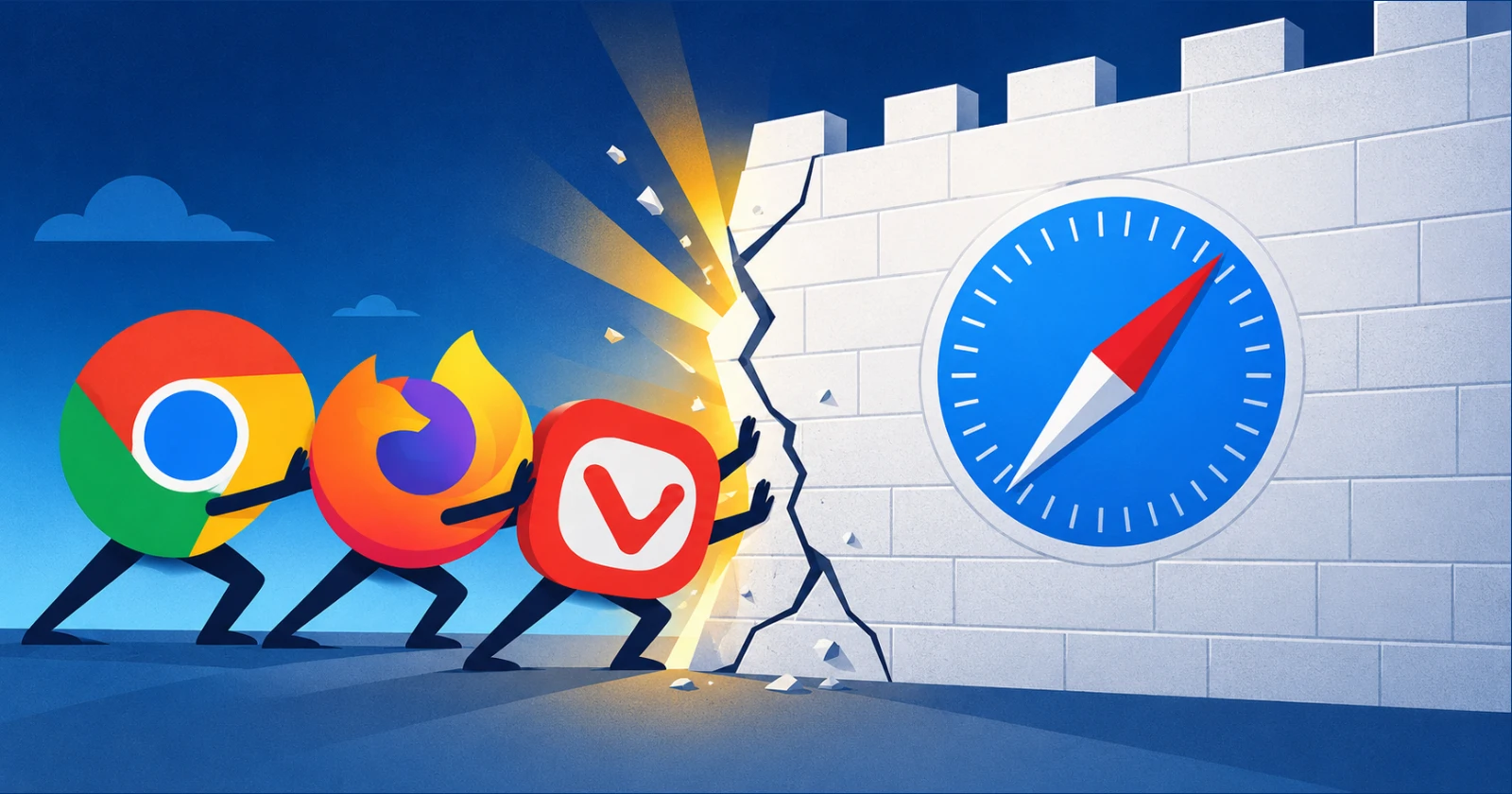
It takes a lot to put Google and Mozilla on the exact same side of a fight, and Apple somehow keeps managing it.
On X, Google’s Chrome for Developers account publicly backed Mozilla’s recent explanation of why you still can’t get a real version of Firefox on an iPhone, even in Europe, where the rules supposedly opened up years ago.
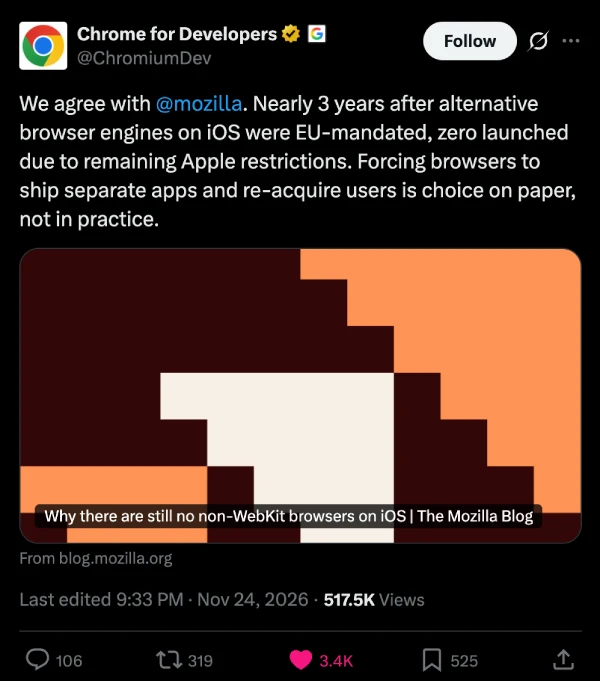
Right now, every iPhone browser is basically Safari in a different skin because Apple forces all of them to run on its WebKit engine. The EU’s Digital Markets Act was meant to end that back in March 2024, but nearly three years on, zero major browsers have made the switch.
“Forcing browsers to ship separate apps and re-acquire users is choice on paper, not in practice,” Google wrote, calling out Apple’s rule that stops companies from simply updating their existing iOS apps with a new engine.
It’s a pretty absurd hoop to make developers jump through, and it makes total sense why nobody has bothered. Back in September, Firefox head Ajit Varma explained why Mozilla refuses to build an EU-only version, saying that splitting the app in two would force them to double their iOS team just to maintain it.
Google’s post appeared at the same time as a joint open letter from Open Web Advocacy, which gathered support from Vivaldi, Brave, Mozilla, Shopify, and various trade groups representing around 50,000 businesses across the EU. It’s a significant moment showing that many companies are coming together to voice their concerns and advocate for a more open web.
Vivaldi noted on X that after two and a half years, “not a single browser vendor has been able to upgrade its EU users from Apple’s WebKit engine to the browser vendor’s preferred engine.”
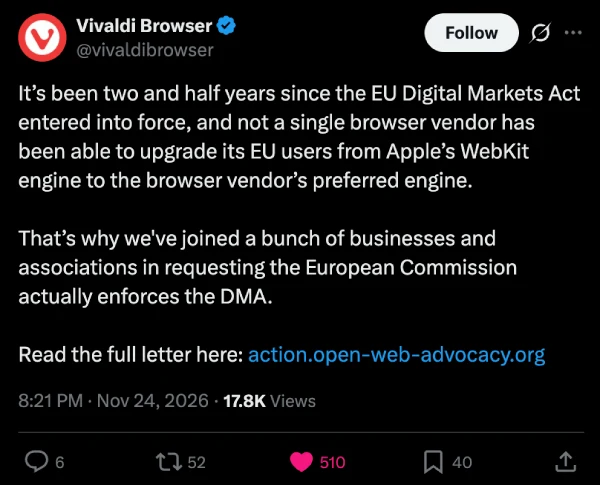
The group wants the European Commission to actually enforce the law, estimating that stronger mobile web apps could save EU companies over €12 billion a year in dev costs and App Store fees.
Predictably, Google playing the hero for an open web got roasted in the X replies, with plenty of users pointing out that Google funds most of Mozilla’s budget anyway. Others quickly brought up Chrome’s ad blocker changes and Google’s upcoming Android sideloading restrictions.


Dwayne Cubbins
3239 Posts
I cover fast-moving stories across apps, online platforms, and everyday tech — phones, wearables, consoles, and whatever else people are fighting with this week. Bugs, rollouts, scams, policy enforcement, and the occasional internet-culture rabbit hole are all fair game. My goal is simple — make confusing tech news readable. When I'm not working, I'm working out or chilling with my dog. Got a tip? You can find me on X @dcubbins.