


Mozilla just officially explained why Firefox is still unable to bring its Gecko browser engine to iOS, despite Apple introducing changes that allow third-party engines in specific regions. The company says that Apple’s requirements are impractical, and it’s difficult for independent developers to offer WebKit alternatives.
In an official blog post, Mozilla said that Firefox usage on iOS has grown, particularly in the European Union. That’s where the Digital Markets Act (DMA) has allowed users to pick their default browsers since 2024. The company claims millions of users have picked Firefox, with daily iOS usage doubling.
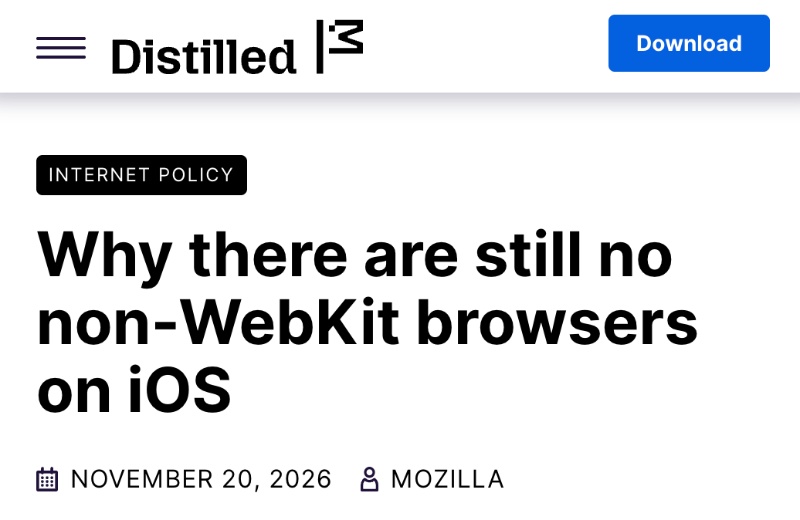
However, Apple’s restrictions continue to limit what Mozilla can offer. Apple allows alternative engines in the EU, but the company also introduced several conditions.
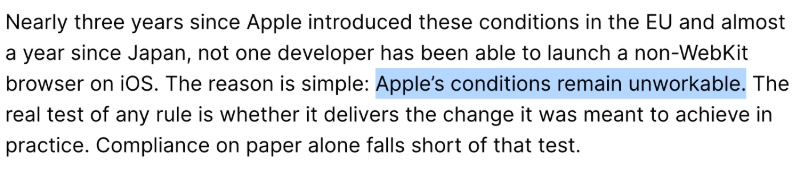
Mozilla has been working to bring Gecko to iOS, but one requirement involves creating an entirely separate Firefox app instead of updating the existing one. This would essentially force users to download a completely separate app, and then manually transfer their bookmarks, passwords, and browsing history.
Mozilla argues that this additional step, just to switch the browser engine, could discourage existing users from switching. Many people switched over to Firefox after the browser choice screen, but this would now create an unnecessary barrier and might turn some users away.
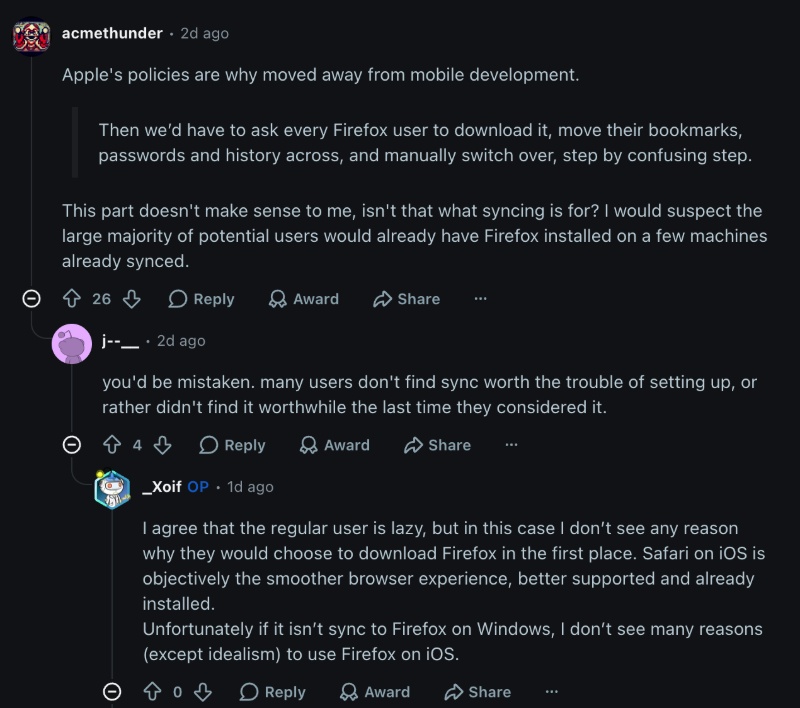
Despite this, commentary online argues that Mozilla should release a separate Gecko-powered Firefox browser regardless. It could bring in support from users interested in independent software. Considering that Mozilla maintains a separate app, Firefox Focus, they could consider maintaining this separately as well.

Some people also argue that transferring browser data isn’t that hard, since Firefox Sync makes it fairly straightforward. But we also have to take into consideration that people who have never configured browser sync might face trouble with it.
All things considered, Mozilla says that the company will continue pushing for fairer conditions that allow independent browser engines to reach iOS users, instead of developing a completely separate app.


Sudhanshu K
401 Posts
I have been a consumer technology enthusiast for over 5 years. Thanks to my experience in software beta testing and product reviews, I've understood and learnt a lot about what bugs and issues bother people, and I spend time trying to simplify their solutions. I cover smartphones, software, social media, apps, AI, and most consumer tech gadgets. Actively pursuing a Computer Science bachelor’s degree. I'm mostly active on Twitter/X (@TechWhirlUlt), drop a DM or tag me if you want to share info or connect!