






Vivaldi for iOS just turned three, but the developers aren’t celebrating. While more people have started using the app since it launched in late 2023, Vivaldi still has to rely on Apple’s WebKit engine, not the Chromium base used on other platforms.
If you use Vivaldi on desktop or Android, you probably appreciate how customizable it is. Vivaldi has moved quickly and taken risks on other operating systems, like its recent Android update that added support for extensions. These updates are possible because Vivaldi focuses on a modular browser that adapts to what users want, a key trait of an independent browser.
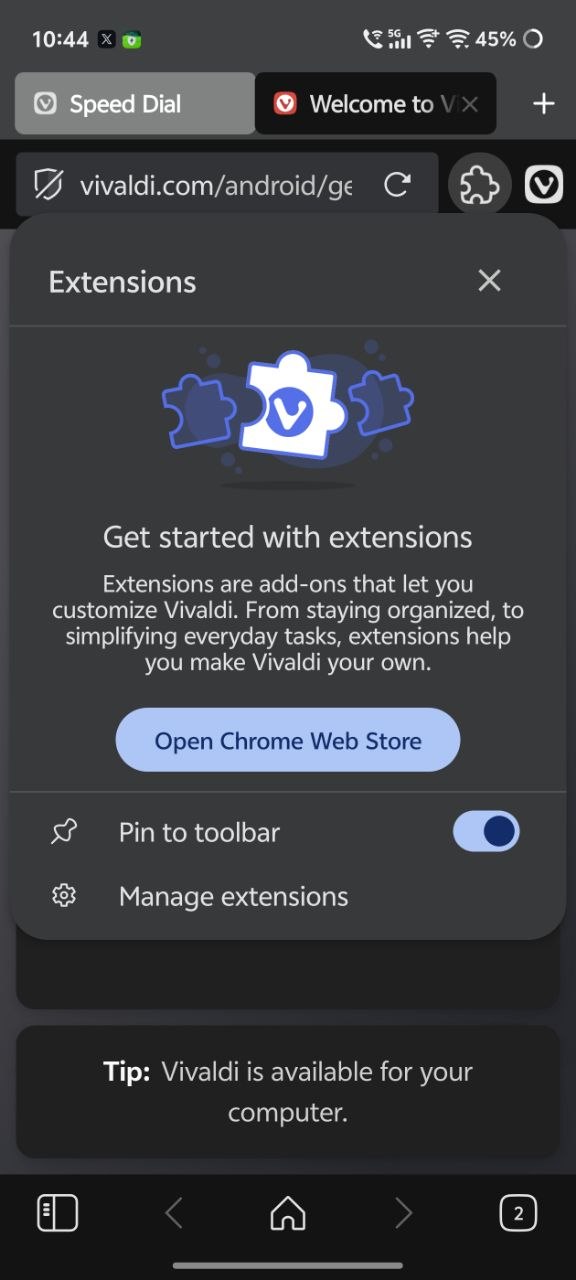
Vivaldi for iOS, on the other hand, isn’t modular at all. From the start, Apple required all third-party browsers to use its WebKit engine. Because of this rule, every browser alternative to Safari on iPhone runs on the same engine, so the main differences are just in appearance.
The EU’s new Digital Markets Act was created to stop gatekeeping practices like Apple’s. In response, Apple introduced a Web Browser Engine Entitlement for the EU and Japan. Still, no alternative browser for iOS has been announced that uses anything other than WebKit.

Bruce Lawson from Vivaldi talked about this issue in a recent post marking the browser’s anniversary. He said Apple’s complicated system “makes it impossible for a small independent browser company to distribute our preferred product.”
Lawson says the main problem is the technical challenge of supporting two different engines. To launch a Blink-based browser on iOS, Vivaldi would need to create two separate versions of the app: one for the EU and Japan, and another for everywhere else.
Vivaldi wouldn’t be able to update its current users in these regions. Instead, users would have to find and install a new app that only works outside the EU and Japan.
Even if Vivaldi or another small browser company decided to take the risk and spend the money to build a new engine for iOS, Apple’s agreement still lets them reject the app “for any reason” and “at its sole discretion,” according to Bruce Lawson. He says this rule is “designed to hamstring any fair competition.”
Bruce Lawson’s last example of Apple’s proposal highlights a practical problem that would increase Vivaldi’s support costs. Every day, more than 400,000 people cross the border between non-EU Switzerland and EU countries, but Apple hasn’t explained how an alternative engine browser would work for them.
Right now, Vivaldi’s development plans focus on projects the team can control. That’s why they recently introduced an overhauled ad blocker in the latest Snapshot release. The company can update its own services and apps, like adding a list-filtering feature to the ad blocker, but it can’t do this for Vivaldi iOS without Apple’s approval first.
Lawson plans to meet with other browser companies and EU officials in Brussels to discuss the issue further. For now, Vivaldi for iOS will keep working on features that don’t need Apple’s approval, hoping they can eventually start using their own engine.


Dwayne Cubbins
3064 Posts
I cover fast-moving stories across apps, online platforms, and everyday tech — phones, wearables, consoles, and whatever else people are fighting with this week. Bugs, rollouts, scams, policy enforcement, and the occasional internet-culture rabbit hole are all fair game. My goal is simple — make confusing tech news readable. When I'm not working, I'm working out or chilling with my dog. Got a tip? You can find me on X @dcubbins.