


The Tor Project just surveyed over 50,000 users across more than 250 countries and regions, and a huge chunk of them aren’t doing anything shady on there.
Sure, over one in five respondents in the new survey still use it because going online could expose them to violence or arrest, and 44% are trying to get past government censorship.
What actually topped the list is way more ordinary, with 53% saying they just want their ISP out of their business and half trying to stop companies from making money off their browsing.
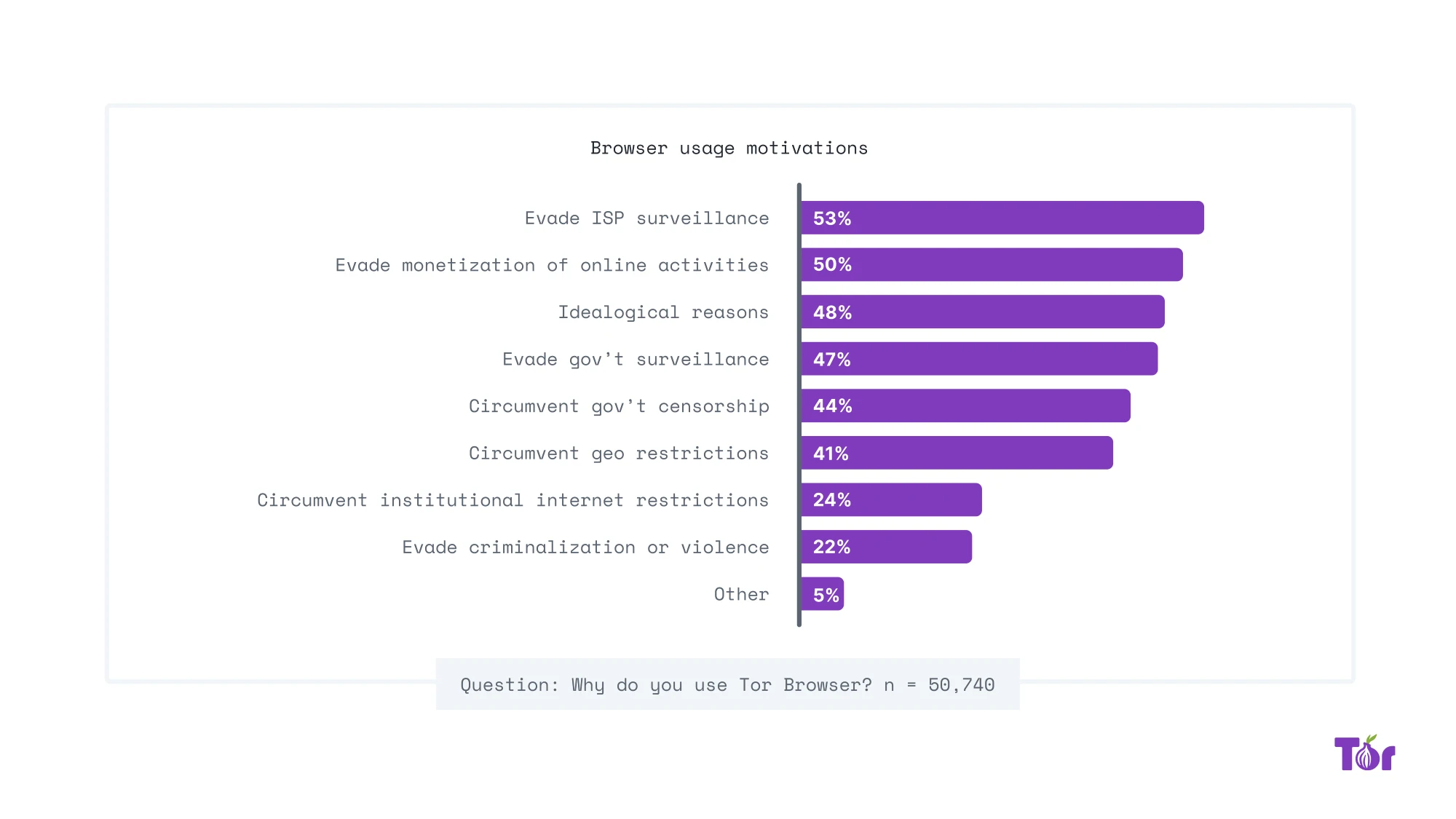
They’re watching videos, reading the news, checking email, and scrolling social media like anyone else. As the blog post put it, “More often than not, people need Tor for everyday browsing.”
Android users made up 44% of everyone who replied, yet among brand new users that shoots all the way up to 78%.
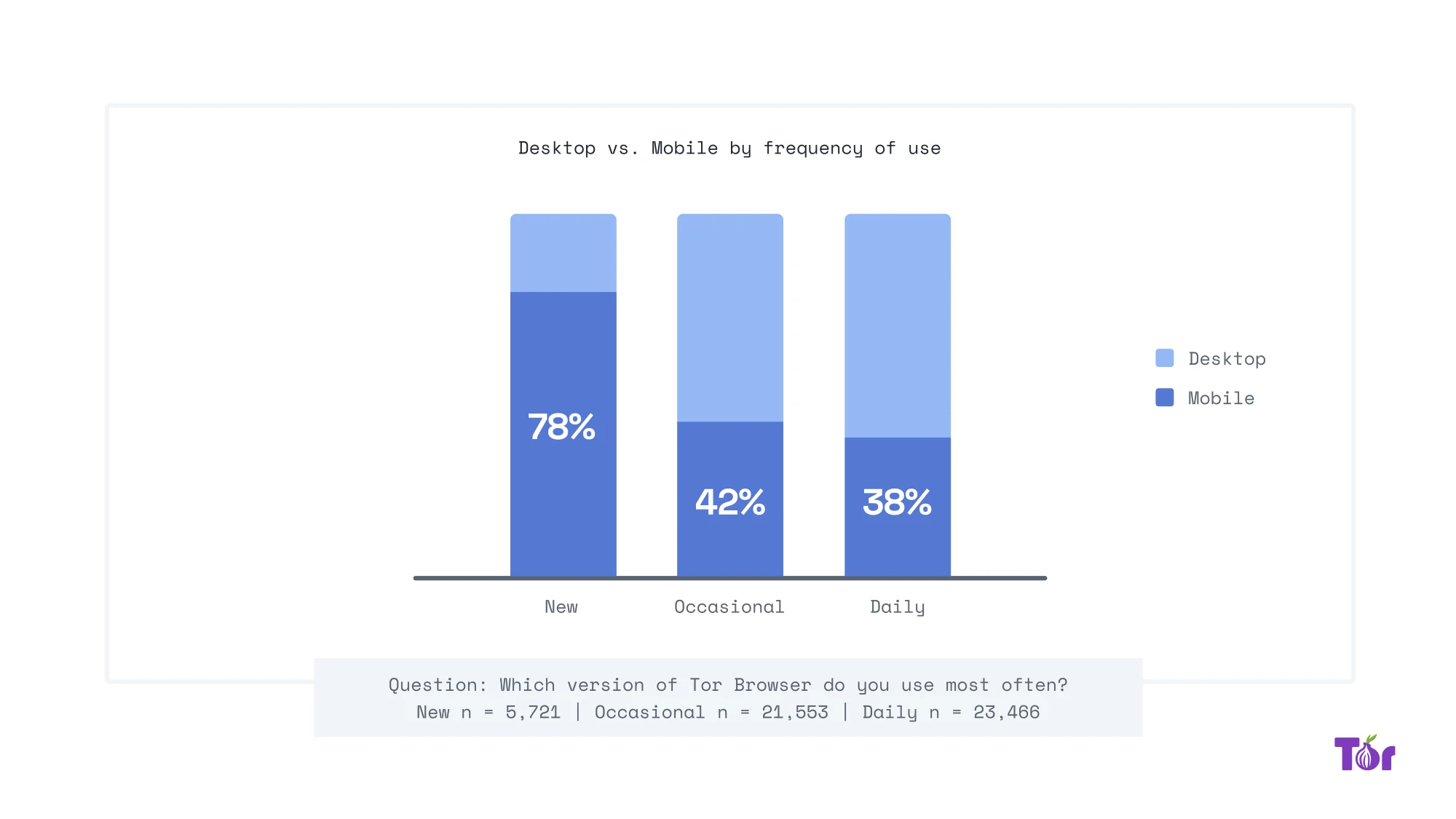
It makes sense once you think about how we use our phones. As the Tor team asked, “If you receive a private message on Signal with a link, are you going to open it on a non-privacy-preserving browser?”
The annoying part is that phone users popping in for quick sessions struggle to stay logged in or remember passwords, while 47% of everyone surveyed complained about broken sites, just ahead of slow speeds at 42%.
Out of the folks hitting broken pages, 57% got blocked or banned on social platforms and 51% got stuck dealing with way too many CAPTCHAs. Websites basically spot Tor traffic, assume it’s a bot, and lock you out.
It’s the same catch we saw in recent desktop browser fingerprinting tests where Tor tied at the top for hiding your device details, because the harder you make it to track you, the more regular sites start acting up.


Dwayne Cubbins
3238 Posts
I cover fast-moving stories across apps, online platforms, and everyday tech — phones, wearables, consoles, and whatever else people are fighting with this week. Bugs, rollouts, scams, policy enforcement, and the occasional internet-culture rabbit hole are all fair game. My goal is simple — make confusing tech news readable. When I'm not working, I'm working out or chilling with my dog. Got a tip? You can find me on X @dcubbins.