


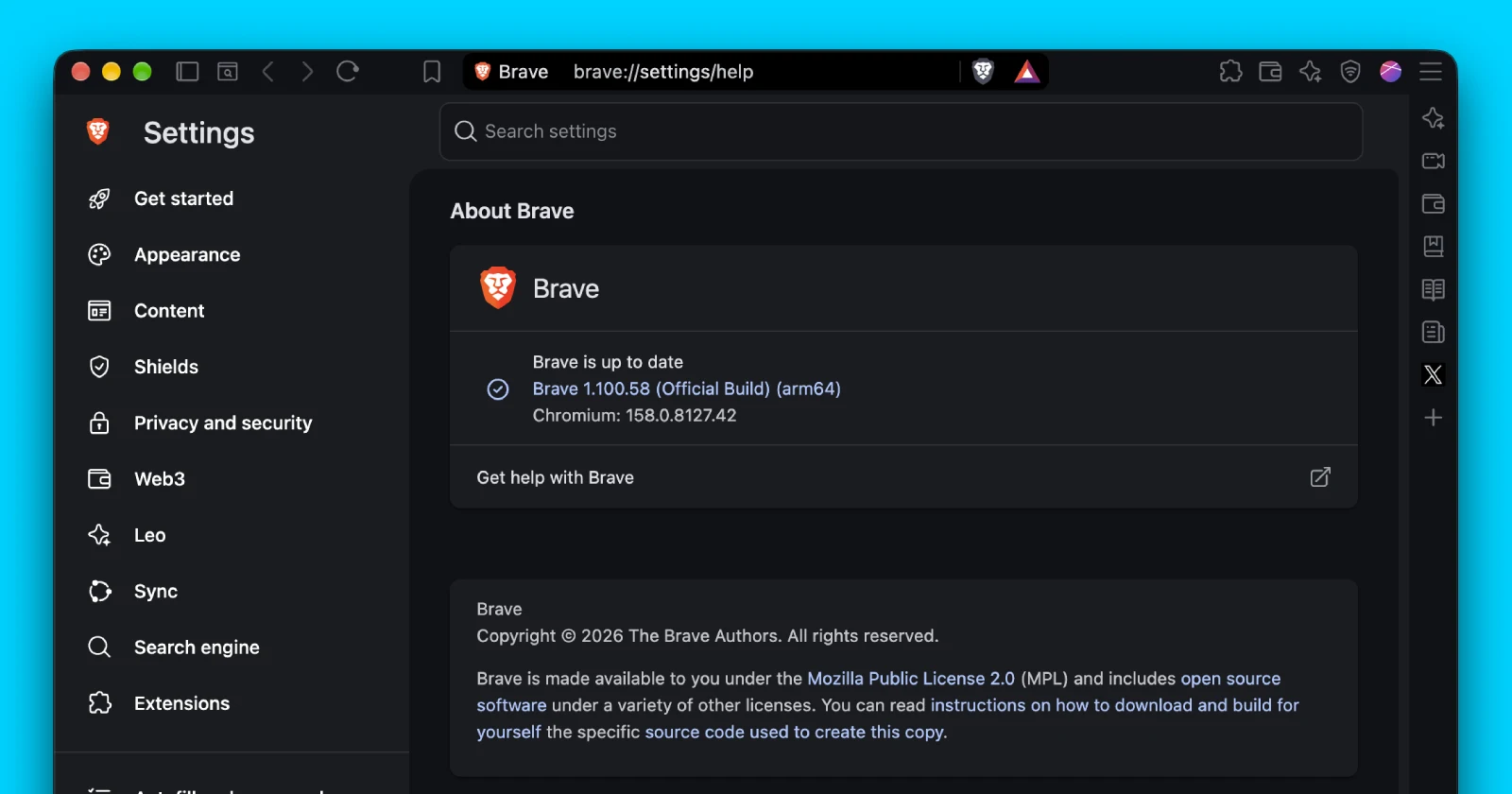
Brave has pushed out version 1.100.58 for desktop users, and the headline change is local, on-device processing for the WebSpeech API in English.
Normally, when you use voice dictation or speech-to-text on a website in a Chromium browser, your audio gets sent off to remote cloud servers to be transcribed. Running it locally means your voice stays on your actual machine instead of bouncing through Google’s servers, which is a pretty big deal if you care about privacy or just want voice input to work without a cloud roundtrip.
You might not see it right away though. According to the official release notes, the feature is “being rolled out in phases using Griffin starting at 25%.”
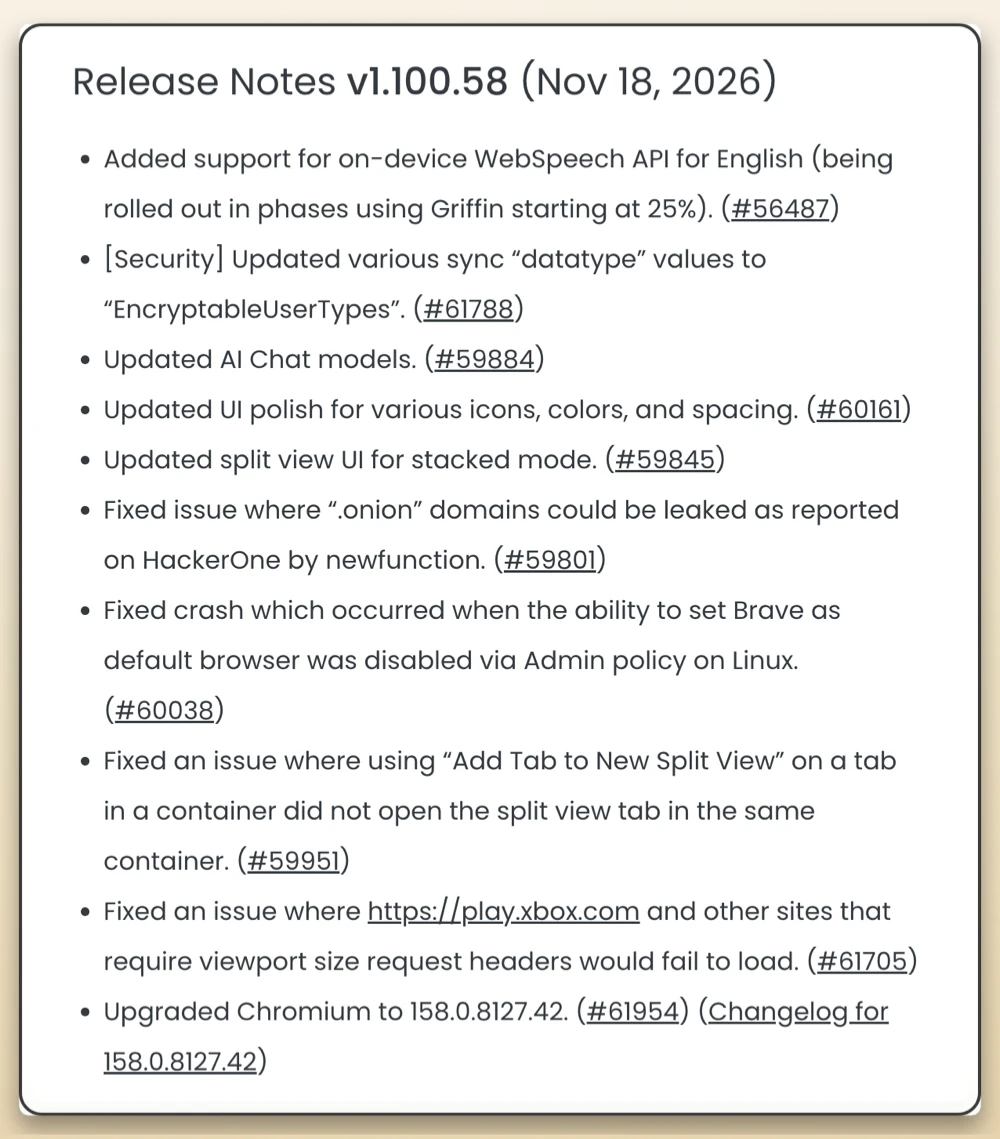
Beyond voice processing, this build bumps the browser to Chromium 158.0.8127.42 and packs in a few notable fixes. It patches a nasty bug where .onion domains could leak, fixes an issue that was breaking Xbox Cloud Gaming (play.xbox.com) and similar sites, and cleans up the stacked mode UI for split view. This lands just a week after Brave rushed out v1.99.56 to patch an actively exploited Chromium flaw.
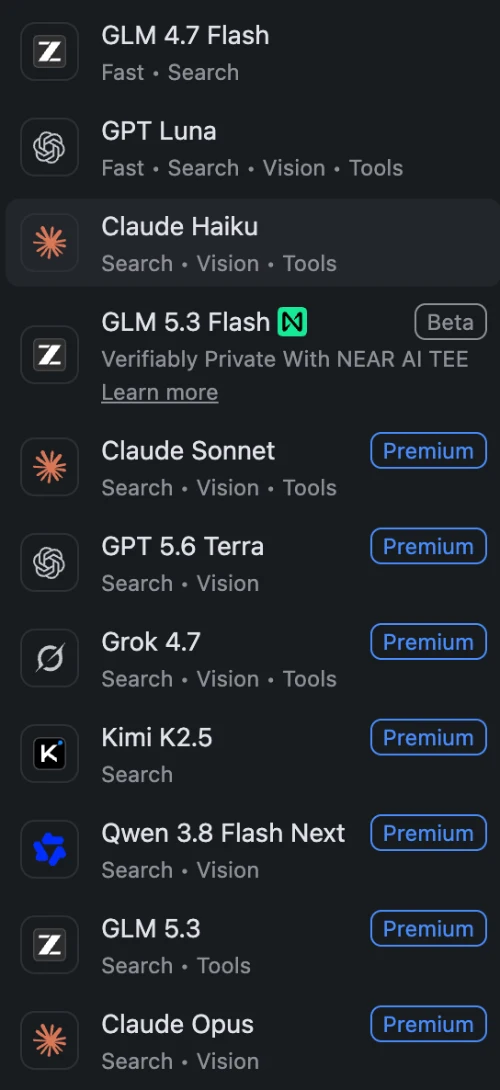
Leo AI is also getting a quiet shuffle in the model picker. Looking at the linked GitHub issue, Brave brought Haiku back now that version 5.5 is out, while dropping Nemotron, Mistral, and Deepseek because they are all hitting the 12-month mark. Haiku, Luna, and Grok also picked up agentic browsing support.
On my end, after updating, the free tier shows GLM 4.7 Flash, GPT Luna, Claude Haiku, and GLM 5.3 Flash with end-to-end encryption. Stepping up to Premium unlocks Claude Sonnet, GPT 5.6 Terra, Grok 4.7, Kimi K2.5, Qwen 3.8 Flash Next, GLM 5.3, Claude Opus, and Qwen 3.6 35B.


Dwayne Cubbins
3220 Posts
I cover fast-moving stories across apps, online platforms, and everyday tech — phones, wearables, consoles, and whatever else people are fighting with this week. Bugs, rollouts, scams, policy enforcement, and the occasional internet-culture rabbit hole are all fair game. My goal is simple — make confusing tech news readable. When I'm not working, I'm working out or chilling with my dog. Got a tip? You can find me on X @dcubbins.