



Brave is rolling out a fix after hackers hijacked a popular web tool called Optimizely to slip malware onto 178 major websites on November 16. If you visited places like Zoom, the BBC, CNN, IKEA, or Equifax that day, there is a real chance your browser quietly ran malicious code in the background without you knowing.
Most big websites use Optimizely to test out page layouts, and since the poisoned code came straight from Optimizely’s own servers, affected sites just trusted it and let it run. According to security researcher Scott Helme at Report URI, who uncovered the whole mess, “trusted JavaScript doesn’t always remain trustworthy.”
Once the script loaded on a page, it immediately started looking for ways to rob people. It watched payment forms to steal credit card details, grabbed browser cookies, and even swapped out crypto wallet addresses copied to your clipboard so your money would go to the hackers instead, which netted them around $7,000 in just a few hours.
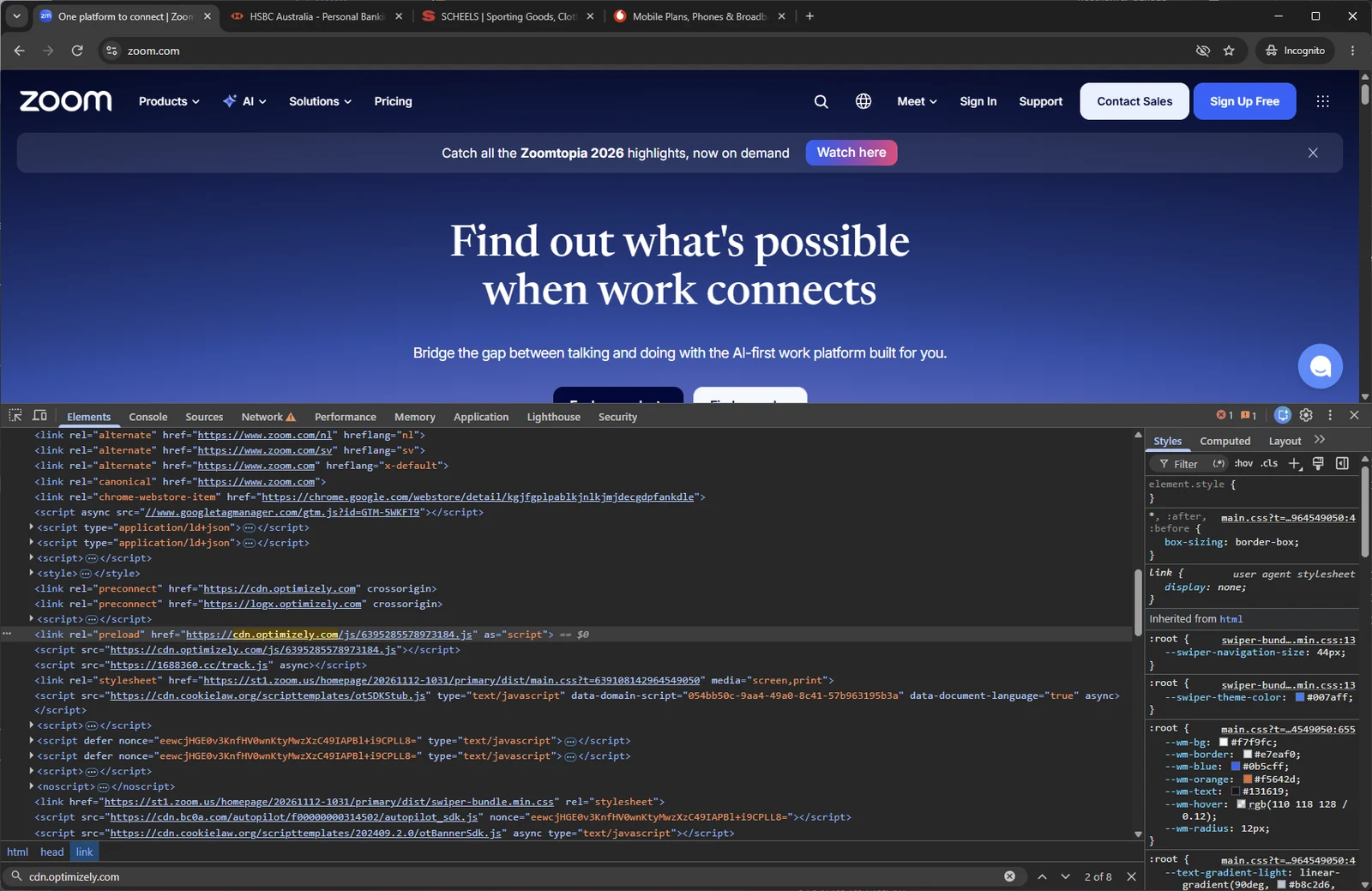
iPhone and iPad users running older software got hit with hidden exploit kits too, right on the heels of Brave warning users about zero-click AdFection spyware attacks that infect devices through regular ad slots.
Brave jumped into the conversation on X to point out that “Brave Shields would have blocked the card skimmer from sending stolen card data to the attackers.” The team has now blocked all 11 domains used by the hackers and shipped a clever workaround that swaps Optimizely’s tracking script with a harmless dummy version.
As the company explained in its thread, “The replacement blocks injected code from running and stops Optimizely from tracking you, while keeping pages working.”
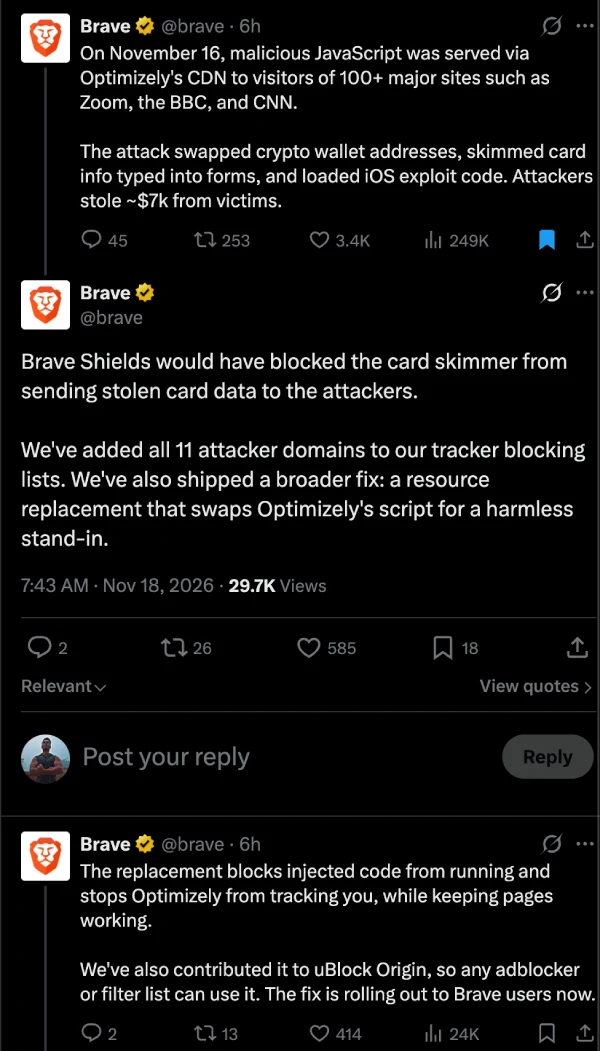
They also shared this fix directly with uBlock Origin so other ad blockers can protect their users too, which is great to see while Brave is building a uBlock-style network logger in DevTools for folks who want to see which scripts get blocked on a page.


Dwayne Cubbins
3217 Posts
I cover fast-moving stories across apps, online platforms, and everyday tech — phones, wearables, consoles, and whatever else people are fighting with this week. Bugs, rollouts, scams, policy enforcement, and the occasional internet-culture rabbit hole are all fair game. My goal is simple — make confusing tech news readable. When I'm not working, I'm working out or chilling with my dog. Got a tip? You can find me on X @dcubbins.