



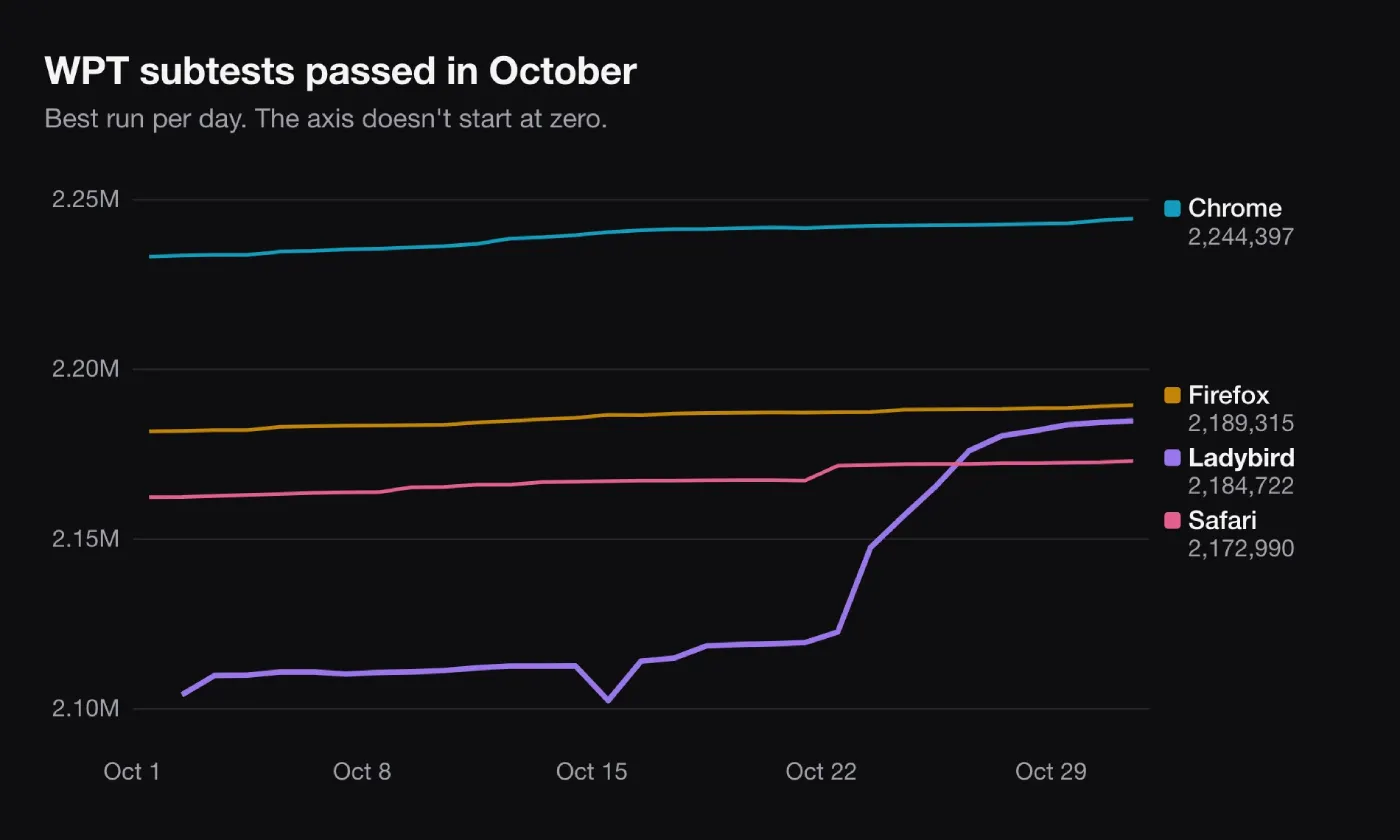
Ladybird just dropped its October 2026 newsletter, and the independent browser has officially passed Apple’s Safari Technology Preview on Web Platform Tests.
That jump came in just five days, after developers used AI coding agents to fill in gaps across CSS and text editing in the test suite, pushing the score past 2.18 million subtests.
Passing Safari on paper is a huge bragging right, but the real win this month is how the browser handles heavy websites without freezing up.
Most browsers run JavaScript, styling, and page layout on a single thread, which is why a poorly optimized script locks up the whole page. Ladybird moved styling and layout onto their own separate thread so animations and mouse hovers keep working while heavy scripts run.
“As far as we know, no other browser can do this today,” the team noted. Before this, we had also highlighted recent work on the browser to keep scrolling and text selection smooth during JavaScript freezes.
For a long time, the developers also resisted building a Just-In-Time compiler for JavaScript and tried squeezing as much speed out of their basic interpreter as possible. They finally caved this month after realizing that cutting a 300ms hang in half still leaves a noticeable stutter.
“The design is deliberately boring,” the developers explained, adding that “for now, we just want to go reasonably fast.” Paired with a new Rust WebAssembly engine, speeds have jumped across the board, and YouTube video playback now works properly on Windows too.
The browser also got its first complete visual overhaul so the interface stays quiet and out of your way. You now get tab search, pinned tabs, and a sleek violet dark theme for the private windows and profiles added in July.
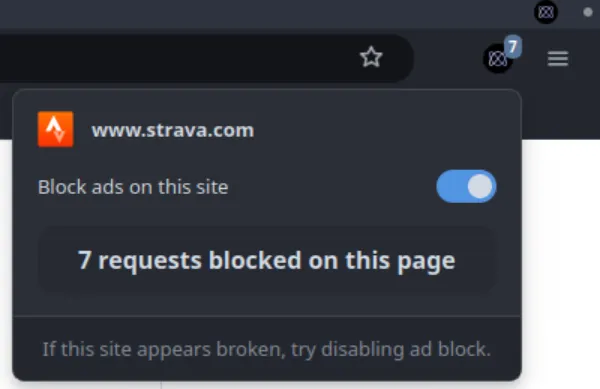
Building on the auto-updating ad filters and AI security fixes from September, there is a new welcome page and a quick toolbar toggle to disable ad blocking per site.
With macOS archives and Linux packages now being built alongside a new broken-site reporter, early testers will not have to compile the browser from source much longer as the first alpha approaches later this year.


Dwayne Cubbins
3187 Posts
I cover fast-moving stories across apps, online platforms, and everyday tech — phones, wearables, consoles, and whatever else people are fighting with this week. Bugs, rollouts, scams, policy enforcement, and the occasional internet-culture rabbit hole are all fair game. My goal is simple — make confusing tech news readable. When I'm not working, I'm working out or chilling with my dog. Got a tip? You can find me on X @dcubbins.