



If fresh data from Statcounter is anything to go by, then it looks like Google Chrome is already clawing back the ground it supposedly lost in October’s browser market share report.
After sliding to around 65% on desktop in September while Edge and Safari surged, Chrome climbed right back up to 66.98% on desktop and 68.81% across all platforms combined.
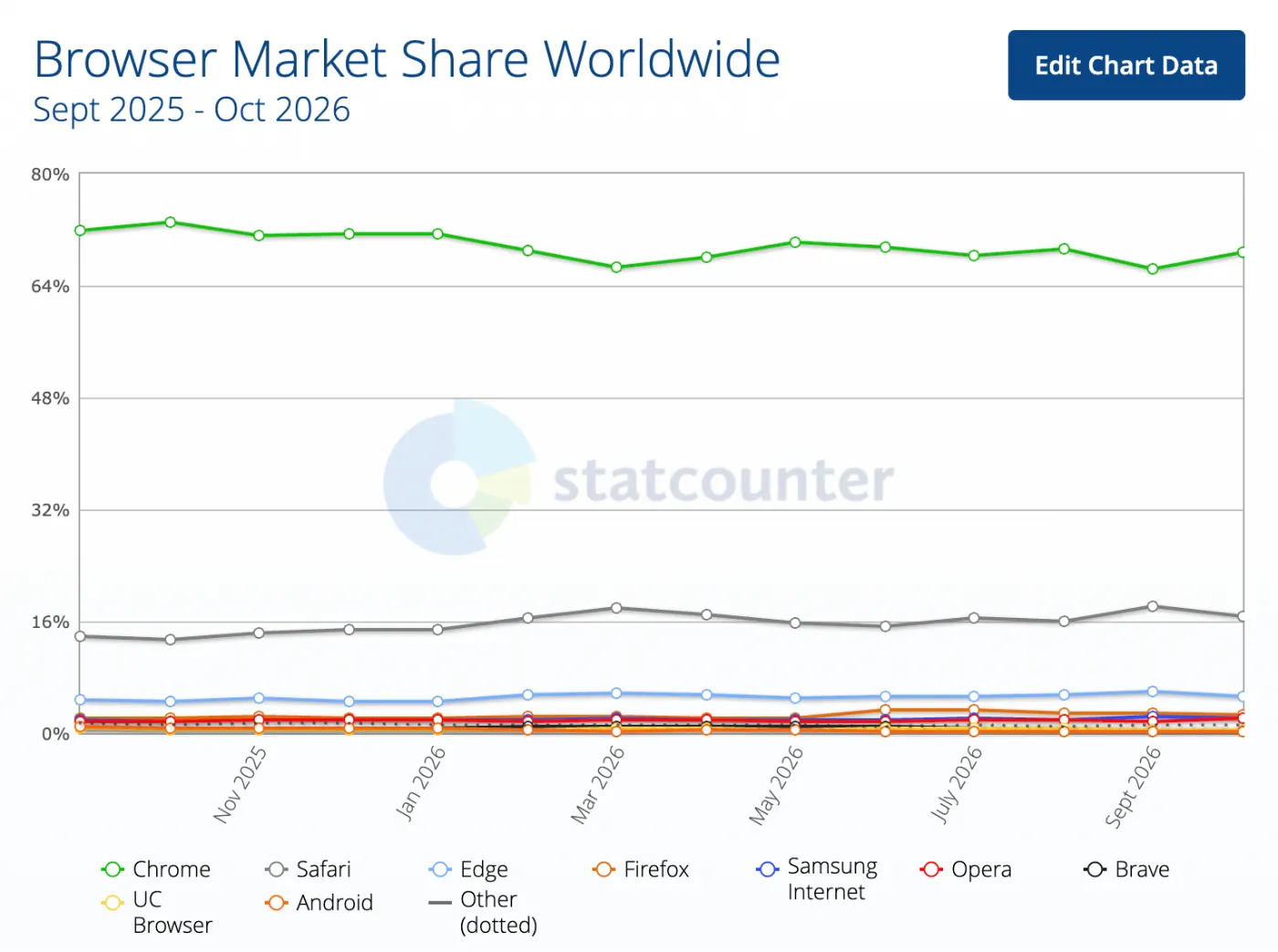
Microsoft Edge went the other way by dropping from 14.64% to 13.24% on desktop and slipping from 6.02% to 5.33% overall. Apple’s Safari also pulled back to 7.83% on desktop and fell from 18.2% to 16.6% across all devices, while Opera nudged up to 2.65% on desktop and 2.16% overall.
Firefox dipped as well in October, falling from 6.09% to 5.72% on desktop and down to 2.56% across all platforms. That continues a gradual cool-off after Firefox briefly edged past Safari on desktop in June and picked up more traction in July when it hit 6.43%.
That said, we’d advise you to take all of these figures with a huge grain of salt because they are rough estimates at best. Statcounter relies on tracking scripts installed on a limited pool of websites, so ad blockers or a minor tweak in bot filtering can easily throw the numbers off from month to month.
Folks in a Reddit discussion wondered if Firefox’s dip came from users jumping to newer options like Zen Browser, though another user noted that “Zen still use Firefox UA, means it will identify as Firefox” along with other forks.

Meanwhile, the OP argued that Firefox “recently lost many old users” and suggested the Nova redesign might backfire, even as Chrome and Edge dropping Manifest V2 extensions still hasn’t loosened Google’s grip on most regular users.


Dwayne Cubbins
3170 Posts
I cover fast-moving stories across apps, online platforms, and everyday tech — phones, wearables, consoles, and whatever else people are fighting with this week. Bugs, rollouts, scams, policy enforcement, and the occasional internet-culture rabbit hole are all fair game. My goal is simple — make confusing tech news readable. When I'm not working, I'm working out or chilling with my dog. Got a tip? You can find me on X @dcubbins.