






The latest numbers on the usage of desktop browsers from Statcounter have arrived, and according to them, Google Chrome had a rather eventful September.
According to the tracker, Chrome’s market share dropped from about 73% to 65.09% between August and September this year. An 8% drop in a month is unusual, so the big question is: where did those users go? Turns out, Microsoft Edge picked up most of the lost share, rising from about 10.5% to 14.64%. Safari and Firefox (6.1%) also saw noticeable increases.
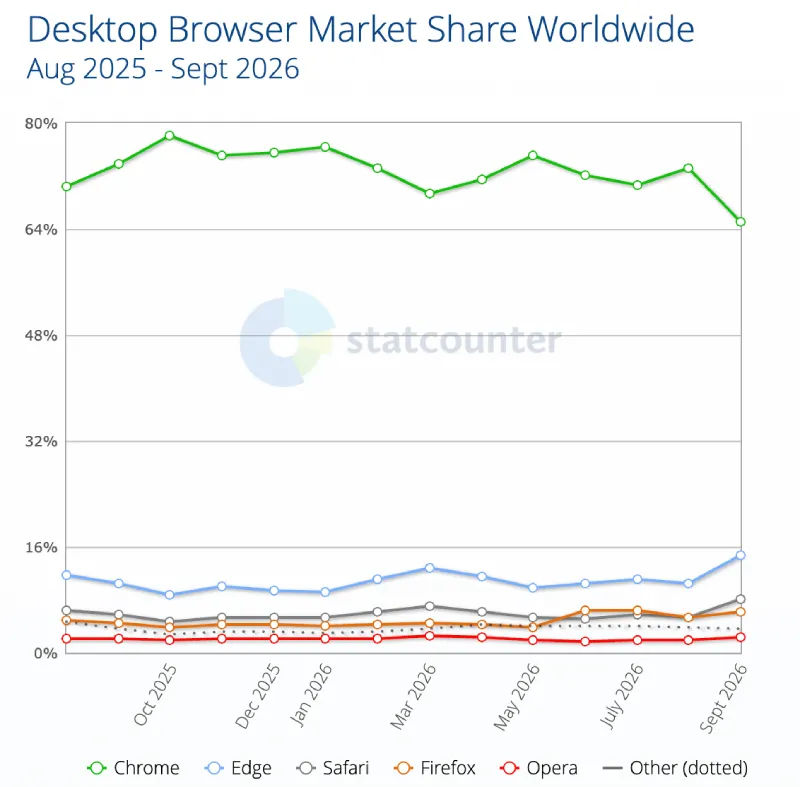
This shift happened just as Microsoft won a major antitrust case in the EU courts, where it had faced accusations of trying to monopolize the digital advertising market. But even EU regulators had to admit that Microsoft Edge had been an “insignificant threat” to Google Chrome for years because it never became popular enough with users.
If these numbers are even somewhat accurate, they suggest that many people could be switching browsers all at once.
However, anyone who has been following the statistics closely enough knows that there is no way these numbers can be completely correct.
Statcounter does not track the usage on all computers in the world, and neither do any other services, which is why sudden jumps and drops should always raise an eyebrow.
According to Statcounter’s FAQ, the numbers result from aggregating traffic from a select group of partner websites.
This means any change in these sites’ behavior, or any issues with bot filtering, can cause a sudden hiccup in the data, and neither users nor the companies can do anything about it.
That’s why folks in a discussion thread about the numbers are also skeptical about the data’s accuracy.
Still, even if the exact numbers are wrong, people might be switching browsers, especially given that Google booted MV2 extensions from the Web Store and Chrome. Hardcore uBlock Origin users might be looking at alternatives that let them keep using the extension.
For a more detailed look at the numbers of all major browsers, check out the image below that we created after extracting the data from Statcounter.
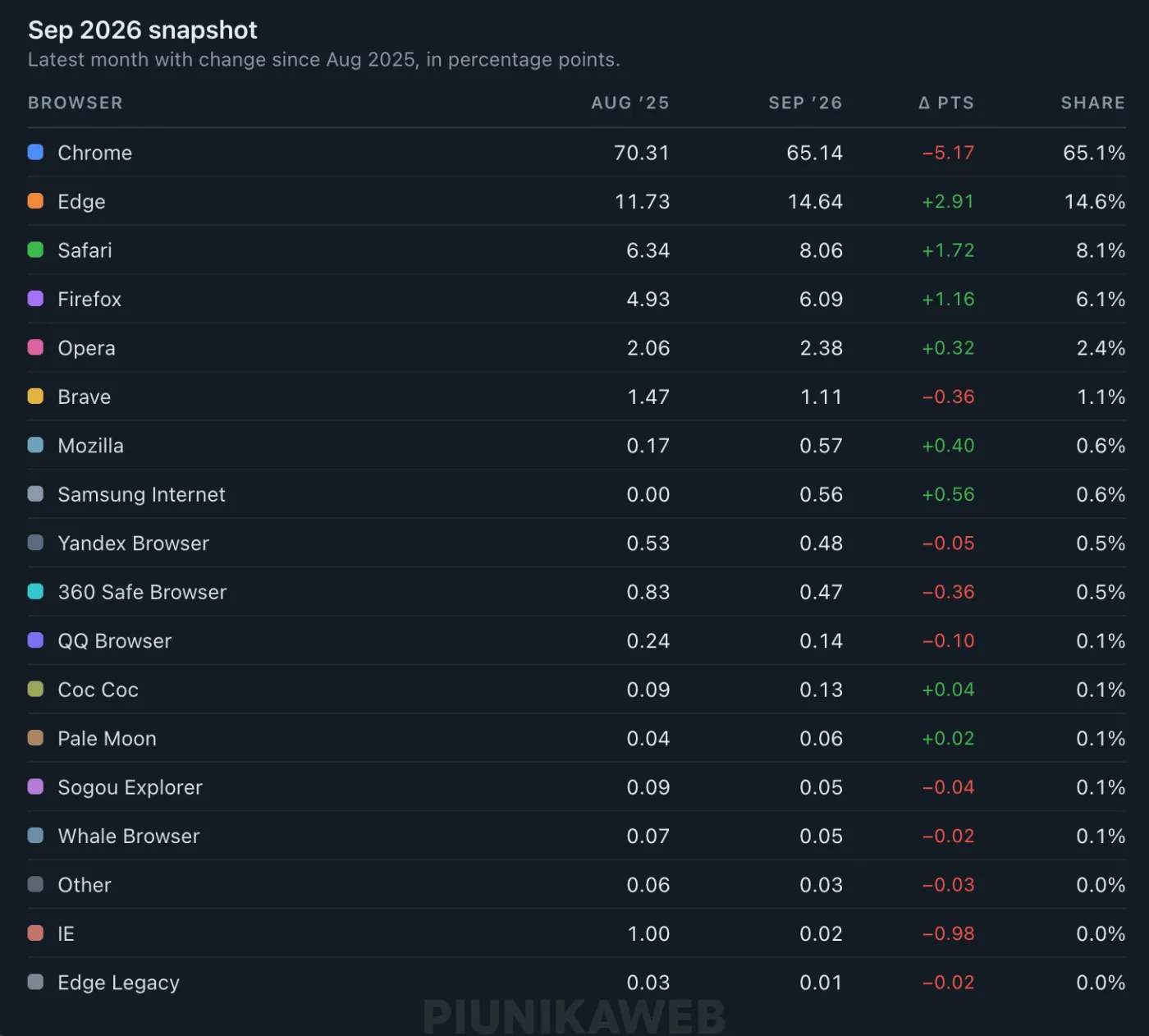
That said, we have seen similar fluctuations before, most recently in Firefox following closely on the heels of Safari, and none of them signified any particular change in people’s browsing habits. In any case, this is fun to discuss, but it seems unlikely that this fluctuation indicates any major change in the real world. It will be interesting to see what numbers the tracker reports next month.
Here’s the crux of the article in video form:


Dwayne Cubbins
3078 Posts
I cover fast-moving stories across apps, online platforms, and everyday tech — phones, wearables, consoles, and whatever else people are fighting with this week. Bugs, rollouts, scams, policy enforcement, and the occasional internet-culture rabbit hole are all fair game. My goal is simple — make confusing tech news readable. When I'm not working, I'm working out or chilling with my dog. Got a tip? You can find me on X @dcubbins.