
Microsoft just had a real Thanos moment in European court. Did it beat the antitrust regulators? Yes. What did it cost? Edge’s entire dignity, with the company having to prove its browser is too irrelevant to be a threat.
The case started because Opera challenged the European Commission’s decision to leave Microsoft’s browser out of the Digital Markets Act’s gatekeepers list in 2024. The Norwegian browser maker argued that Edge is preinstalled on Windows and gets pushed throughout the OS and therefore filed a complaint with the EU General Court.
Opera put forth Microsoft’s history with Internet Explorer, arguing that “Edge, like Internet Explorer before it, is the gatekeeper through which users on Windows must pass to download” competing browsers.
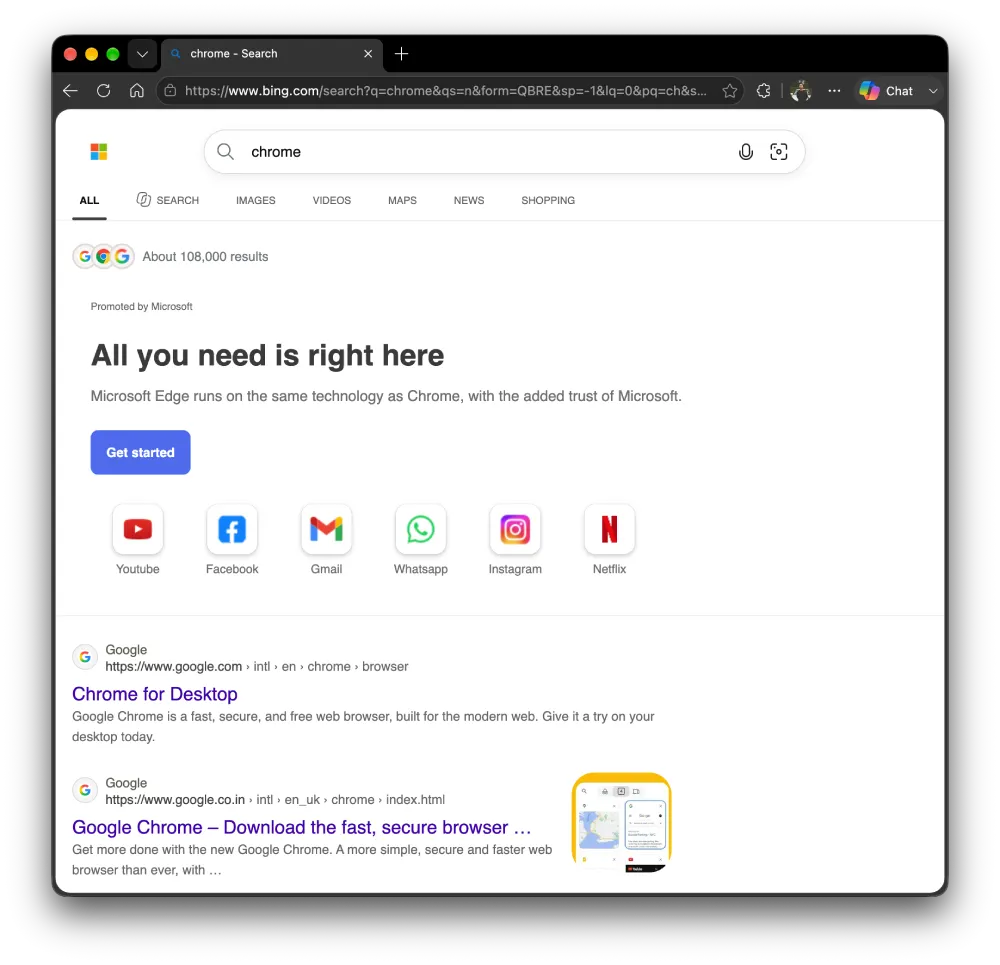
That said, this argument has some holes. Even though Edge may be preinstalled on Windows, that doesn’t mean everyone on Windows uses Edge. Every user can easily switch to their preferred browser within just a few clicks.
This is exactly what Microsoft proved in court. The company pointed to browser usage data showing Edge had just a 5.8% share of page views across devices in Europe. So despite being preinstalled, Edge has a very low market share in the region. In fact, as we reported last month, Edge is seemingly losing market share to the likes of Firefox.
According to data shared in court, Microsoft’s Edge still had a double-digit market share in the region, but those numbers only took into account desktop users. Once the figures were adjusted for mobile users too, the numbers dropped. All this makes it hard to call Edge a “gatekeeper.”
So it’s no surprise that the EU General Court ruled the Commission had not made an error by accepting Microsoft’s “sufficiently substantiated arguments to demonstrate that Edge did not constitute an important gateway.”
Adding to that, the court also dismissed Opera’s claims about Microsoft’s control over the browser, since the company uses Google’s Blink engine to power Edge through the Chromium project, and not its own proprietary engine. This is hardly proof of Microsoft controlling any part of the web experience.
Opera can still appeal the decision to the Court of Justice of the EU. For now, Microsoft’s Edge browser will remain outside the DMA rules.
Full case details: T‑357/24 Opera Norway v Commission.


Dwayne Cubbins
3101 Posts
I cover fast-moving stories across apps, online platforms, and everyday tech — phones, wearables, consoles, and whatever else people are fighting with this week. Bugs, rollouts, scams, policy enforcement, and the occasional internet-culture rabbit hole are all fair game. My goal is simple — make confusing tech news readable. When I'm not working, I'm working out or chilling with my dog. Got a tip? You can find me on X @dcubbins.
Next article View Article