


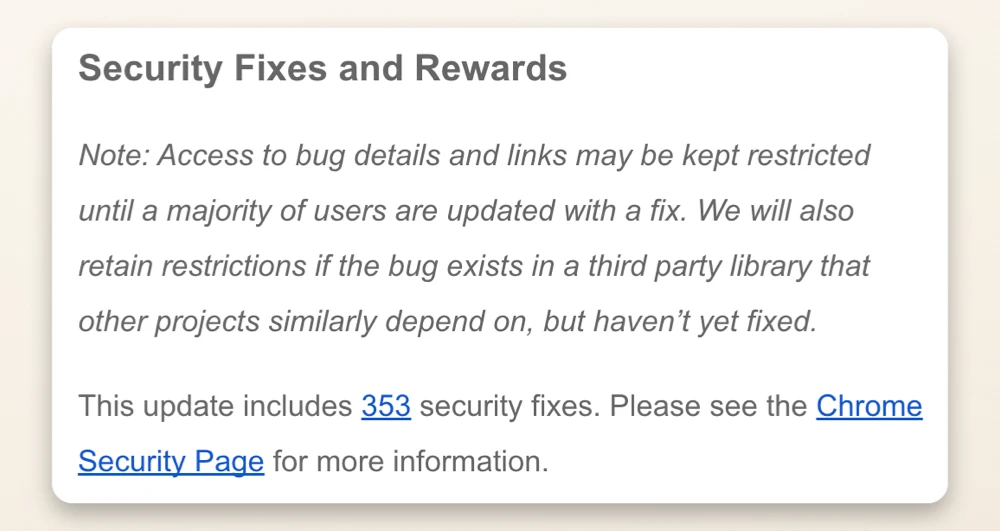
Google has finally rolled out Chrome 156 to the public, and it comes with a plethora of security fixes. In total, it addresses 353 issues, making it a huge release compared to the previous update that brought a mere 10 security fixes.
If you use Chrome on Windows, Mac, or Linux, you will want to grab version 156.0.8078.47 or .48 as soon as it hits your machine. Android users are also getting the same Chrome 156 update through the Play Store over the next few days, carrying the exact same security patches under the hood.
Out of the 350-plus bugs squashed this week, six are marked as critical. These are nasty memory flaws where visiting a rigged webpage could theoretically let a hacker crash your browser and run malicious code on your computer without you clicking a thing.
Unsurprisingly, researchers at Anthropic flagged multiple of these security issues using Claude, alongside OpenAI’s Codex Security team.
It is wild how fast AI is finding these vulnerabilities now, which explains why Google is also using Gemini AI to sniff out fake antivirus warnings and phishing traps before they reach you.
As usual, Google is keeping the exact technical details of the bugs locked down for now, noting that “access to bug details and links may be kept restricted until a majority of users are updated with a fix.”
They also handed out thousands of dollars in bounty rewards to independent researchers, including a $10,000 payout for a single flaw in the browser’s site isolation system.
Between this massive patch drop and the emergency move where Chrome and Firefox blocked flawed eMudhra security certificates over the weekend, browser security teams are clearly working overtime right now.


Dwayne Cubbins
3135 Posts
I cover fast-moving stories across apps, online platforms, and everyday tech — phones, wearables, consoles, and whatever else people are fighting with this week. Bugs, rollouts, scams, policy enforcement, and the occasional internet-culture rabbit hole are all fair game. My goal is simple — make confusing tech news readable. When I'm not working, I'm working out or chilling with my dog. Got a tip? You can find me on X @dcubbins.