






If you use Brave on your computer, head to Settings and download the latest desktop version. The browser is officially moving to version 1.97. We’ve already covered the Mac crash fixes and private screenshot protections in this update, but there’s another major addition tucked in as well.
With this release, Brave now supports JPEG XL images right out of the box. That means you no longer have to dig through experimental flags or toggle developer settings just to view a .jxl graphic on the web.
Interestingly, the official release notes didn’t mention JPEG XL support. Instead, the team posted about it on X.
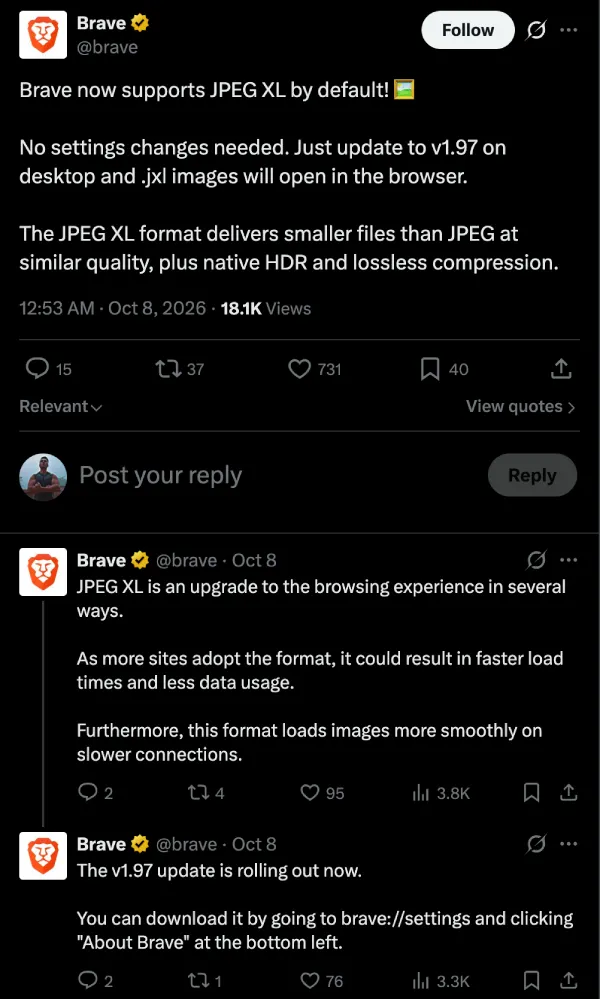
The timing makes sense once you look under the hood. Brave is built largely on the open-source Chromium engine, and this update brings its desktop browser up to Chromium 155. We saw it coming as Google began rolling out Chrome 155, which finally enables native JPEG XL decoding. Since Brave shares the same foundation, desktop users get the upgrade without waiting for custom development.
If you aren’t familiar with the codec, JPEG XL is essentially designed to replace the ancient JPEG standard we have lived with for decades. According to Brave, the format delivers “smaller files than JPEG at similar quality, plus native HDR and lossless compression.”

So web pages can load lighter images without sacrificing sharp details or vibrant colors on modern displays. Brave also pointed out that the format “loads images more smoothly on slower connections,” so you should notice far less stutter when scrolling through media-heavy sites.
This rollout comes as other mainstream browsers make the same move. Just recently, Firefox 157 brought out-of-the-box JPEG XL support to its desktop users.


Dwayne Cubbins
3098 Posts
I cover fast-moving stories across apps, online platforms, and everyday tech — phones, wearables, consoles, and whatever else people are fighting with this week. Bugs, rollouts, scams, policy enforcement, and the occasional internet-culture rabbit hole are all fair game. My goal is simple — make confusing tech news readable. When I'm not working, I'm working out or chilling with my dog. Got a tip? You can find me on X @dcubbins.