





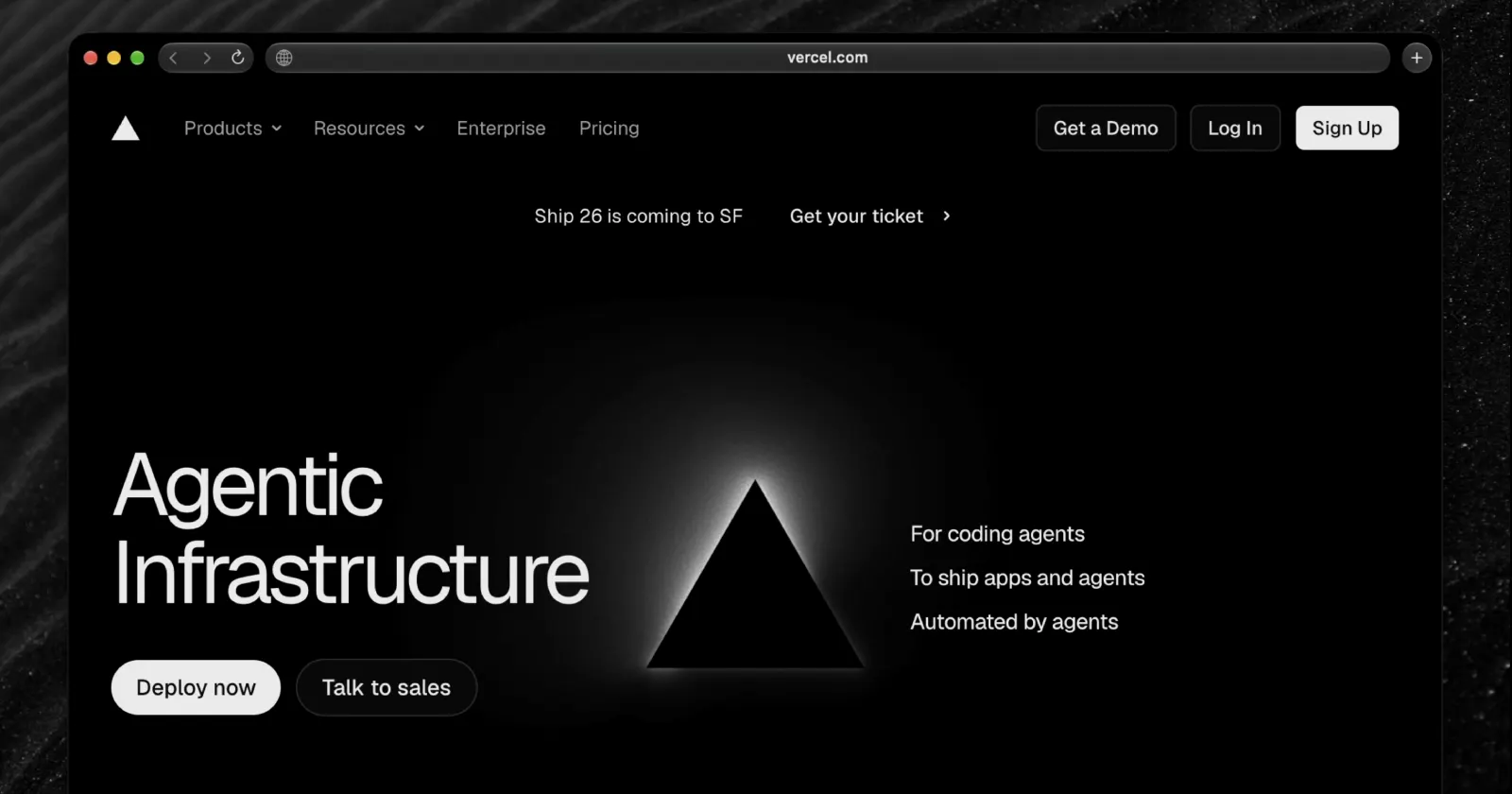
Guillermo Rauch, CEO of Vercel, decided to rewrite his personal web browser experiment called Mini, and the way he went about it is actually interesting to anyone who cares about performance.
He initially built the browser with Electron and Bun, the obvious shortcut most developers take if they want to build a desktop application without going crazy. However, Rauch opted to port Mini to Rust and Swift, rather than use the web app in a box approach.
He posted on X that the new native alternative was faster and more secure than the original Electron stack, and surprisingly simple to iterate on.
I personally like the look of it; it is minimalist, removes visual clutter, and embraces a Liquid Glass aesthetic that looks right at home on macOS.
The Mac aesthetic usually comes at the cost of either the Chromium engine or WebKit, but Rauch used the CEF crate to embed an up-to-date Chromium rendering in Mini. The window controls and focus behavior are purely native in Swift, allowing for more fine-grained focus and input handling than JavaScript ever allowed.
Building a browser from the ground up is notoriously difficult for a good reason, and even in the age of AI-assisted development, it takes a lot of time and effort to throw together something like Chrome or Firefox. We recently covered how DHH praised Ladybird for attempting to build a browser from the ground up on the Lex Fridman podcast.
Rauch took a more pragmatic route for his personal project, using Chromium to handle web standards while native code handles the shell. Additionally, he managed to implement an AI assistant without bloating the app in the process.
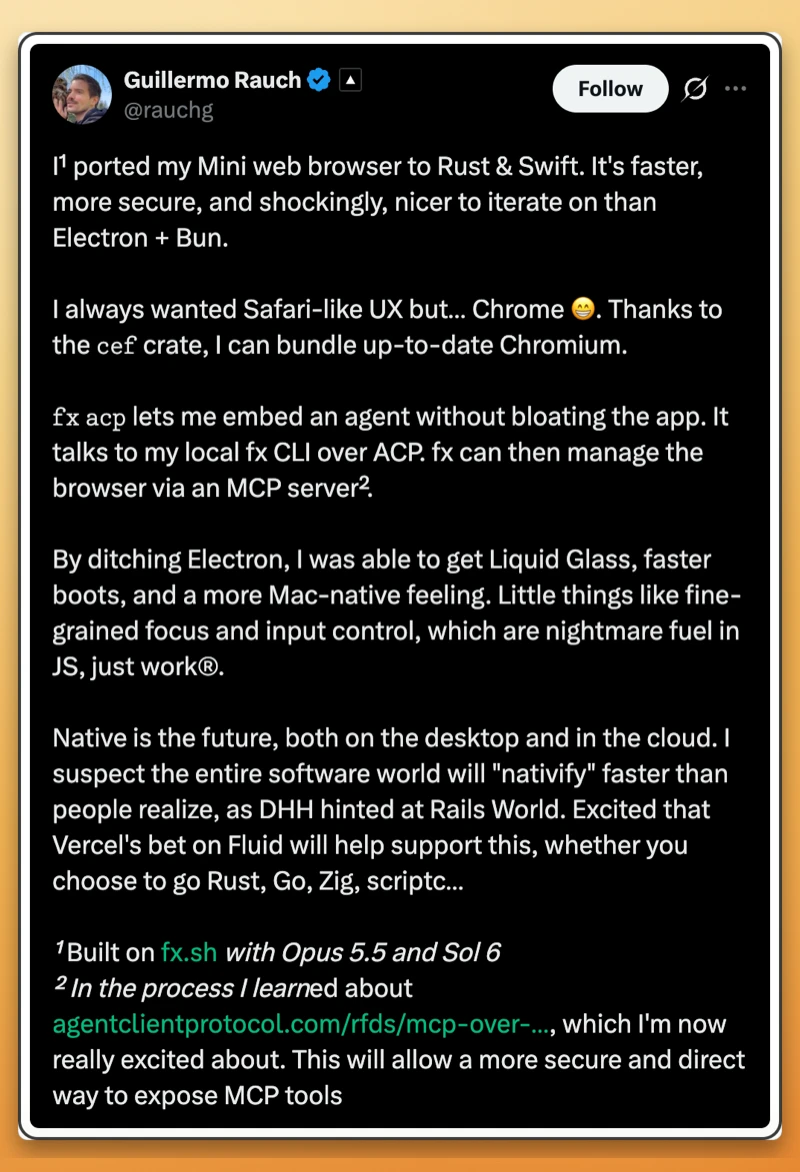
I¹ ported my Mini web browser to Rust & Swift. It’s faster, more secure, and shockingly, nicer to iterate on than Electron + Bun.
I always wanted Safari-like UX but… Chrome 😁. Thanks to the 𝚌𝚎𝚏 crate, I can bundle up-to-date Chromium.
𝚏𝚡 𝚊𝚌𝚙 lets me embed an agent… pic.twitter.com/bFhDtgyrhx
— Guillermo Rauch (@rauchg) September 28, 2026
Mini communicates with a local command-line tool over the Agent Client Protocol, which allows an embedded Claude model to read pages and silently open new background tabs via an MCP server.
This is similar to our recent coverage of Microsoft Edge testing WebMCP to allow AI bots to fill out forms and navigate websites.
Before going and trying to download Mini, it is worth noting that the tool is not available for download, and Rauch has not indicated any public release is in the works.
However, his thoughts about native apps making a comeback on both the desktop and the cloud really hit the nail on the head. Mini is just one example of how modern browsing can be performed while dropping the Electron tax, and hopefully, more independent browser developers take notice.


Dwayne Cubbins
3058 Posts
I cover fast-moving stories across apps, online platforms, and everyday tech — phones, wearables, consoles, and whatever else people are fighting with this week. Bugs, rollouts, scams, policy enforcement, and the occasional internet-culture rabbit hole are all fair game. My goal is simple — make confusing tech news readable. When I'm not working, I'm working out or chilling with my dog. Got a tip? You can find me on X @dcubbins.