






Right now, most AI agents trying to browse the web act a bit like toddlers with a mouse. They keep taking screenshots, get confused by complex web code, and just hope they don’t click the wrong pop-up.
Microsoft thinks there’s a much easier way to handle these problems. In a fresh developer blog post, the Edge team introduced experimental support for WebMCP, an open web standard that lets websites talk directly to AI assistants. The goal is for Microsoft Edge to let AI bots fill out forms and click buttons for you, so you don’t have to.
If you’ve been following our coverage, you’ll know Brave also began testing WebMCP support roughly a month ago.
The push stems from the simple fact that AI agents are poor at navigating web pages like you and me would. When you watch one in action, you’ll see that most can’t handle simple dropdown menus, often misread buttons, or get lost on tricky checkout pages.
That is where WebMCP comes in. The experimental web API is meant to bridge the gap between websites and browsing bots.
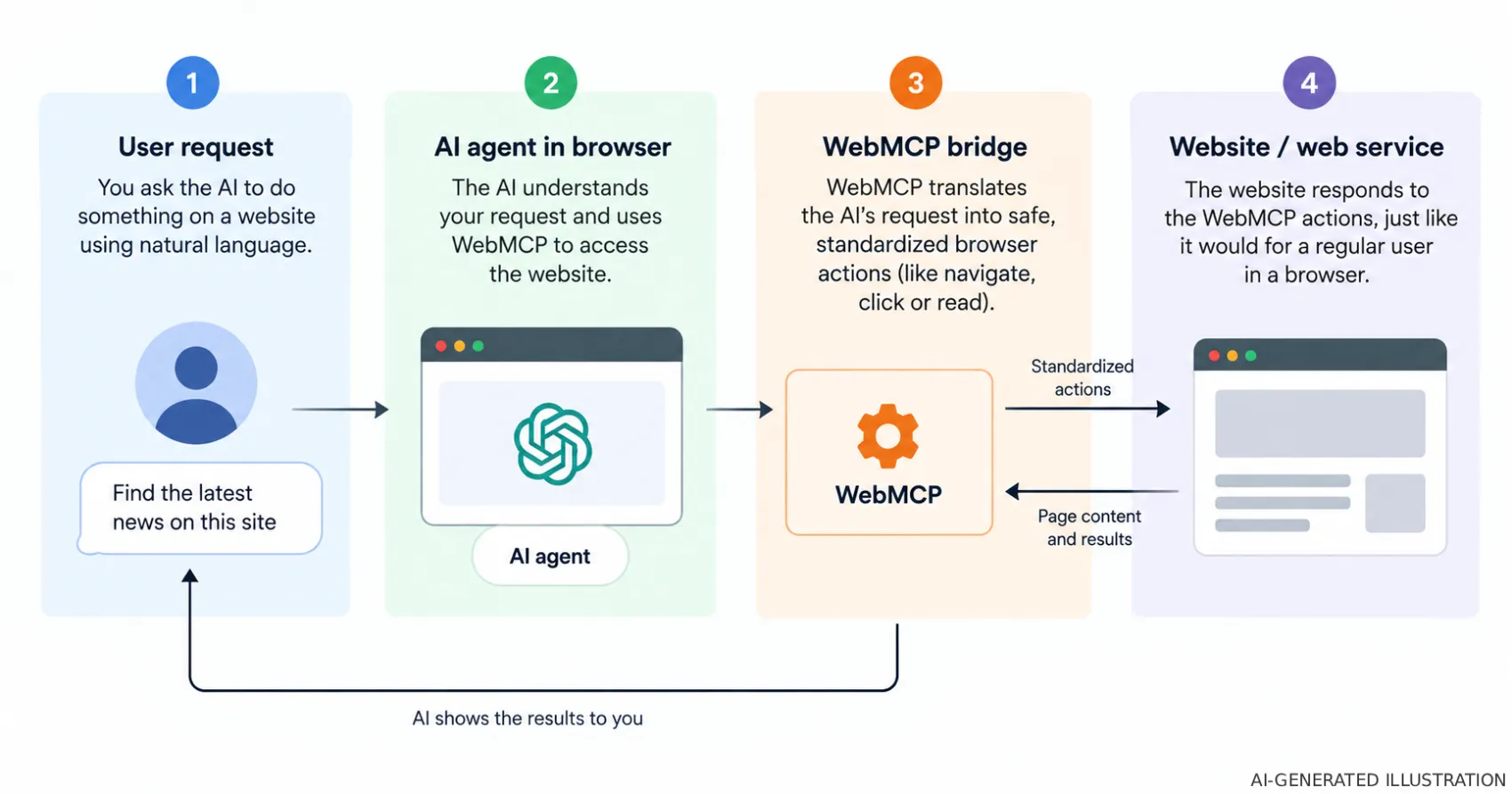
Here’s a simplified explanation of how it works. Instead of making the AI guess where to click, website creators can use WebMCP to show their front-end code directly to the bot.
Microsoft says developers can use their existing code and “present it in the form of structured tools which a browsing agent can then use to assist users in carrying out tasks on your site.” So if you want an AI to order dinner or fill out a long, boring form, the website can just give the agent a direct shortcut to do the job in the background. You won’t have to pretend to be a human quickly clicking through everything anymore.
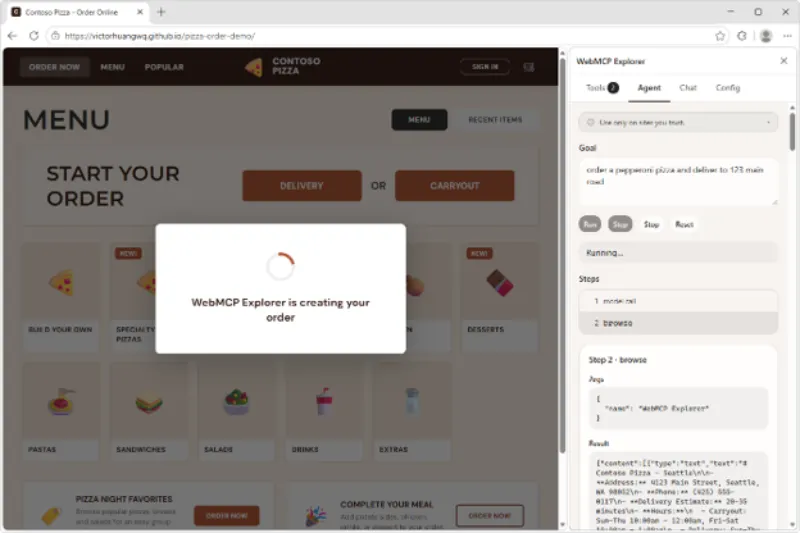
The objective is to create efficient, fast, and trustworthy ways for humans and agents to work together online. They even have a few demo sites, like one involving ordering pizza, in which a sidebar agent handles the entire purchase for you.
Edge has already been testing an AI feature that lets it diagnose and repair browser issues directly from the settings page. So it’s no surprise that the company is looking for ways to make the AI in its browser more helpful, instead of leaving it as a glorified chatbot.
Meanwhile, the Edge team has been focused on figuring out how third-party tools interact with the browser. They recently started turning off older Manifest V2 extensions in Canary for some users and put an automated review process in place for extension submissions to keep up with the influx of AI-generated add-ons. The browser ecosystem is changing rapidly.
WebMCP is still in the early stages of testing, and developers will have to add support to their sites before it appears in practice. However, if it becomes widespread throughout Chromium, we may finally be done having to look after AIs as they make mistakes when filling in form fields.


Dwayne Cubbins
3041 Posts
I cover fast-moving stories across apps, online platforms, and everyday tech — phones, wearables, consoles, and whatever else people are fighting with this week. Bugs, rollouts, scams, policy enforcement, and the occasional internet-culture rabbit hole are all fair game. My goal is simple — make confusing tech news readable. When I'm not working, I'm working out or chilling with my dog. Got a tip? You can find me on X @dcubbins.