It looks like the folks at Brave are gearing up to make the browser’s Leo AI assistant more than just a chatbot for summarizing web pages. The company has begun testing WebMCP support, which lets websites talk directly to Leo, in its Nightly builds.
For some context, WebMCP stands for Model Context Protocol for the web. This protocol allows website developers to expose specific controls and actions directly to AI agents intentionally. So instead of an AI, let’s say Leo in this case, struggling to navigate a page like a human would by glancing at everything on the page, Leo can just directly talk to the website and perform actions.
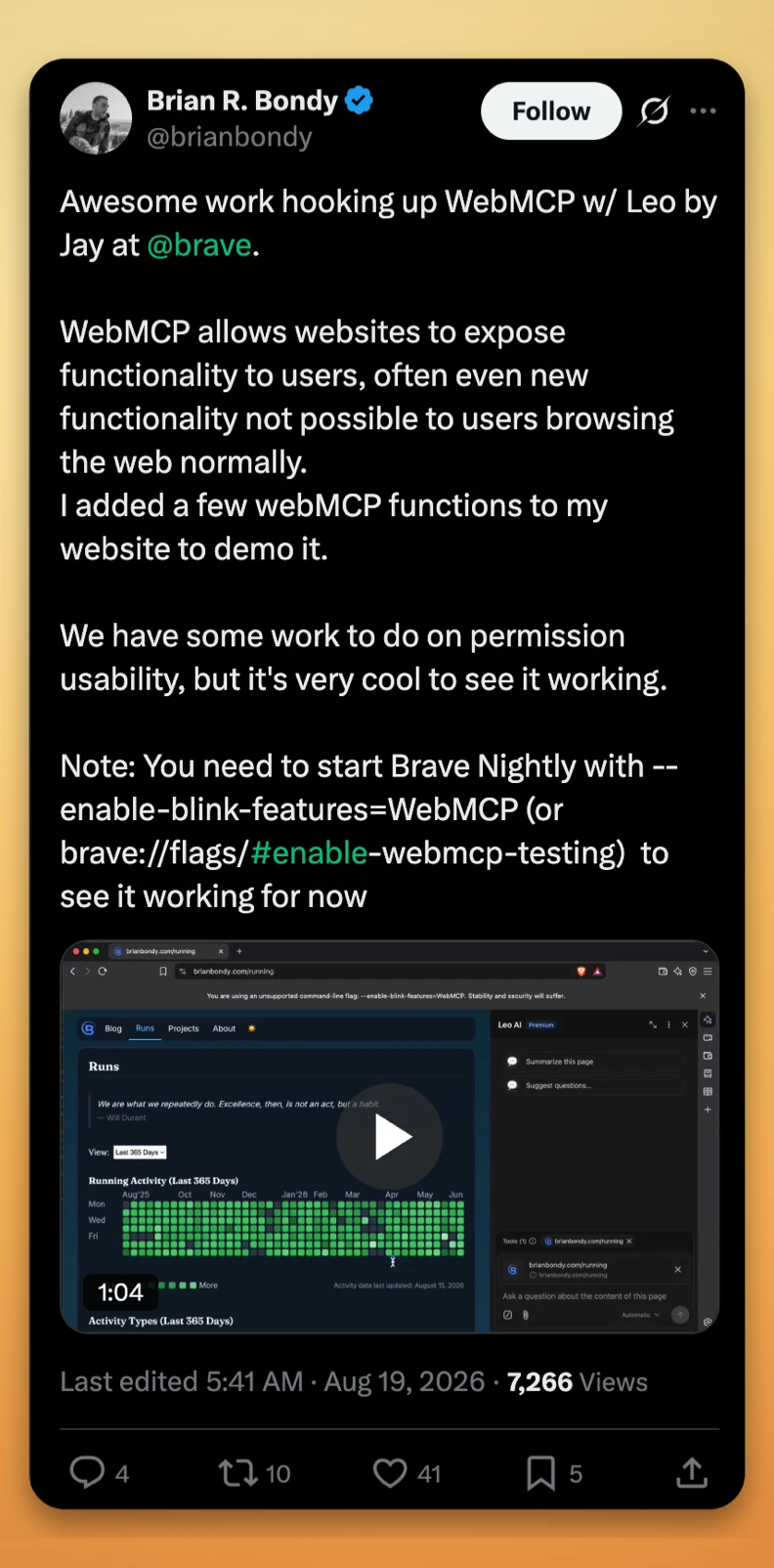
Brave co-founder and CTO Brian Bondy highlighted the new addition in Brave Nightly with a post on X that includes a clip of Leo interacting with his own blog. He asks Leo to switch the site to light mode, filter his running stats by elevation, and even trigger a stick figure animation on the page.
Awesome work hooking up WebMCP w/ Leo by Jay at @brave.
WebMCP allows websites to expose functionality to users, often even new functionality not possible to users browsing the web normally.
I added a few webMCP functions to my website to demo it.We have some work to do on… pic.twitter.com/ttBL0EYoX5
— Brian R. Bondy (@brianbondy) August 19, 2026
As you can see in the video, Leo is able to interact with the page and control it directly.
In his post, Bondy said, “WebMCP allows websites to expose functionality to users, often even new functionality not possible to users browsing the web normally.”
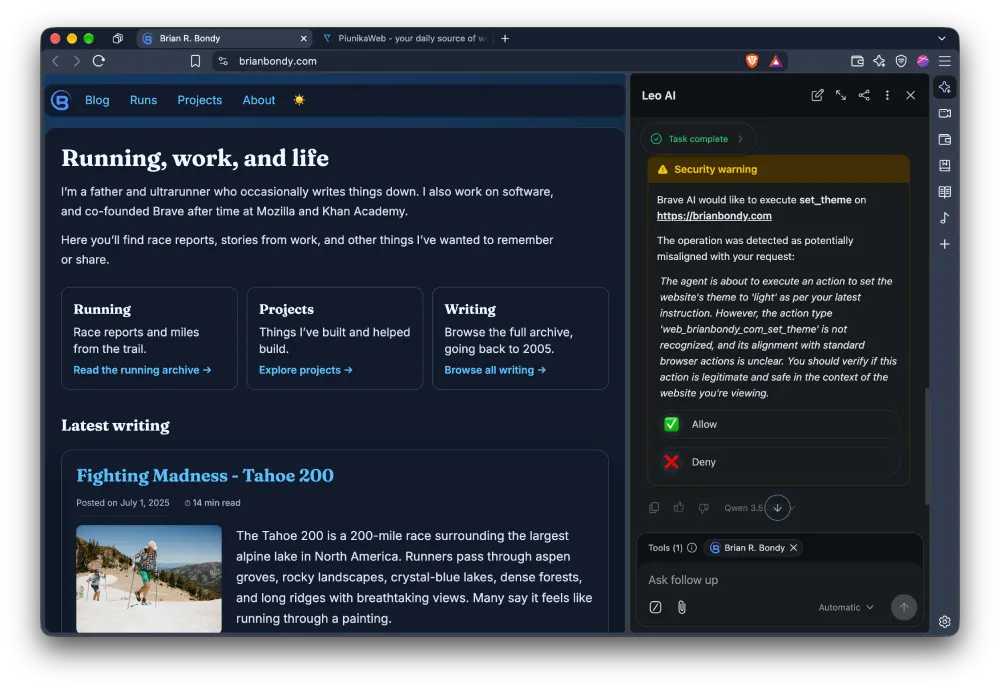
I also installed the latest Brave Nightly build to give this a try. I headed to Bondy’s blog (since it’s built with WebMCP support) and also asked Leo to change the site’s theme from dark mode to light mode. There was a security pop-up that asked if I wanted to allow the AI to run the action or deny it.
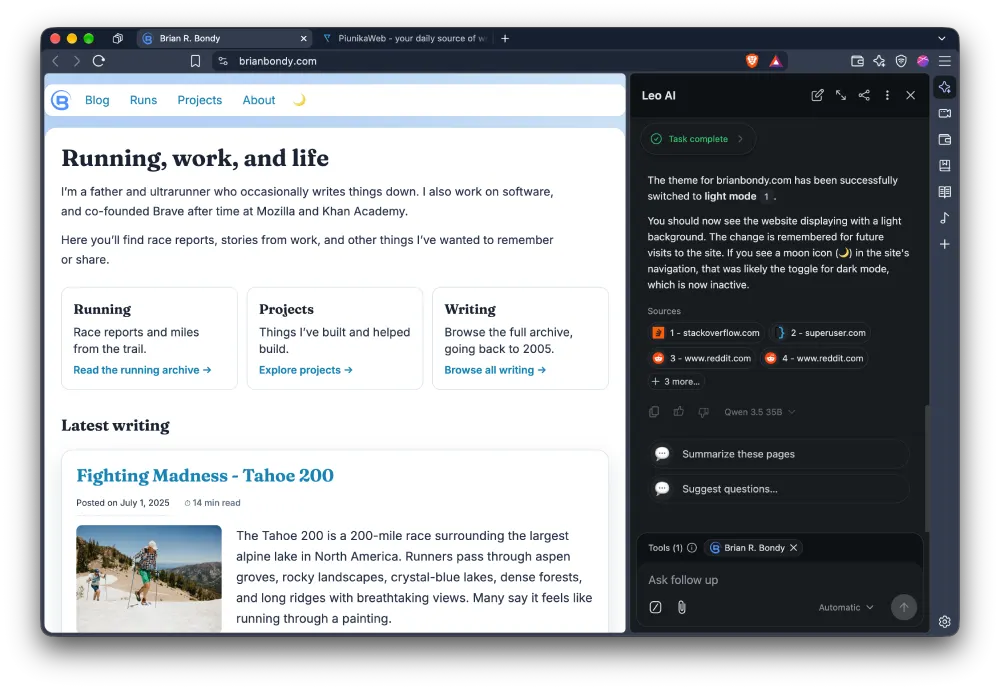
Once accepted, the site almost immediately switched to light mode. There was no struggle you’d typically see with the AI trying to figure out where to find the light mode toggle on the page. It just worked.
Meanwhile, Brave has also been busy elsewhere. The browser maker recently added default protection against GPU fingerprinting and even launched an alternative to Google Maps with its own place search API.
For now, it is only available in the Nightly channel, so most users will have to wait for the feature to land in the stable version. If it gains enough adoption, interacting with web pages using an AI assistant will become significantly faster and more intuitive.


Dwayne Cubbins
3064 Posts
I cover fast-moving stories across apps, online platforms, and everyday tech — phones, wearables, consoles, and whatever else people are fighting with this week. Bugs, rollouts, scams, policy enforcement, and the occasional internet-culture rabbit hole are all fair game. My goal is simple — make confusing tech news readable. When I'm not working, I'm working out or chilling with my dog. Got a tip? You can find me on X @dcubbins.
Next article View Article