






Mozilla has long advocated for open-source AI and has now invested significant money and resources in the field. At Canada’s biggest AI event, ALL IN, Mozilla and the Montreal research institute Mila announced a joint project to help ordinary organizations implement their own advanced AI rather than renting it from just a few large American technology companies.
What’s interesting is that the Canadian government is backing the new project. This is noteworthy since most of the activity occurs in private cloud data centers. In a blog post, Mozilla says it provided initial funding of $5 million and is serving as a technical partner. Mila is responsible for the engineering.
But that’s not all. A Canadian company, Hypertec, is contributing an additional $1 million to help get the joint operations off the ground on its own hardware.
The Firefox maker notes that the objective is to “make owning your AI as easy as renting it.” According to them, the challenge of using open-source models was never creating the models themselves. Instead, it was adapting them for each hospital, factory floor, or local charity that wants to use day-to-day AI, which requires an engineering team that most do not possess.
It’s also worth noting that this isn’t the first time Mozilla has floated the prospect of the underdogs joining forces against the tech giants. In July, we reported that President Mark Surman was advocating an open-source AI “rebel alliance” led by Canada and the EU. This announcement may have been the first with actual funding, but the idea was not new.
Evan Solomon, Canada’s minister for artificial intelligence, framed the issue as one of independence. “Canada has the option of relying on technologies developed elsewhere or of building more of what we need right here at home,” he stated.
There is a real challenge at the heart of the issue, since Mozilla’s own research indicates that while 79% of developers who are creating AI features make use of open models, only about half of them manage to get them into production because of the costs as well as the security and maintenance problems they cause.
It was no surprise, since Mozilla has focused on AI this year, even announcing a new nonprofit to steer its strategic development.
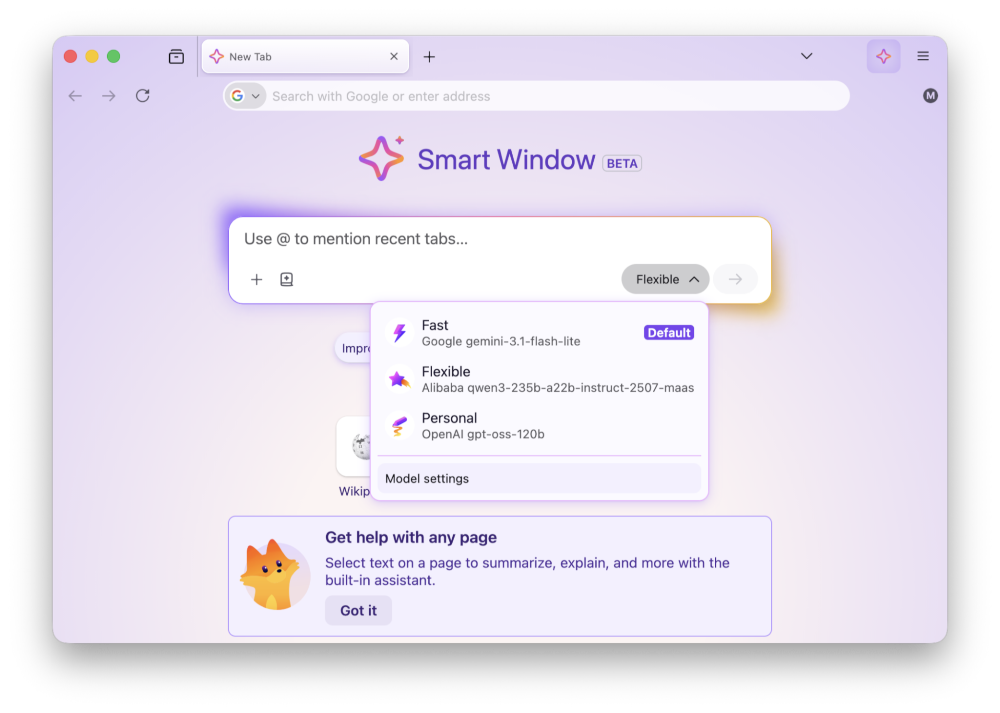
The same principles apply in the case of Firefox, whether it’s concerning new partnerships, for example, the recent agreement with Mistral AI to enable the Smart Window feature, or wider privacy and AI improvements aimed directly at Chrome.
Mozilla and Mila are so confident in their capabilities that they expect to have working examples of the new system ready within six months.


Dwayne Cubbins
3035 Posts
I cover fast-moving stories across apps, online platforms, and everyday tech — phones, wearables, consoles, and whatever else people are fighting with this week. Bugs, rollouts, scams, policy enforcement, and the occasional internet-culture rabbit hole are all fair game. My goal is simple — make confusing tech news readable. When I'm not working, I'm working out or chilling with my dog. Got a tip? You can find me on X @dcubbins.