
Mozilla president Mark Surman says Canada and the European Union could help loosen Big Tech’s hold over AI by putting more weight behind open-source models.
In a Fortune piece, Surman described the effort as a “rebel alliance.” The name is a bit dramatic, but the concern behind it is not new. Most major AI services are owned by a handful of US companies. If you want access to the biggest models, you are generally dealing with OpenAI, Google, Anthropic, Microsoft, or Meta.
That can become a problem when access changes overnight.
Surman pointed to the recent Mythos situation, which reportedly left governments and companies uneasy about relying on AI systems they do not control. If a model is hosted elsewhere, made by someone else, and comes with rules you have no say in, there is not much you can do when those rules change.
Canada has been talking more openly about open-source AI in its national strategy. The EU has also tied open source to its push for tech sovereignty. The UK has its Open Source Builder’s Fund, while Germany and Japan have been moving in a similar direction. None of this means they have signed up for a formal Mozilla-led group. They have not.
Still, it’s clear that governments do not want every serious AI project to run through American cloud platforms and closed models. Open models give local companies, researchers, and public bodies more room to run and adapt systems themselves, even if building them still costs a lot of money.
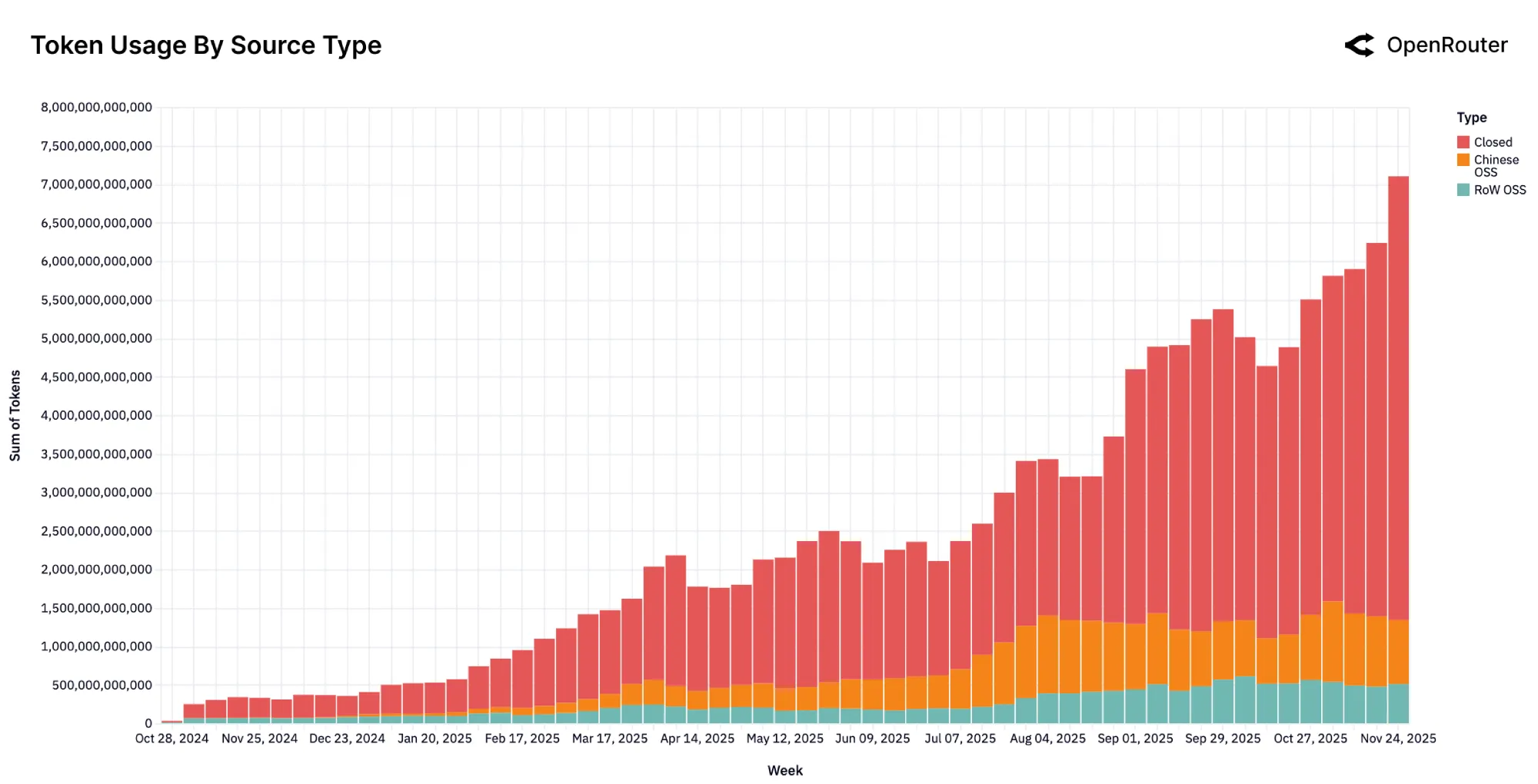
Surman also cited OpenRouter data showing open-source models went from around 1 to 2 percent of token use in late 2024 to nearly 30 percent by mid-2025. That is a big jump, although it does not put open models ahead of the major closed AI services yet.
Mozilla has been making its own AI moves alongside this. Firefox Nightly now has a Manage AI shortcut in the search bar, which gives users a quicker way to find controls for the browser’s AI features. Mozilla is clearly adding AI, but it wants to keep selling the idea that users should get a say in how much of it they see.
That fits with the company’s recently announced nonprofit setup for the AI era. Firefox may still be Mozilla’s most visible product, especially after it reportedly moved ahead of Safari in desktop browser share, but Surman is looking beyond the browser.
There is no Canada-EU-Mozilla AI alliance to announce here. But Canada and the EU are both putting more attention on open-source AI, and Mozilla is happy to attach its name to that push.


Dwayne Cubbins
3064 Posts
I cover fast-moving stories across apps, online platforms, and everyday tech — phones, wearables, consoles, and whatever else people are fighting with this week. Bugs, rollouts, scams, policy enforcement, and the occasional internet-culture rabbit hole are all fair game. My goal is simple — make confusing tech news readable. When I'm not working, I'm working out or chilling with my dog. Got a tip? You can find me on X @dcubbins.
Next article View Article