Google started rolling out the Chrome 152 update a couple of days ago with several changes hidden behind the curtain. The company posted a blog post about one of those changes called Connection Allowlists.
This is a feature that lets a website lock down which servers its pages are allowed to connect to, essentially preventing sketchy sites from tracking your habits or leaking any private data without your knowledge.
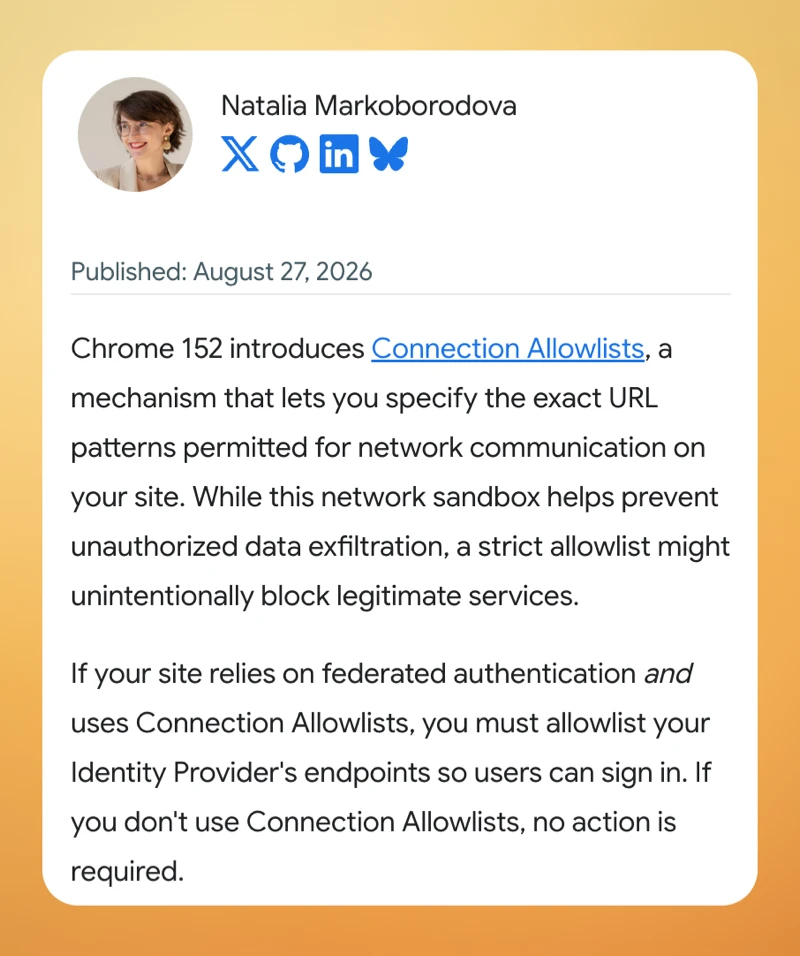
As explained by Google, it works by letting a website send a Connection-Allowlist header, and the browser (Chrome) then treats that list as the only approved destination. Everything else gets blocked automatically.
That said, there are some caveats with the rule. For example, if a website doesn’t explicitly list its login providers in the Connection-Allowlist header, the ‘Sign in with Google’ or ‘Sign in with Facebook’ buttons that we usually see on websites will also stop working.
Think of it as a digital sandbox that stops websites you visit from sneakily reaching out to unapproved servers in the background.
Of course, most average users won’t even need to think about this process at all. Most websites should work just fine, and nothing changes on the front end.
But just in case your favorite forum or shopping site suddenly refuses to let you log in using your Google account over the coming weeks, there is a good chance the site owner forgot to update their rules for Chrome’s new guardrails.
Still, coming from Google itself, this is a pretty big deal for privacy enthusiasts. The company, for its part, has also been leaning into AI to find security vulnerabilities before attackers can exploit them.
The ball is firmly in the court of website admins now. Google gave them the tools to lock things down, and now they just have to make sure they do not lock their own users out in the process.


Dwayne Cubbins
3078 Posts
I cover fast-moving stories across apps, online platforms, and everyday tech — phones, wearables, consoles, and whatever else people are fighting with this week. Bugs, rollouts, scams, policy enforcement, and the occasional internet-culture rabbit hole are all fair game. My goal is simple — make confusing tech news readable. When I'm not working, I'm working out or chilling with my dog. Got a tip? You can find me on X @dcubbins.
Next article View Article