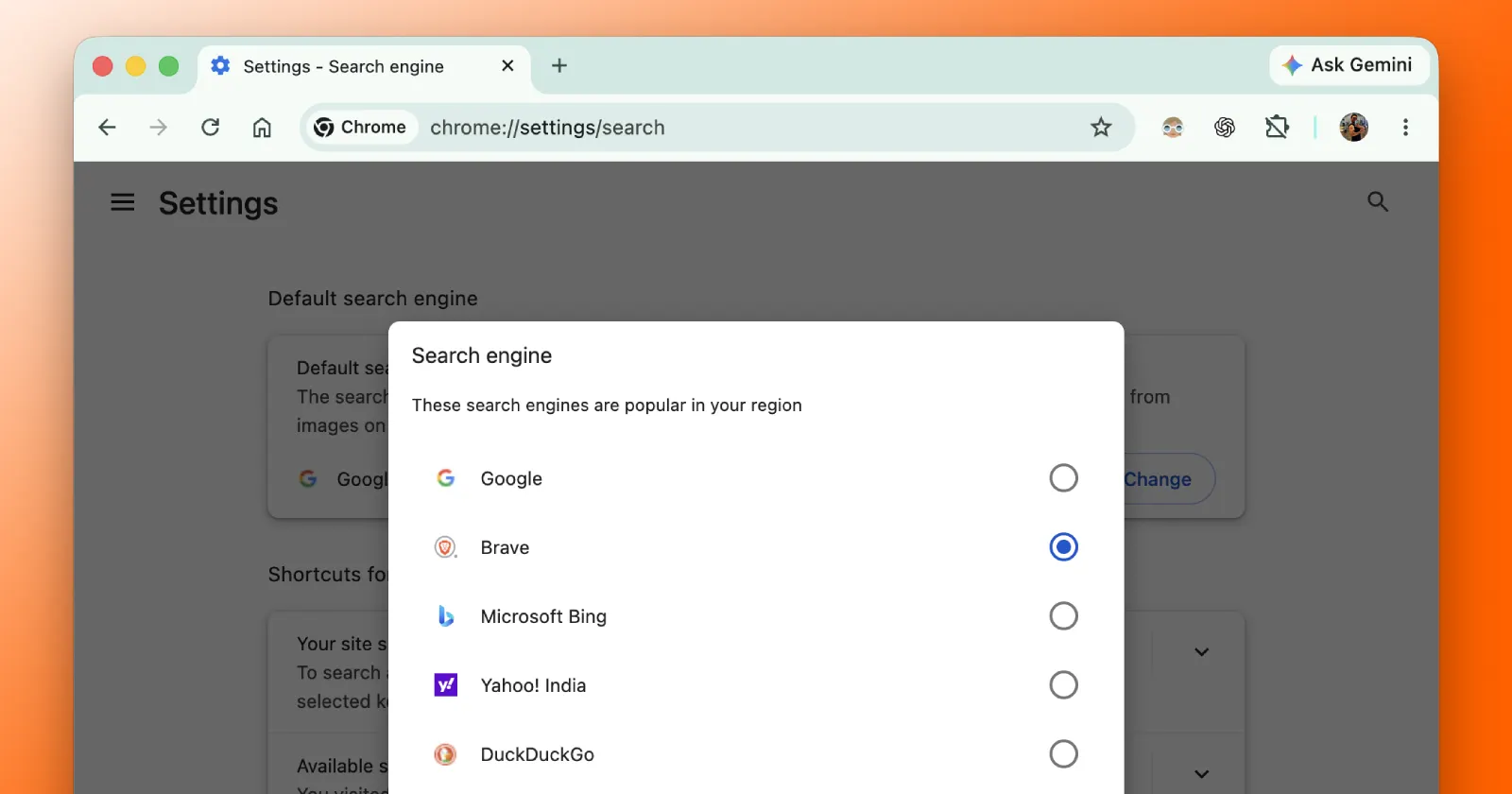
If you open up Chrome’s settings and go looking for a new default search engine, you might notice a name that wasn’t there before. Brave Search is now showing up right next to the usual suspects like Google, Bing, Yahoo, and DuckDuckGo. You no longer have to go through the hassle of adding it manually.
This was first spotted by the folks over at Windows Report. We’ve since tested it ourselves and can confirm that Brave is indeed an option now. We spotted it on Chrome Version 151.0.7922.72, so if you’re on that build or newer, there’s a good chance you’ll see it too.
If you want to change your default search engine, then head into Chrome’s settings, click on the search engine section, and hit “Change” next to whatever your current default is. Pick Brave from the list, and from that point on, anything you type into the address bar gets sent to Brave instead of your old search provider.
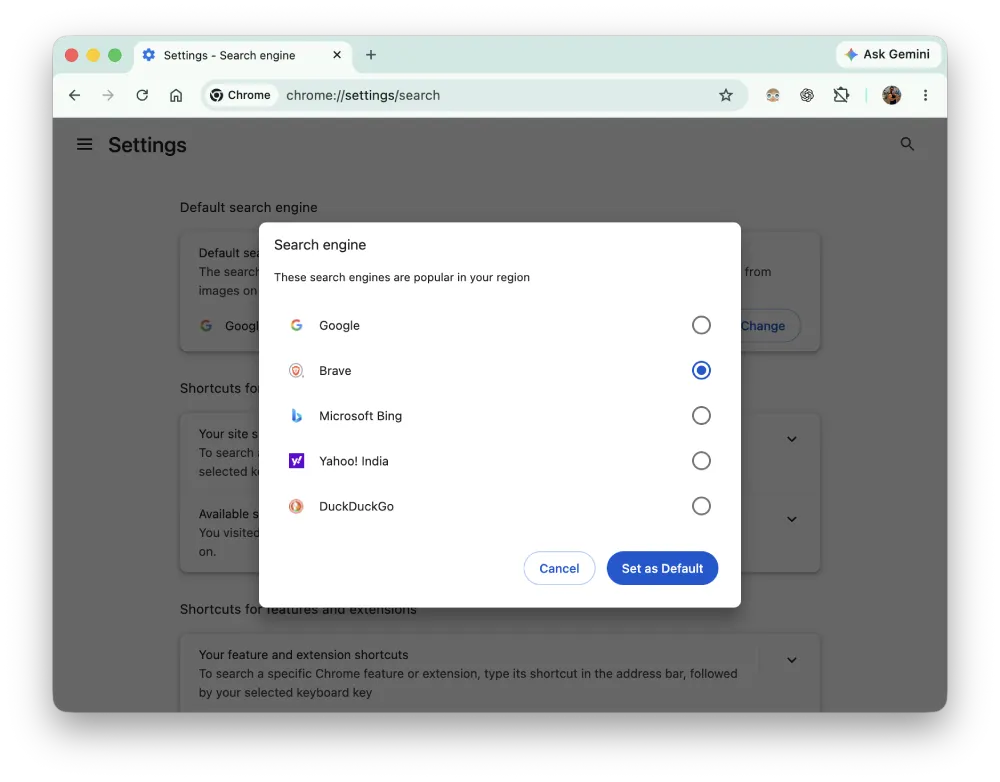
Now, whether you actually see Brave in that list depends a lot on where you live. As pointed out by the publication, Chrome builds this list based on your region and shuffles it around based on what’s popular locally. So your list might look a little different depending on your country.
That said, Brave has spent years pitching itself as the privacy-friendly alternative to Google, and now Google is the one making it easier to jump ship. Brave co-founder Brendan Eich, who also created JavaScript and co-founded Mozilla, wasn’t going to let the moment pass quietly. Responding to the news on X, he wrote, “Welcome news, but Chrome users should switch to @Brave and get better browser and search at once.”

For a bit of background, Brave Search runs on its own web index, so it isn’t just repackaging results from Google or Bing behind the scenes. It launched back in 2021 and has slowly built itself up as a genuine option for people who want something outside the big two.
This also comes at a time when Google has been facing a lot of pressure over how search defaults work in the first place. Just recently we highlighted a push from DuckDuckGo, arguing that Google shouldn’t be allowed to pay its way into being everyone’s default engine.
So adding a rival search engine in its own browser, which is already the most used browser by far, is a welcome step.
Google has also been busy on other fronts too. The browser recently became available for Arm64 Linux devices, including the Raspberry Pi, and Google has also been testing Global Privacy Control in Chrome Canary for people who want more control over how their data gets shared.


Dwayne Cubbins
3078 Posts
I cover fast-moving stories across apps, online platforms, and everyday tech — phones, wearables, consoles, and whatever else people are fighting with this week. Bugs, rollouts, scams, policy enforcement, and the occasional internet-culture rabbit hole are all fair game. My goal is simple — make confusing tech news readable. When I'm not working, I'm working out or chilling with my dog. Got a tip? You can find me on X @dcubbins.
Next article View Article