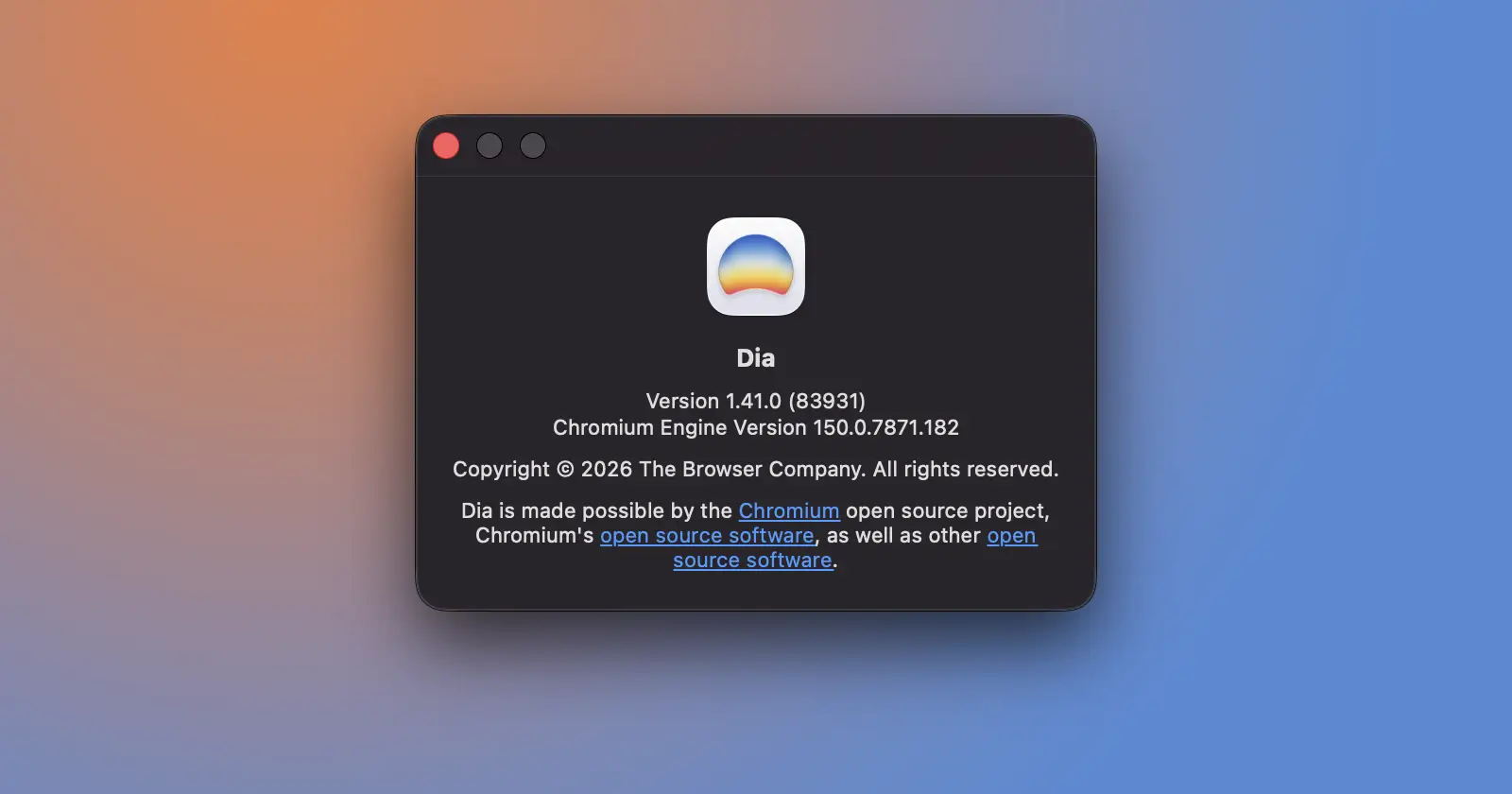
The latest release for Dia is here, but if you had high hopes, you might want to lower your expectations. It’s yet another one of those housekeeping updates instead of a major overhaul.
If you have been waiting for The Browser Company to finally deliver on its promise of Spaces, you are going to be disappointed again. The latest update for Dia on macOS, version 1.41.0, comes with only a few tweaks and improvements.
According to the changelog posted on the browser’s subreddit, the command bar now displays the actual name of the search engine you are using instead of just saying Google.
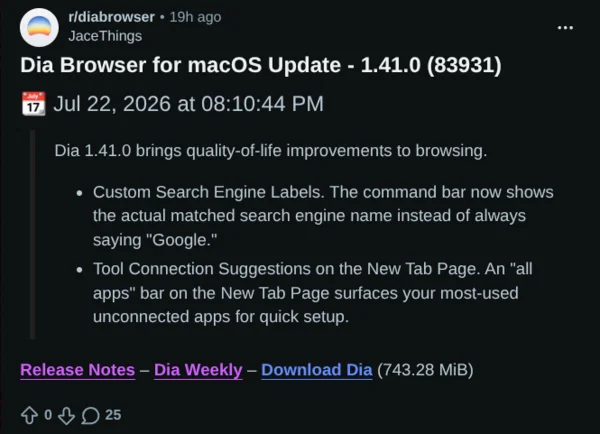
It also adds a new bar on the New Tab Page that suggests app connections you might want to set up. These are nice touches, but they feel like band-aids on a much larger wound.
The real story here is what is missing. For months, the community has been asking for Spaces, a feature that would let users organize their browsing into distinct workspaces. A moderator on the r/diabrowser subreddit previously confirmed that this feature was pushed to early July.
Well, that deadline has clearly come and gone. The month is coming to an end, and we likely won’t see Spaces at all in July unless it’s released with next week’s update.
Meanwhile, the frustration has already been bubbling up in the community. Just last week, we highlighted how users were losing all hope in the company to bring them the features they’ve been requesting for months. And with yet another minor update and no new features, it looks like Atlassian is testing the patience of its browser crowd.
Even earlier updates that brought useful tools like Picture-in-Picture stashing couldn’t hide the fact that core organizational features were lagging behind. The stashing feature let users hide floating video windows to the edge of the screen, which was a great fix for a common annoyance. Yet even with that win, the lack of Spaces kept the conversation focused on what was missing.
More recently, Dia introduced a Reports feature in version 1.39.2. This tool allows users to turn chat conversations into formatted documents with graphs and summaries. While Reports are useful for creating one-on-one summaries or competitive research, they do not solve the fundamental issue of managing multiple browsing contexts.
The recent version 1.40.1 also tried to quiet complaints by fixing performance issues and re-enabling the back and forward cache for faster page loads. But again, not the biggest ask from the user base.
Now with 1.41.0, the cycle continues. Users are starting to question why the company prioritizes these small UI tweaks over the features that would actually make the browser more productive.
Of course, we may never know the reason, but let’s hope the company figures out its priorities.


Dwayne Cubbins
3078 Posts
I cover fast-moving stories across apps, online platforms, and everyday tech — phones, wearables, consoles, and whatever else people are fighting with this week. Bugs, rollouts, scams, policy enforcement, and the occasional internet-culture rabbit hole are all fair game. My goal is simple — make confusing tech news readable. When I'm not working, I'm working out or chilling with my dog. Got a tip? You can find me on X @dcubbins.
Next article View Article