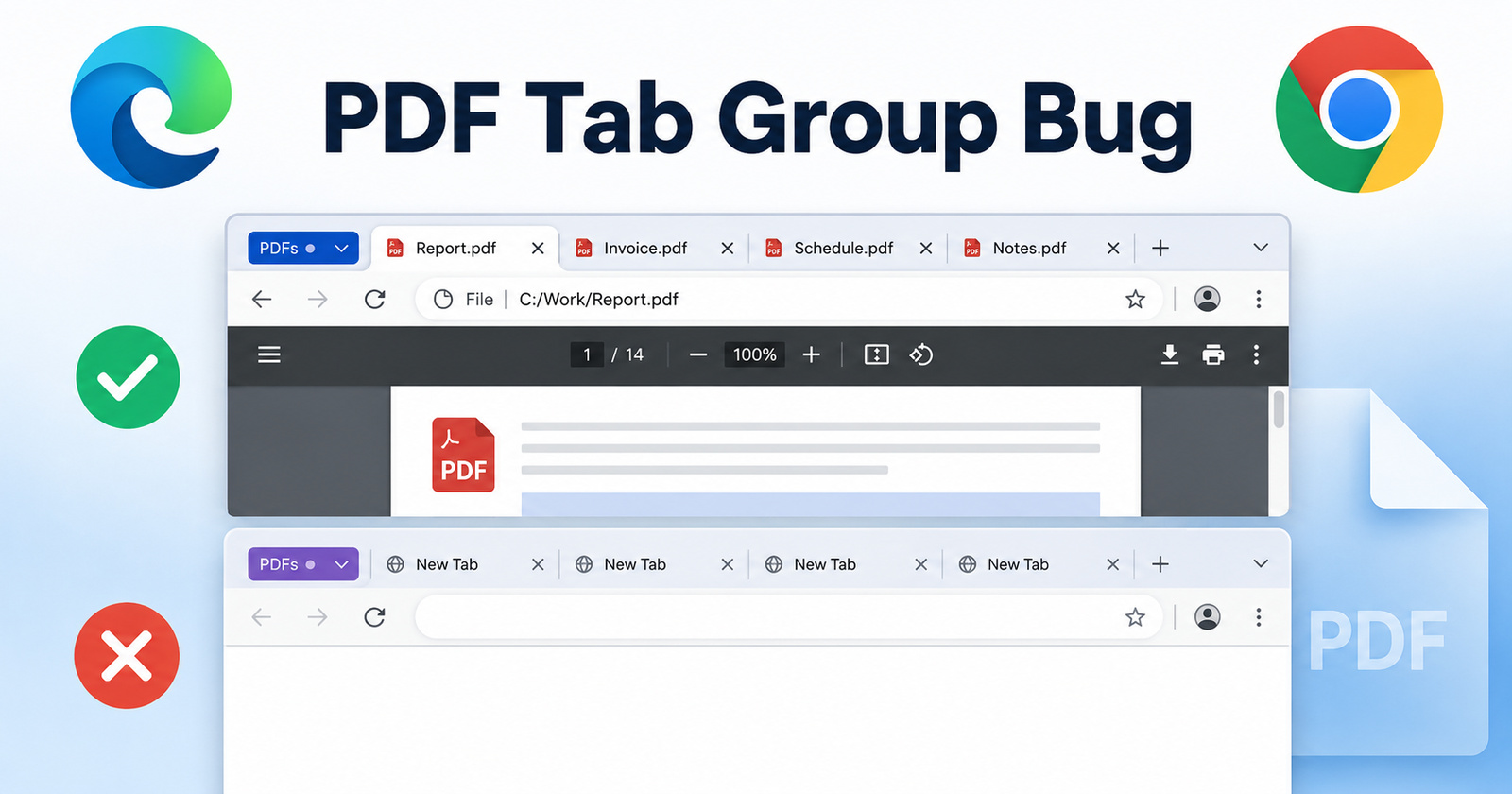
Following our report on Google making it harder for extensions like uBlock Origin to work on Chrome, there has been a lot of chatter and confusion about what’s actually happening to ad-block support in other Chromium-based browsers. With some reports suggesting that even Opera will follow suit.
Well, Opera just set the record straight in a thread on X.
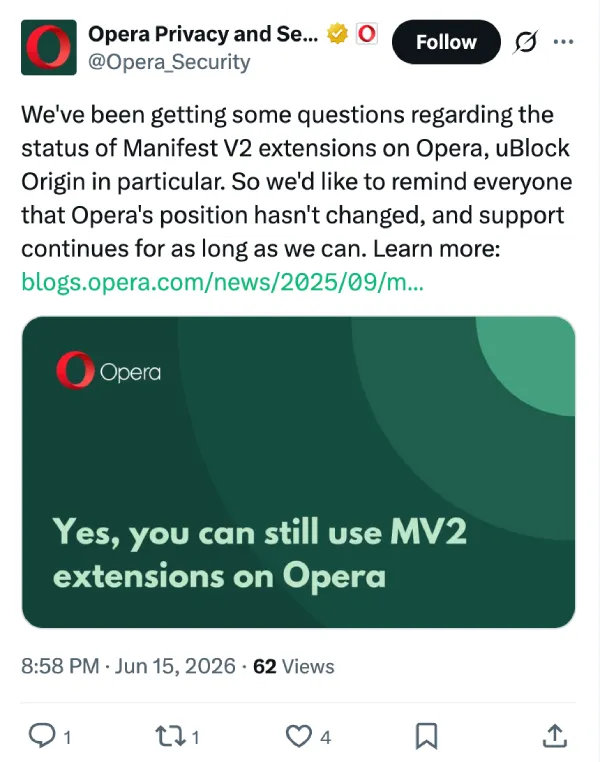
The browser maker’s privacy and security team hopped online to clear the air. Users have been bombarding them with questions about Manifest V2 extensions and uBlock Origin specifically. The team confirmed their position hasn’t changed at all, and they still plan to support Manifest V2 for as long as they technically can. This matches the exact promise they made back in late 2025 when the Google phase-out began.
Google is currently pulling the plug on the old extension framework. We saw this escalate recently when Chrome 150 ripped out the main workaround flag.
The upcoming Chrome 151 update locks things down even harder by removing the rest of the legacy code. Regular users will basically lose access to classic uBlock Origin on Google’s browser very soon, and this aggressive timeline made Opera users worry about their own setup.
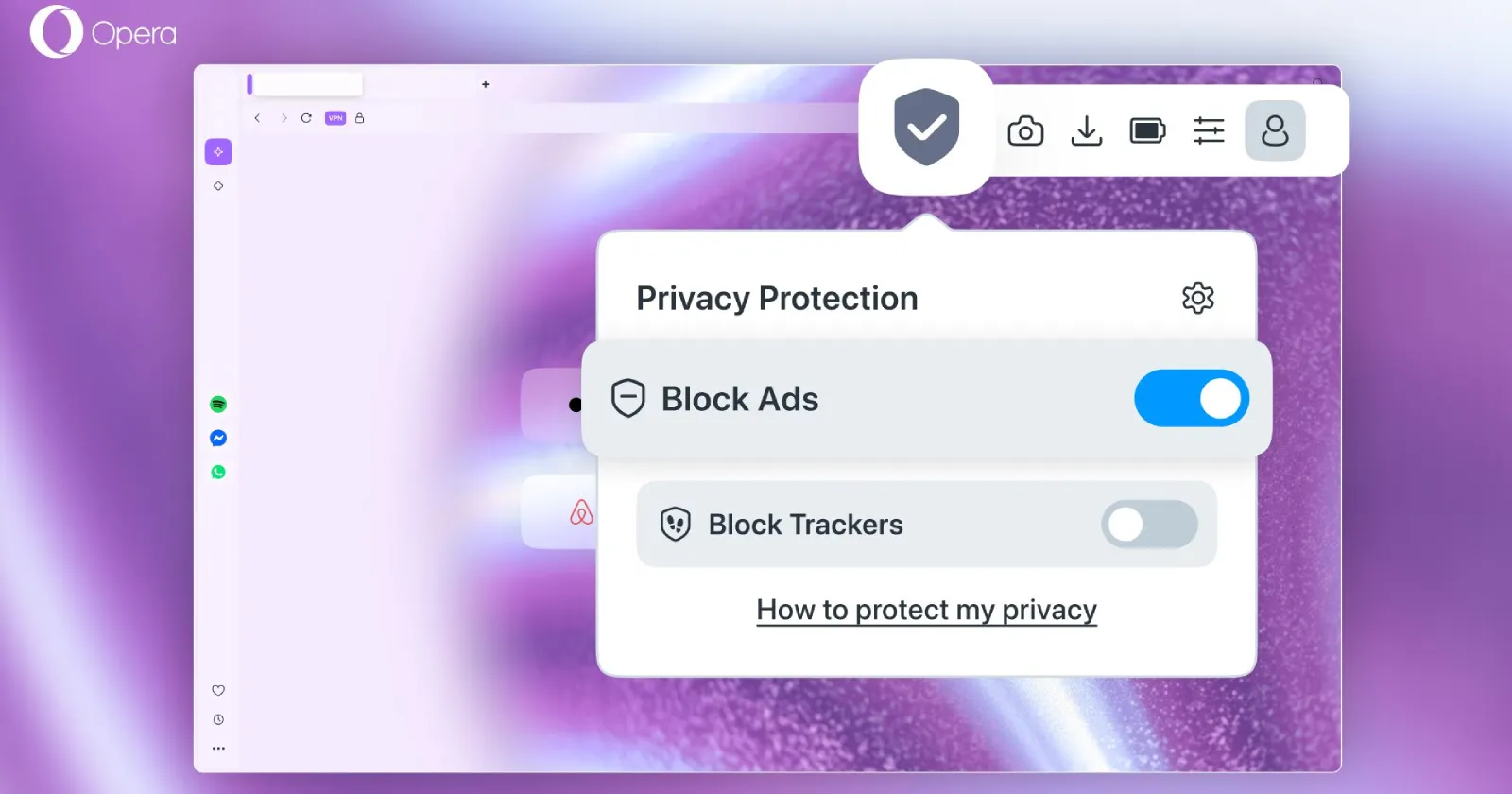
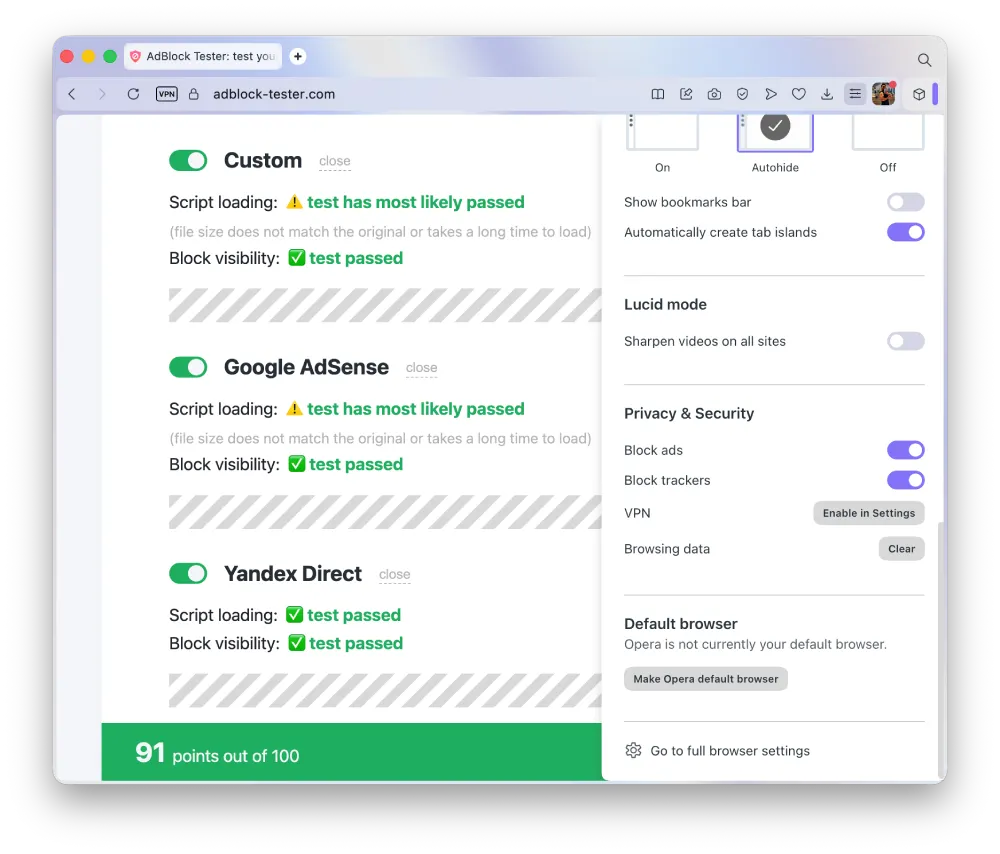
But even if Opera is forced to use Google’s new Manifest V3 framework,, the company already has a backup plan. The security team used their recent X thread to remind everyone about their native ad blocker. You don’t need to download a third-party extension to block ads on Opera because the company overhauled its native blocking engine just last month to prepare for this exact situation.
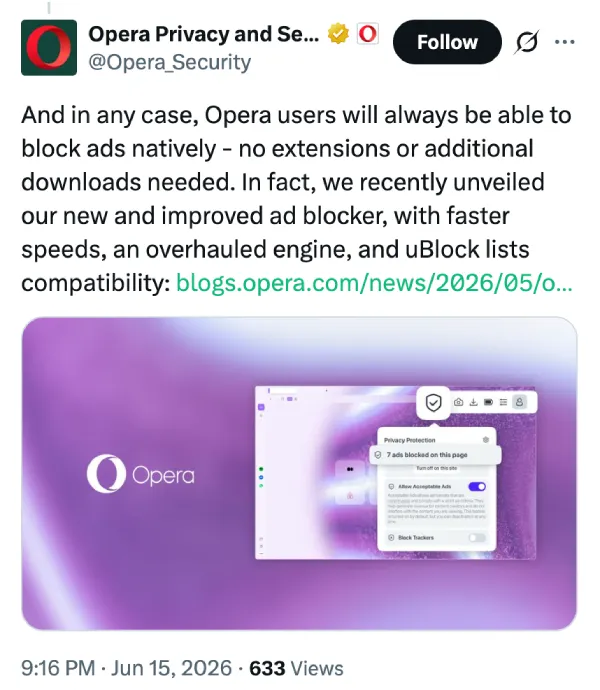
That May update made the built-in blocker significantly faster and added direct compatibility with uBlock lists and filters. You just toggle the ad blocker on in the toolbar and it handles the heavy lifting. This native tool operates completely outside the Manifest V2 and V3 extension rules. Google can change the Chrome extension API all it wants without breaking Opera’s built-in filtering feature since the browser simply bypasses the restrictions entirely.
The actual extension store situation remains a bit more complicated. Opera builds its browser on Chromium and maintaining a separate extension framework takes a lot of resources. The company already admitted its own add-on store will eventually become an exclusive Manifest V3 space. New Manifest V2 extensions aren’t being accepted anymore, and older add-ons might become unstable or insecure as developers abandon them for the new standard. The clock is definitely ticking on third-party MV2 add-ons.
That said, Opera isn’t the only browser maker in the spotlight. We recently also looked at how the likes of Brave and Firefox are handling this shift.
Brave uses a native system called Shields that ignores the extension drama completely. Firefox runs on a totally different engine and will keep supporting the classic uBlock Origin extension indefinitely. Opera sits somewhere in the middle of these two approaches. You can keep running your old extensions for a while longer while the developers patch the Chromium updates, or you can just flip on the native blocker with the uBlock filters and forget about the looming Manifest V3 deadline entirely.


Dwayne Cubbins
3101 Posts
I cover fast-moving stories across apps, online platforms, and everyday tech — phones, wearables, consoles, and whatever else people are fighting with this week. Bugs, rollouts, scams, policy enforcement, and the occasional internet-culture rabbit hole are all fair game. My goal is simple — make confusing tech news readable. When I'm not working, I'm working out or chilling with my dog. Got a tip? You can find me on X @dcubbins.
Next article View Article