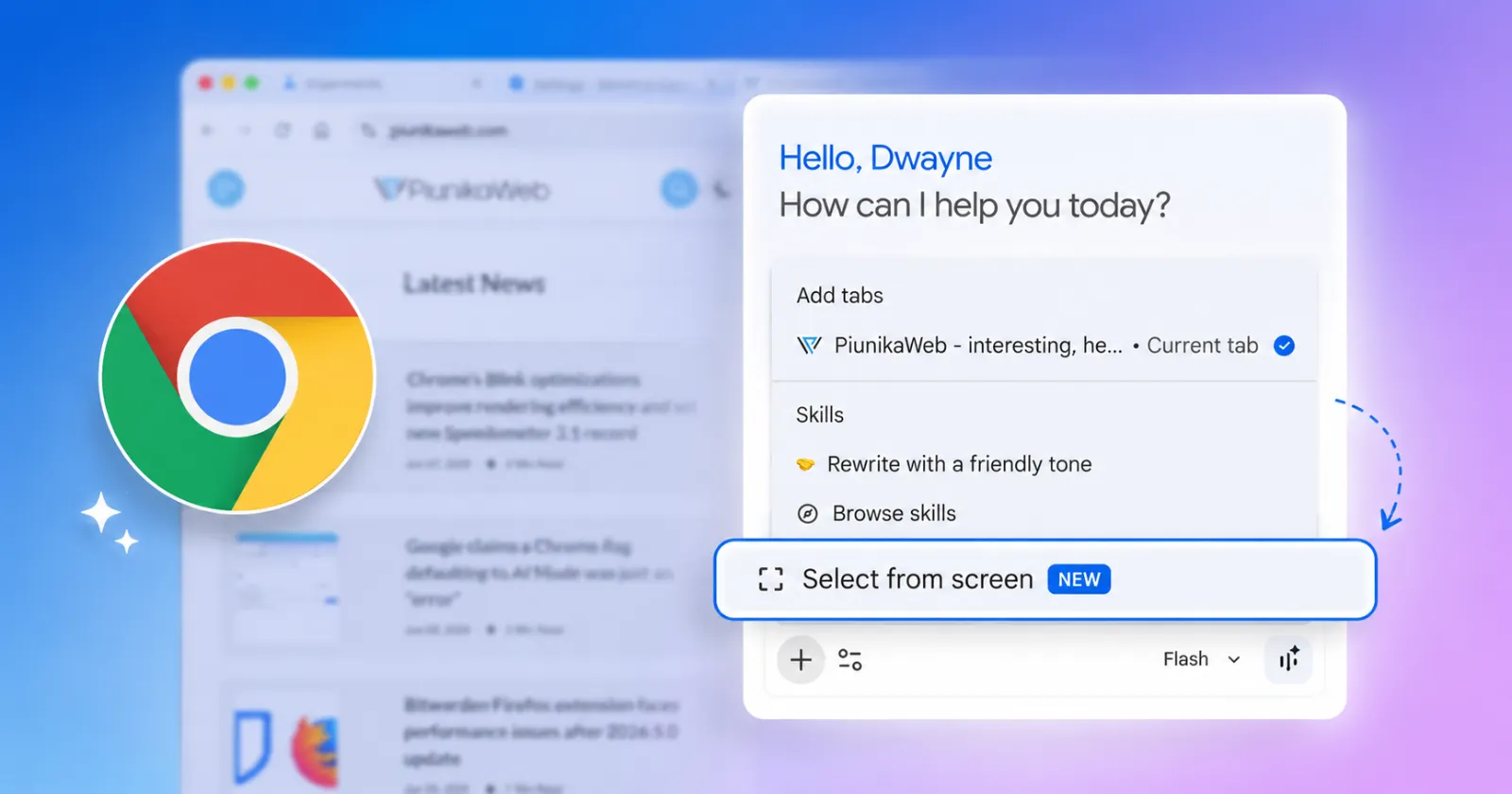
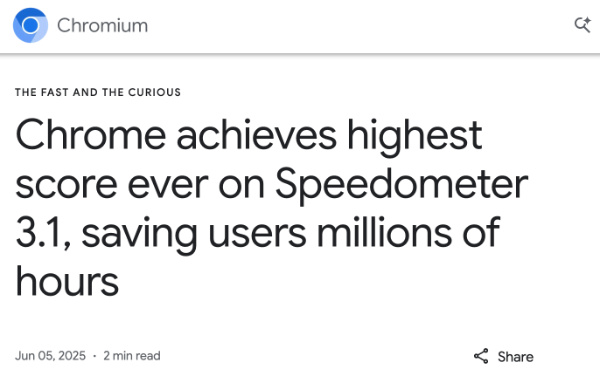
Google announced recently that the Chrome browser achieved the highest score ever recorded on the Speedometer 3.1 performance benchmark.
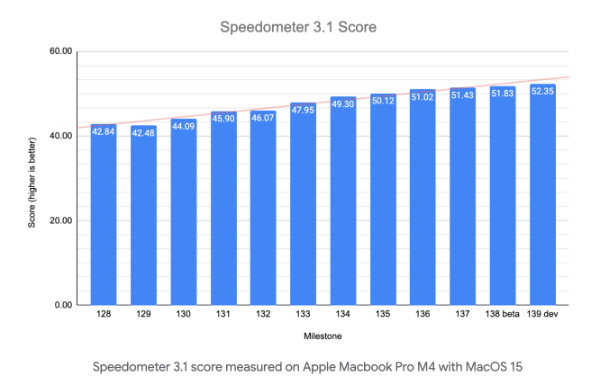
The test was detailed through an official blog post, and it was performed on a MacBook Pro (M4 chip), running macOS 15 (Sequoia). Google Chrome reached 52.35 points in the test.
For those unaware, Speedometer 3.1 is an industry-standard benchmark developed through open collaboration among major browser companies. It tests a lot of daily-use web browsing situations. The benchmark stresses the rendering engine, HTML parsing, JavaScript, JSON processing, and more.
Google attributed these results to ongoing refinements across Chrome’s Blink rendering engine. These optimizations delivered a 22% improvement on Speedometer (after Google’s blog post was updated with more accurate information). Improved memory management and rendering are the main reasons for this boost in the score.
The company also claims that these improvements translate into smoother everyday browsing. For example, you’ll notice less stutter in complex web apps, and overall, each second saved in daily browsing sessions will add up. While the claims of “millions of hours” are probably typical marketing claims, it still does make the web experience better overall.
It’s worth noting that Chrome isn’t the only browser that uses the Blink engine. Other browsers, such as Microsoft Edge and Opera, also share the same engine, so these optimizations may eventually appear in other Chromium-based products.
The claims from Google can also be independently verified by running the open-source Speedometer 3.1 test website directly.
I don’t have the M4 MacBook Pro that the test was performed on, but I’ve tested the scores on an M1 MacBook Air (8GB RAM). I have also compared the scores with Firefox (which doesn’t run Chromium).
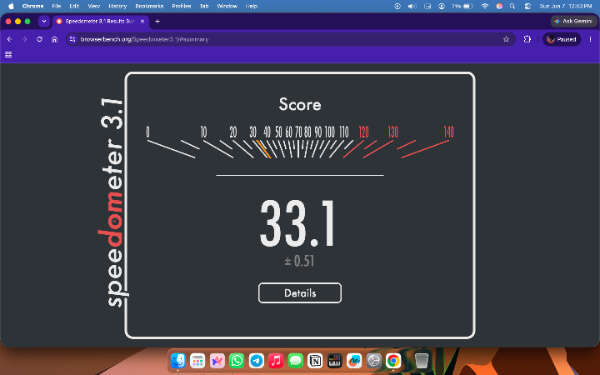
Chrome is slightly faster on average, though Firefox isn’t that behind.
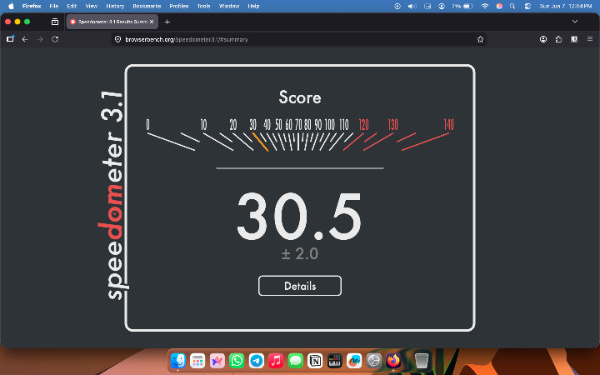
Note: Both browsers were on their latest versions at the time of writing. Chrome was on v149.0.7827.54, and Firefox was on v149.0.7827.54. The benchmark was performed on macOS Tahoe, and not on Sequoia (on which Google performed it).
Finally, Google hasn’t released comparative scores with rival browsers in the blog post. The optimization and efficiency improvements to Chromium are certainly welcome, but it’s not just Chrome that’ll receive the benefits.
In other Chrome news, Google has claimed that the Chromium flag defaulting to AI mode was an “error.” You can read about that here. The company is also working on an AI feature that could automatically select the best credit card for online purchases. We covered that here.


Sudhanshu K
293 Posts
I have been a consumer technology enthusiast for over 5 years. Thanks to my experience in software beta testing and product reviews, I've understood and learnt a lot about what bugs and issues bother people, and I spend time trying to simplify their solutions. I cover smartphones, software, social media, apps, AI, and most consumer tech gadgets. Actively pursuing a Computer Science bachelor’s degree. I'm mostly active on Twitter/X (@TechWhirlUlt), drop a DM or tag me if you want to share info or connect!
Next article View Article