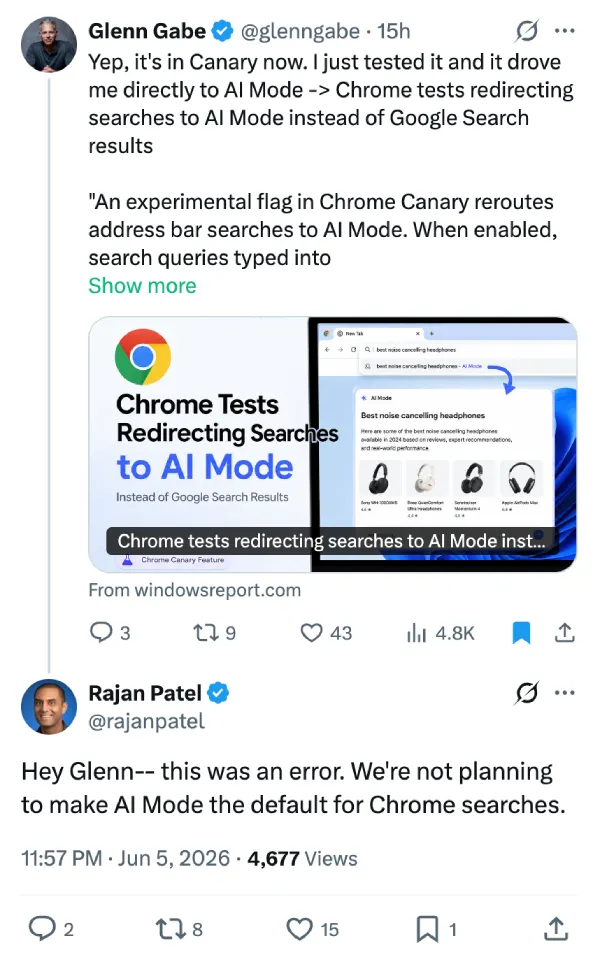
Google Search vice president Rajan Patel denied plans to make AI Mode the default search mechanism inside Google Chrome following an internet backlash over a hidden testing flag.
This response came shortly after a flag appeared in Chrome Canary, which, when enabled, intercepted standard address bar queries and immediately launched conversational AI threads instead of traditional search results.
Rajan Patel called the public release an “error” in a response to SEO consultant Glenn Gabe on X. Patel stated that Google isn’t planning to force the AI interface on standard Chrome searches. The denial followed hours of heavy criticism from web publishers and browser trackers who spotted the experimental setting.
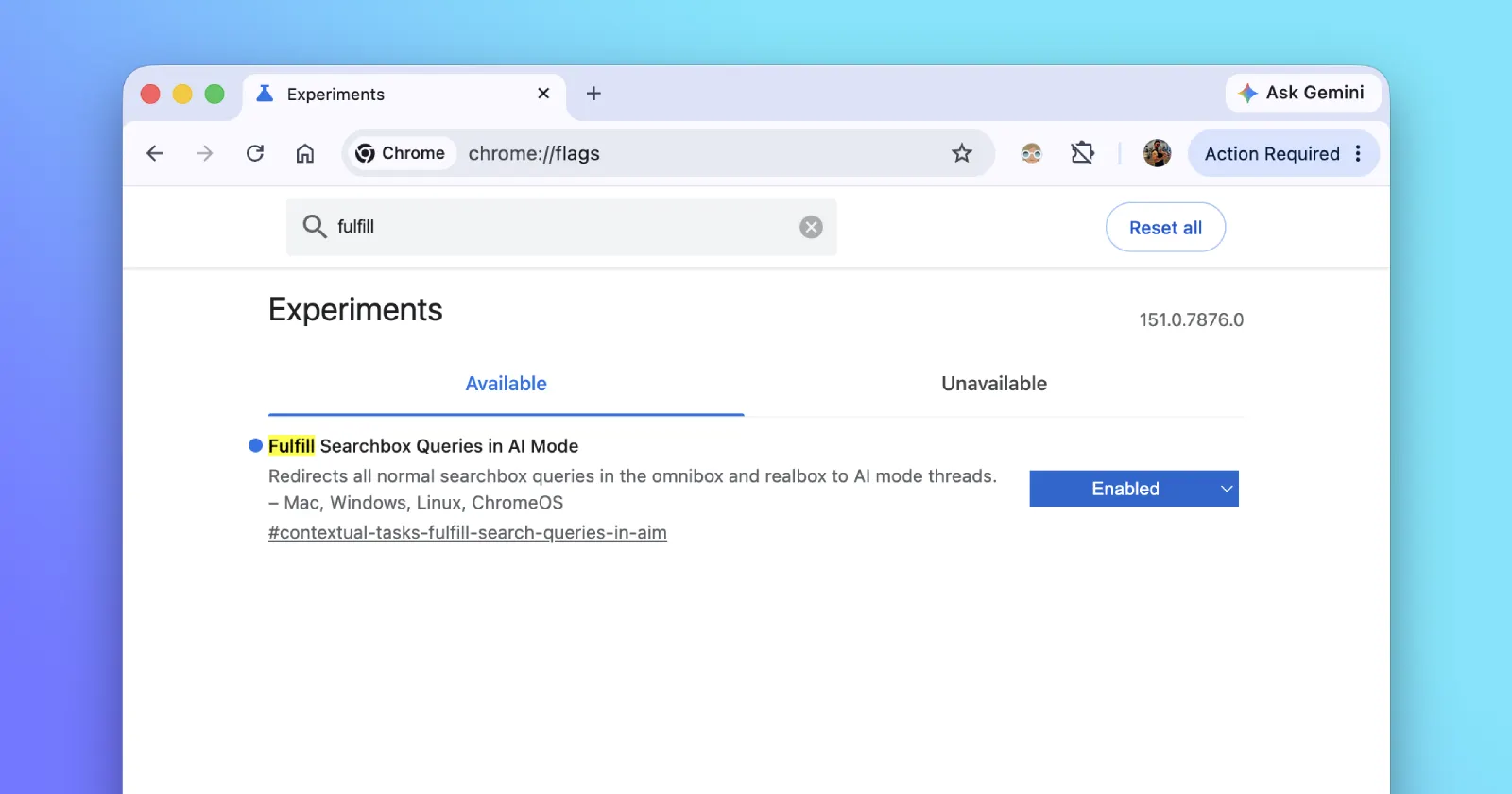
Windows Report first discovered the flag, which carried the internal title Fulfill Searchbox Queries in AI Mode. When users enabled the setting in Chrome Canary, it changed the fundamental behavior of both the main omnibox and the New Tab Page search field. Typing any standard keyword into those inputs completely bypassed the traditional list of web links, forcing the browser to generate an interactive AI response instead.
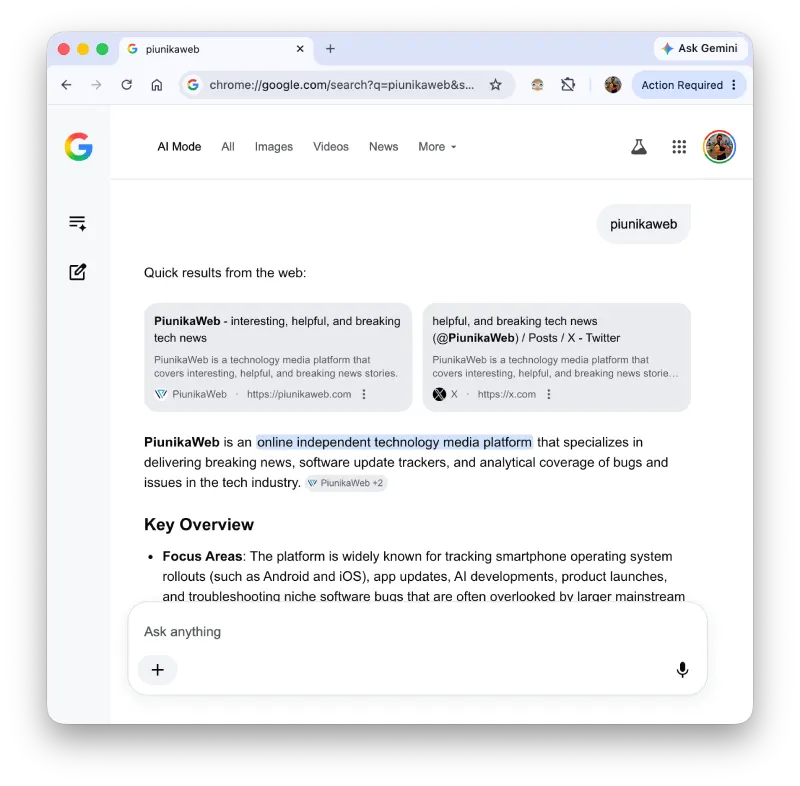
I tested this myself on Chrome Canary version 151.0.7876.0. After enabling the flag from chrome://flags and restarting the browser, all searches went straight to AI Mode.

That said, as pointed out by the publication, the developer who submitted the original code commit included an explicit note claiming the team was simply using the flag for exploration. The note insisted that Google had no immediate plans to push the routing behavior to the stable version of Chrome.
But with Google’s continued approach to push AI everywhere, many folks, including ourselves, aren’t taking the denial at face value. Last year, I got a survey from Google pitting the standard search experience against AI Mode to see which mode users prefer. So it’s clear that the search giant is likely trying to build a case to make AI Mode more accessible or even more prone to being triggered by mistake by how they place the button.
Before that, a post from Google AI Studio lead Logan Kilpatrick also made it seem as if AI Mode would eventually become the default search interface. But it was later denied.
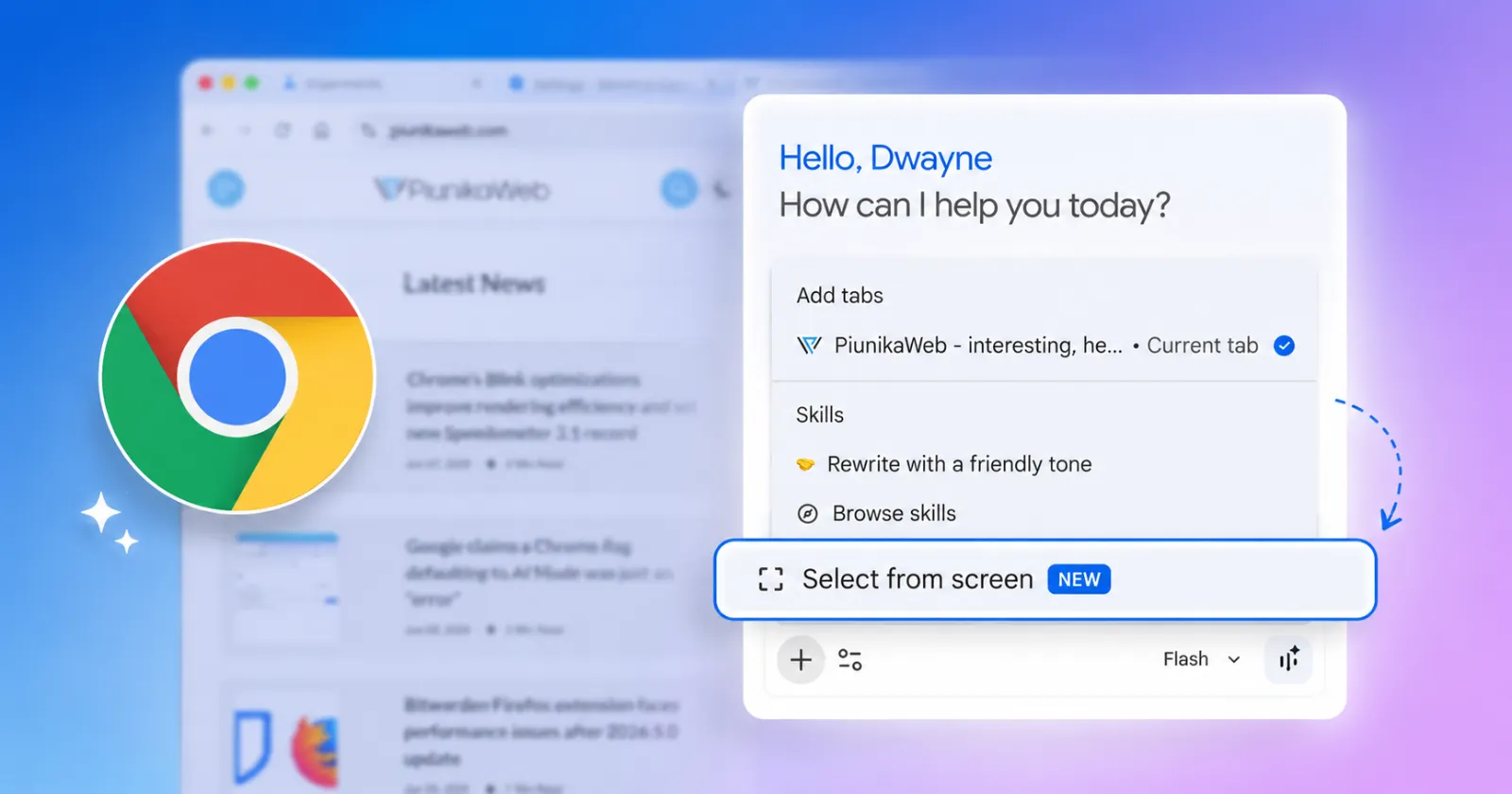
Still, the search-routing experiment also fits into a larger suite of AI desktop tools Google is actively building. Just last week, developers pushed a floating desktop widget called the Everywhere Omnibox into Chrome Canary under the code name Project Loom. That feature allows users to summon a standalone Gemini search field anywhere on their operating system using a global keyboard shortcut. We went hands-on with it, and you can find our report with the details here.
The code has now been ripped out of the main Chromium branch. You can, however, still check out the flag on the Chrome Canary build I mentioned above.


Dwayne Cubbins
3086 Posts
I cover fast-moving stories across apps, online platforms, and everyday tech — phones, wearables, consoles, and whatever else people are fighting with this week. Bugs, rollouts, scams, policy enforcement, and the occasional internet-culture rabbit hole are all fair game. My goal is simple — make confusing tech news readable. When I'm not working, I'm working out or chilling with my dog. Got a tip? You can find me on X @dcubbins.
Next article View Article