






Introducing: New Browser Infrastructure. ⚡️
— Browser Use (@browser_use) June 1, 2026
Chromium fork. Firecracker fork. Custom Linux kernel.
> 3x cheaper. $0.02/h.
> Unlimited scaling
> Subsecond cold starts
> Most stealth browser infra
Feel the speed. Now live.
Try it now ↓ pic.twitter.com/EugghFh3Ky
Browser Use launched a new remote browser infrastructure today, which is designed to let AI agents surf the internet automatically.
The system runs on bare-metal servers using custom-built versions of Chromium and Linux to launch automated cloud browsers in under a single second. Operating costs drop to a flat $0.02 per hour while scaling up to 10,000 active browsers simultaneously across residential connections in over 195 countries.
To prevent websites from blocking these AI assistants, the setup automatically cracks CAPTCHAs and perfectly mimics human hardware traits from real Mac, Windows, and Linux setups, earning a chart-topping 84.8% stealth score on Halluminate’s BrowserBench test, according to the company.
This aggressive shift toward building a web optimized for machines just shows the massive ideological divide in the browsing niche, standing in total contrast to a human-centric counter-movement where Vivaldi’s anti-AI browsing push is rapidly winning over purists and DuckDuckGo’s ‘No AI’ search traffic is tripling from users who are fleeing Google’s AI integration in Search.
The system is fully operational today, requiring users to complete an automated challenge-response setup on the platform’s signup page to grab an access key.
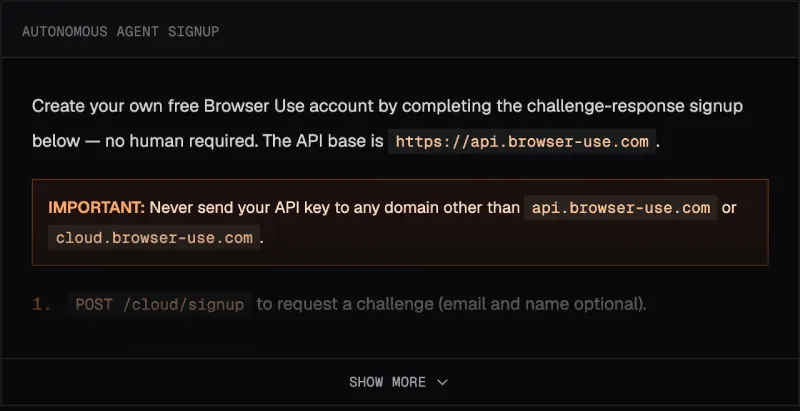
This security gate forces applicants to solve a tricky math puzzle, submit the answer formatted to two decimal places, and attach a specific authentication tag to their active browsing sessions.
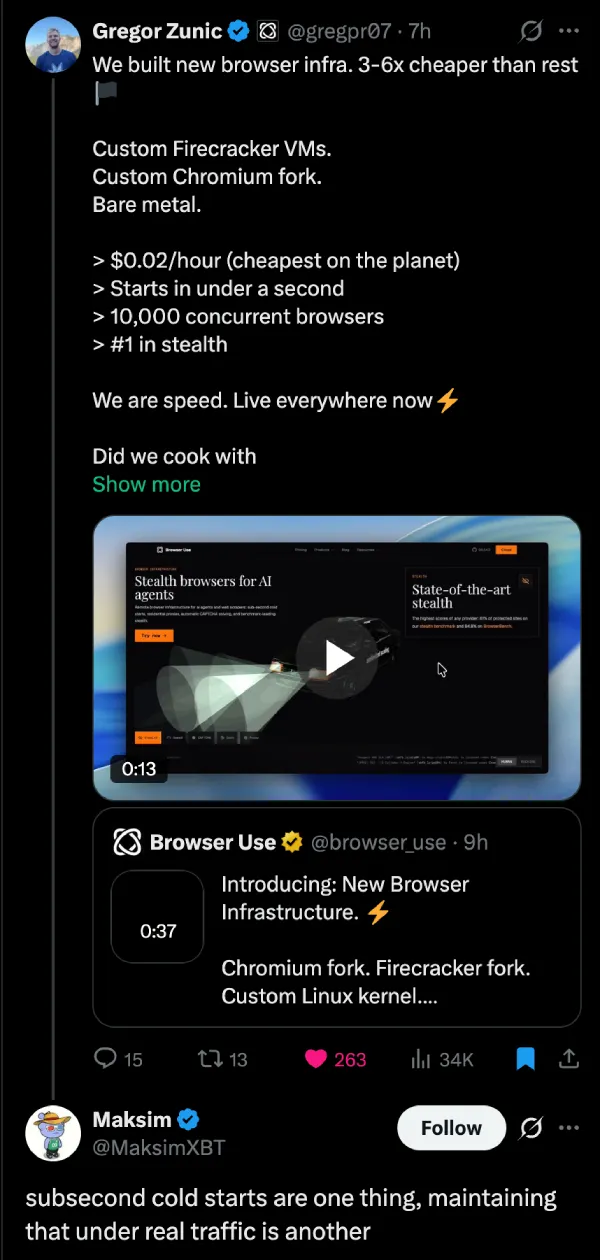
That said, some folks have cautioned that the near-instant start times might not be met once thousands of users start hopping onto the service. So while the numbers seem too good to be true right now, things might change down the line.
From my perspective, it feels like we are officially reaching a crossroads where one side of the tech industry is busy building high-speed infrastructure for bots to browse the web, while regular users are actively retreating to spaces like Vivaldi and DuckDuckGo just to escape the AI wave.
Whether Browser Use can actually scale this infrastructure for pennies remains to be seen.

We stand out from the tech-media crowd because we break news stories; we mainly bring you stuff that you won’t find anywhere in the mainstream tech media. Our stories have been picked up by some of the world’s most popular websites and media outlets—more info is available here.

Dwayne Cubbins
3073 Posts
I cover fast-moving stories across apps, online platforms, and everyday tech — phones, wearables, consoles, and whatever else people are fighting with this week. Bugs, rollouts, scams, policy enforcement, and the occasional internet-culture rabbit hole are all fair game. My goal is simple — make confusing tech news readable. When I'm not working, I'm working out or chilling with my dog. Got a tip? You can find me on X @dcubbins.
Next article View Article

DuckDuckGo is reportedly showing some irrelevant NSFW results in search queries
Some DuckDuckGo users are reporting that the search engine is returning NSFW content for regular queries.
One user searching for a real-life example of “r33 using the doluck kit...
Jun 02, 2026 1 Min Read