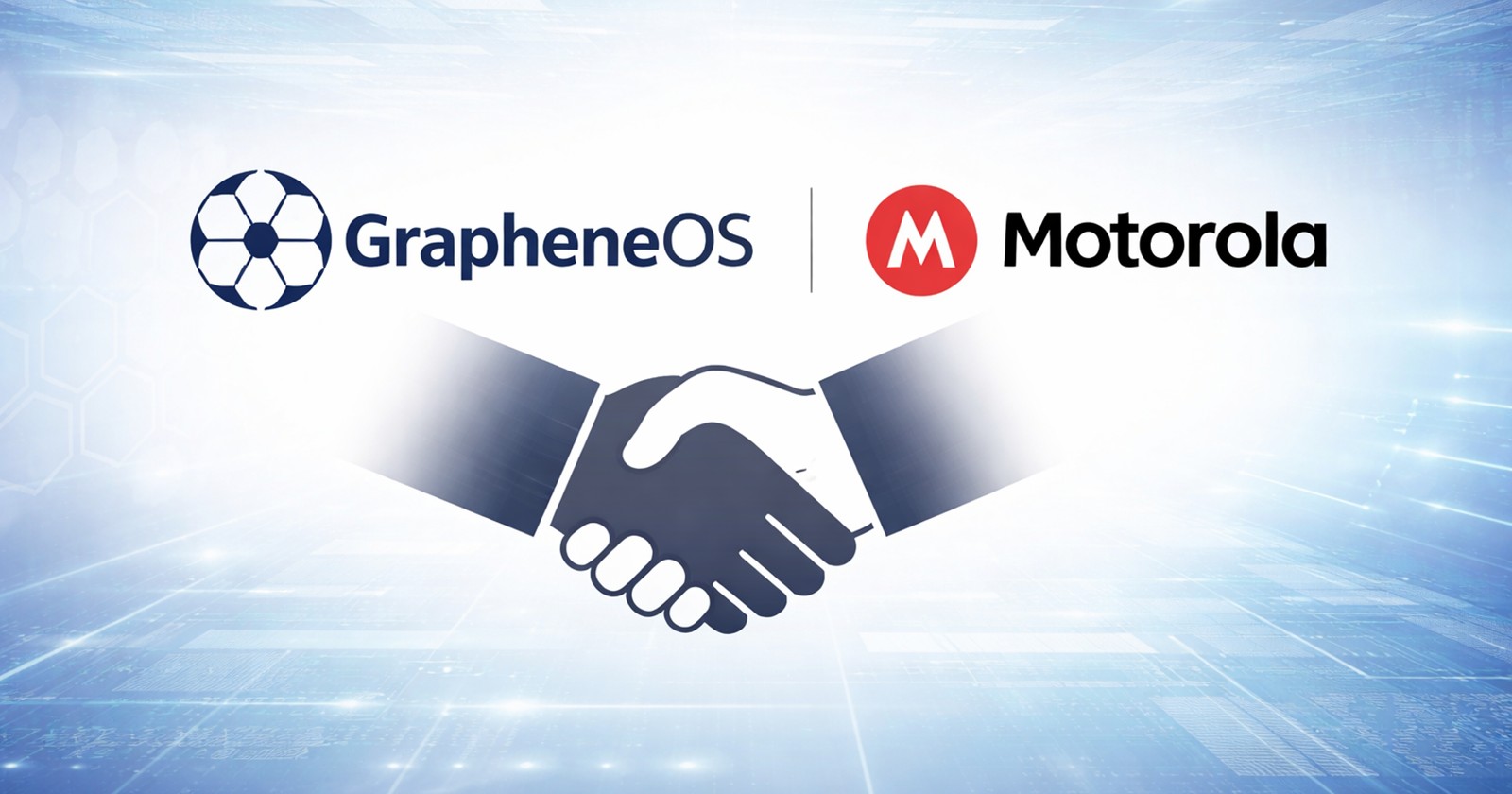
For years, the gold standard for mobile privacy has been a Google Pixel running GrapheneOS. That is finally about to change. Following weeks of anticipation and leaks suggesting a shake-up in the privacy-focused smartphone market, Motorola and the GrapheneOS Foundation have officially announced a “long-term partnership” at MWC 2026 in Barcelona.
The collaboration marks a historic milestone: the development of the first non-Pixel hardware designed from the ground up to meet GrapheneOS’s stringent hardware security requirements.
In a press release, Motorola confirmed that the partnership will manifest in two ways. First, the companies are working on a future smartphone that will ship with GrapheneOS pre-installed out of the box. Second, Motorola plans to integrate specific security features developed by the GrapheneOS team into its broader lineup of Android devices.
"Motorola is introducing a new era of smartphone security through a long‐term partnership with the GrapheneOS Foundation," the company stated in a media briefing. "Together, Motorola and the GrapheneOS Foundation will work to strengthen smartphone security and collaborate on future devices engineered with GrapheneOS compatibility."
Breaking the Pixel monopoly
Until today, GrapheneOS has been exclusively available on Google Pixel devices. This wasn’t due to a “fan preference,” but rather because the Pixel was the only hardware that supported necessary security features like Titan M2 security chips, proper verified boot with user-set keys, and hardware-based memory tagging.
While there was previous speculation that Motorola might be the one to break this trend, the technical hurdles remained high. GrapheneOS developers have noted in the past that current Motorola hardware, including the flagship Motorola Signature, does not meet the project’s security standards.
This confirms that the upcoming GrapheneOS-powered Motorola phone will likely feature entirely new, custom-engineered hardware components specifically designed to handle the OS’s hardened kernel and sandboxing features.
“We are thrilled to be partnering with Motorola to bring GrapheneOS’s industry‑leading privacy and security‑focused mobile operating system to their next-generation smartphone”, said a spokesperson at GrapheneOS. “This collaboration marks a significant milestone in expanding the reach of GrapheneOS, and we applaud Motorola for taking this meaningful step towards advancing mobile security.”
While Motorola was tight-lipped on the specific specs of the “GrapheneOS Edition” phone, the partnership promises “joint research, software enhancements, and new security capabilities” over the coming months.
For the average Motorola user, this is also good news. Even if you don’t plan on buying the specialized privacy phone, Motorola intends to trickle down certain GrapheneOS security hardening techniques to its standard Android builds. This could mean more robust protection against zero-day exploits and better data isolation for the general public.
As of now, there is no firm release date or pricing for the first Motorola x GrapheneOS device, with the company only stating it is a “future release.” However, GrapheneOS has in the past revealed that 2027 is when the device will be ready. The phone will likely include a physical sensor kill switch.
This is a massive win for the Android ecosystem. For a long time, if you wanted the most secure version of Android, you ironically had to buy hardware from the world’s biggest data-collection company (Google). By partnering with Motorola, GrapheneOS is finally decoupled from Pixel hardware.
If Motorola can deliver hardware that matches the security of the Titan M2 chip while offering their signature sleek design, they may have just captured the entire privacy-conscious segment of the market.


Hillary Keverenge
2723 Posts
Tech has been my playground for over a decade. While the Android journey began early, it truly took flight with the revolutionary Lollipop update. Since then, it's been a parade of Android devices (with a sprinkle of iOS), culminating in a mostly happy marriage with Google's smart home ecosystem. Expect insightful articles and explorations of the ever-evolving world of Android and Google products coupled with occasional rants on the Nest smart home ecosystem.
Next article View Article