Since last year, the privacy-focused Android community has been buzzing about GrapheneOS breaking its long-standing exclusivity to Google’s Pixel lineup. What started as a promising tease of a “major OEM” partnership has evolved through delays and hardware teases. Now, we seemingly have a concrete window for when the mystery partner will step into the light.
According to a fresh update from the GrapheneOS team on Mastodon, the wait for an official reveal is nearly over.
Announcement imminent, release in 2027
In a reply regarding the partnership status, GrapheneOS shared that “there will likely be an announcement from the OEM within the next couple of months.”
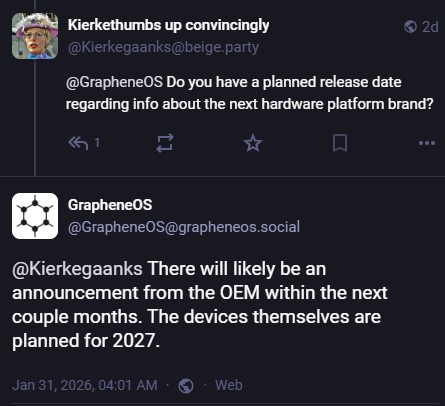
While this puts the official reveal potentially in the Q2 2026 window (April or May), the team was quick to manage expectations regarding the hardware launch itself. The devices are strictly “planned for 2027.”
This aligns with earlier reports from January, where GrapheneOS scrapped initial hopes for a Q4 2026 release. The delay reportedly stems from necessary lead times to ensure the hardware meets the project’s rigorous security standards, specifically regarding memory tagging extensions (MTE) on next-gen chipsets.
While the OEM’s identity remains under wraps for a few more months, GrapheneOS has been steadily feeding us details about what the device will actually do.
Most notably, the team confirmed that future non-Pixel hardware will feature physical sensor kill switches. Unlike software toggles, these would physically disconnect components like the camera and microphone, offering a level of privacy assurance that standard flagship phones simply don’t provide.
The Motorola speculation
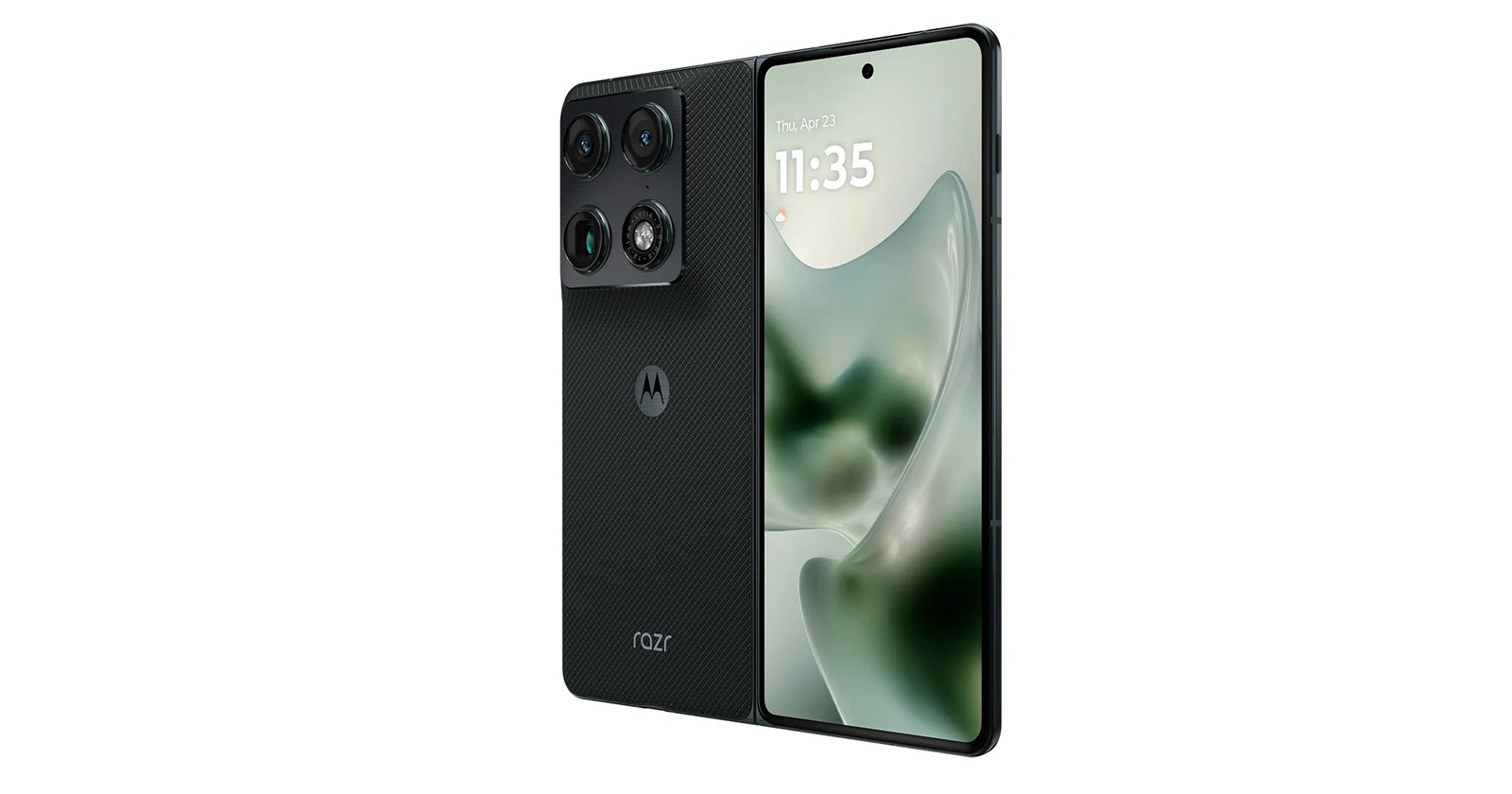
So, who is the partner? The “major OEM” description has narrowed the field significantly. Speculation has heavily pointed toward Motorola (owned by Lenovo).
Motorola fits the bill for several reasons: they are a top global manufacturer, they historically allow bootloader unlocking (a prerequisite for GrapheneOS), and they have a track record of producing business-centric hardware (ThinkPhone) that could align with enterprise security needs. However, until that announcement drops in the coming months, this remains an educated guess.
The end of the Pixel era?
This partnership marks a pivotal shift for GrapheneOS, which has relied on Google’s Pixel hardware solely because of its Titan security chips, longer/guaranteed software support, and open bootloader policy.
With a dedicated OEM partner, GrapheneOS has hinted that the Pixel 11 could be the last new Pixel device to receive official support.
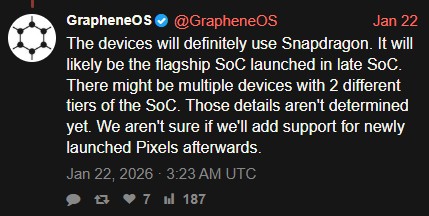
While existing Pixels will continue to be supported for their full lifespans, the project aims to transition users toward hardware that is built from the ground up to respect their privacy, rather than modifying hardware built by an ad company.
For now, all eyes are on that upcoming announcement window. If you’ve been holding out for a high-end privacy phone that isn’t made by Google, 2027 can’t come soon enough.


Hillary Keverenge
2723 Posts
Tech has been my playground for over a decade. While the Android journey began early, it truly took flight with the revolutionary Lollipop update. Since then, it's been a parade of Android devices (with a sprinkle of iOS), culminating in a mostly happy marriage with Google's smart home ecosystem. Expect insightful articles and explorations of the ever-evolving world of Android and Google products coupled with occasional rants on the Nest smart home ecosystem.
Next article View Article