Security and privacy are no longer niche concerns in 2026. With journalists, activists, politicians, and even everyday users increasingly aware of digital surveillance, conversations around who controls your smartphone have grown louder. Unsurprisingly, GrapheneOS keeps resurfacing as one of the most trusted names in privacy-focused mobile operating systems.
While GrapheneOS has long been the gold standard for software-based hardening—turning the Google Pixel into a fortress—the project is now signaling a major shift toward hardware-level privacy controls.
In a recent revelation, GrapheneOS confirmed it has plans to implement a physical “sensor kill switch” on future device generations, a feature that could debut with their highly anticipated non-Pixel hardware in 2027.
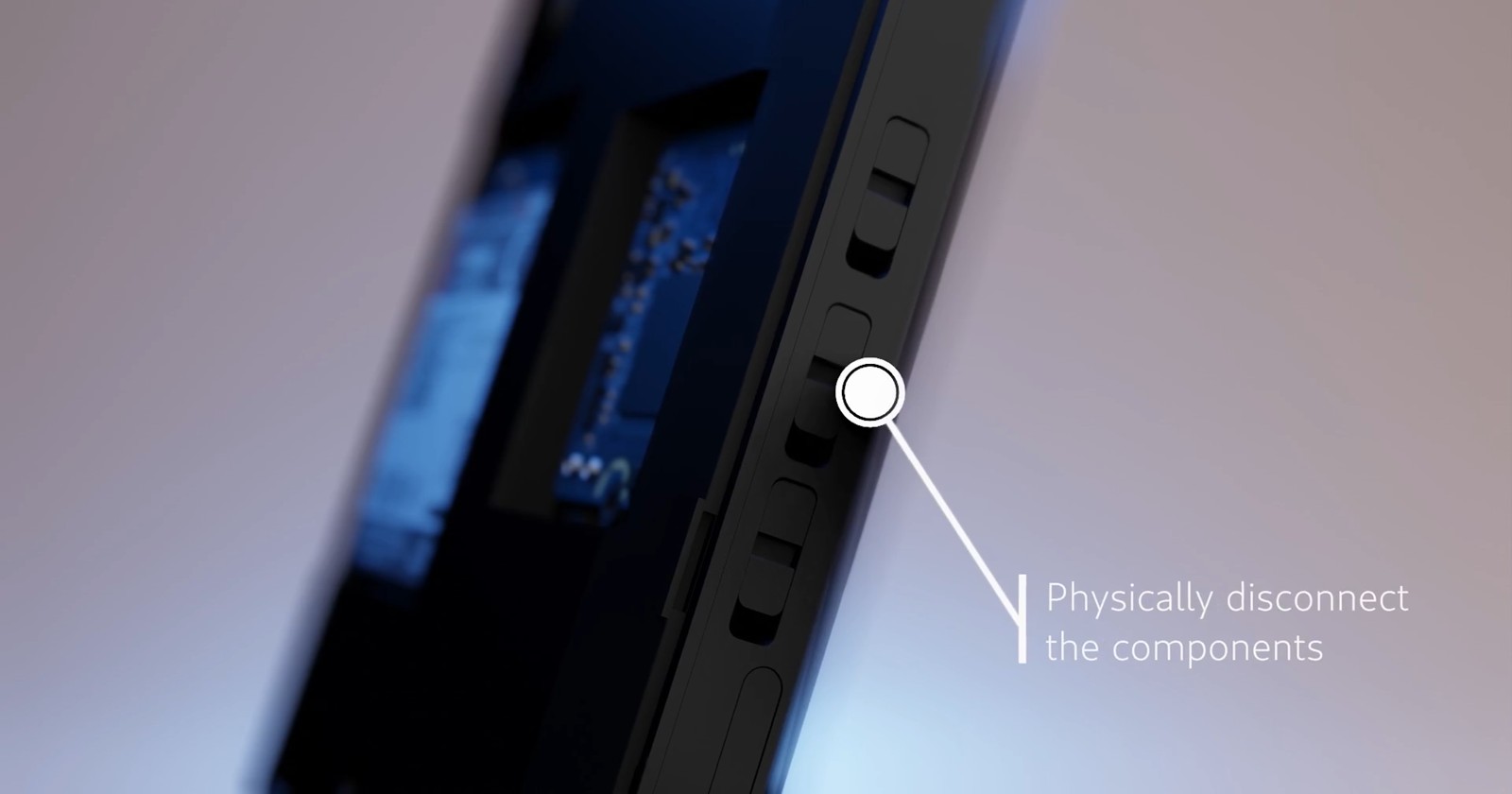
The confirmation came during a discussion regarding the Librem 5, a security-focused phone released back in 2020. The Librem 5 is famous in privacy circles for its hardware dip switches, which allow users to physically cut power to the Wi-Fi, Bluetooth, microphone, and camera.
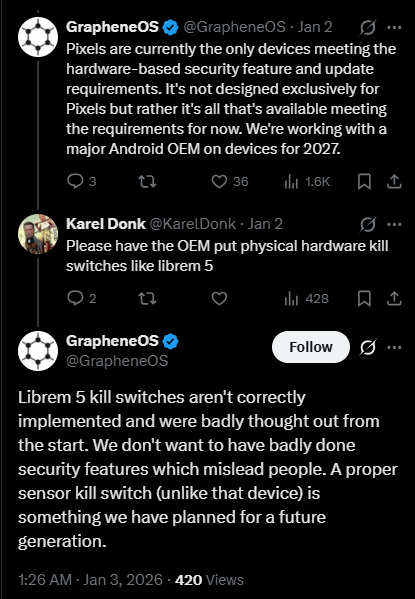
While acknowledging the concept, GrapheneOS was critical of the Librem 5’s execution. In a post regarding the device, the developers noted:
“Librem 5 kill switches aren’t correctly implemented and were badly thought out from the start. We don’t want to have badly done security features which mislead people.”
However, the criticism came with a significant pivot. Rather than dismissing the concept entirely, GrapheneOS revealed they are working on their own, superior version:
“A proper sensor kill switch (unlike that device) is something we have planned for a future generation.”
While they didn’t elaborate on the technical specifics of what makes a “proper” switch versus a “badly thought out” one, the intent is clear: GrapheneOS wants to offer hardware-level assurance that your sensors are off, without relying solely on software toggles.
While initially slated for a Q4 2026 or 2027 release, GrapheneOS recently confirmed that the first non-Pixel device officially supported by the OS will arrive in 2027. The reason for the delay? The hardware partner allegedly failed to meet specific requirements with their 2026 distinct handsets, forcing a delay to the 2027 iteration, where standards could be met.
It is now highly probable that this “proper sensor kill switch” is one of those strict hardware requirements. By moving away from the Google Pixel—which relies entirely on software for sensor disabling—GrapheneOS seems intent on building a device that matches their software rigidity with hardware capability.
For those wondering if the hardware partner in question might be Samsung, GrapheneOS has effectively shut that door. Despite Samsung’s improved track record with software updates, the hardware environment remains hostile to custom operating systems.
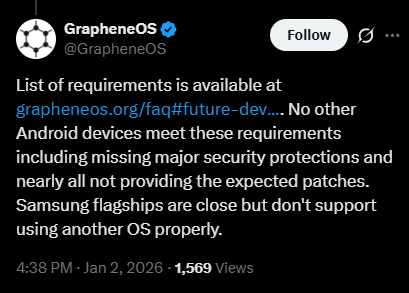
GrapheneOS explained the exclusion of the South Korean giant, stating:
“No other Android devices (except Google Pixel) meet these requirements including missing major security protections and nearly all not providing the expected patches. Samsung flagships are close (they receive regular updates and security patches) but don’t support using another OS properly.”
With the 2027 release window locked in, the prospect of a phone running GrapheneOS out of the box, complete with physical kill switches, is a massive development. It represents a transition for GrapheneOS from a software project that adapts to Google’s hardware to a platform that dictates the physical security features of the device itself.
For now, the Pixel remains the only viable home for GrapheneOS, but the future of privacy looks to be getting a dedicated physical kill switch.
We stand out from the tech-media crowd because we break news stories; we mainly bring you stuff that you won’t find anywhere in the mainstream tech media. Our stories have been picked up by some of the world’s most popular websites and media outlets—more info is available here.
Tech has been my playground for over a decade. While the Android journey began early, it truly took flight with the revolutionary Lollipop update. Since then, it's been a parade of Android devices (with a sprinkle of iOS), culminating in a mostly happy marriage with Google's smart home ecosystem. Expect insightful articles and explorations of the ever-evolving world of Android and Google products coupled with occasional rants on the Nest smart home ecosystem.
Update 31/01/26 - 09:22 am (IST): Brave's support team has confirmed that the company is aware and investigating the issue. They've also provided the same workaround...