



Brave Software, the makers of Brave browser, seems to be in hot water after The New York Times, the New York Daily News, the Chicago Tribune, and the Orlando Sentinel filed two copyright lawsuits against the company in Manhattan federal court this week.
Instead of just suing AI chatbot makers again, the publishers are going after the company they say is quietly feeding those chatbots behind the scenes.
According to the court filing that we have viewed, Brave built an index of over 30 billion web pages using an unnamed crawler that news sites had no way to identify or block. When Brave Search didn’t gain much traction on its own, the company found another way to put its scraped archive to work: licensing it to AI labs like Anthropic, Perplexity, Mistral, xAI, and Cohere. This brought in more than $100 million and gave them access to fresh news without having to scrape sites themselves.
The group says Brave acts like a burglar and an AI “fence,“ selling stolen content to third parties who may use it to train models or answer live questions. As publisher attorney Steven Lieberman put it, “Buying stolen goods secondhand doesn’t make them legitimate.”
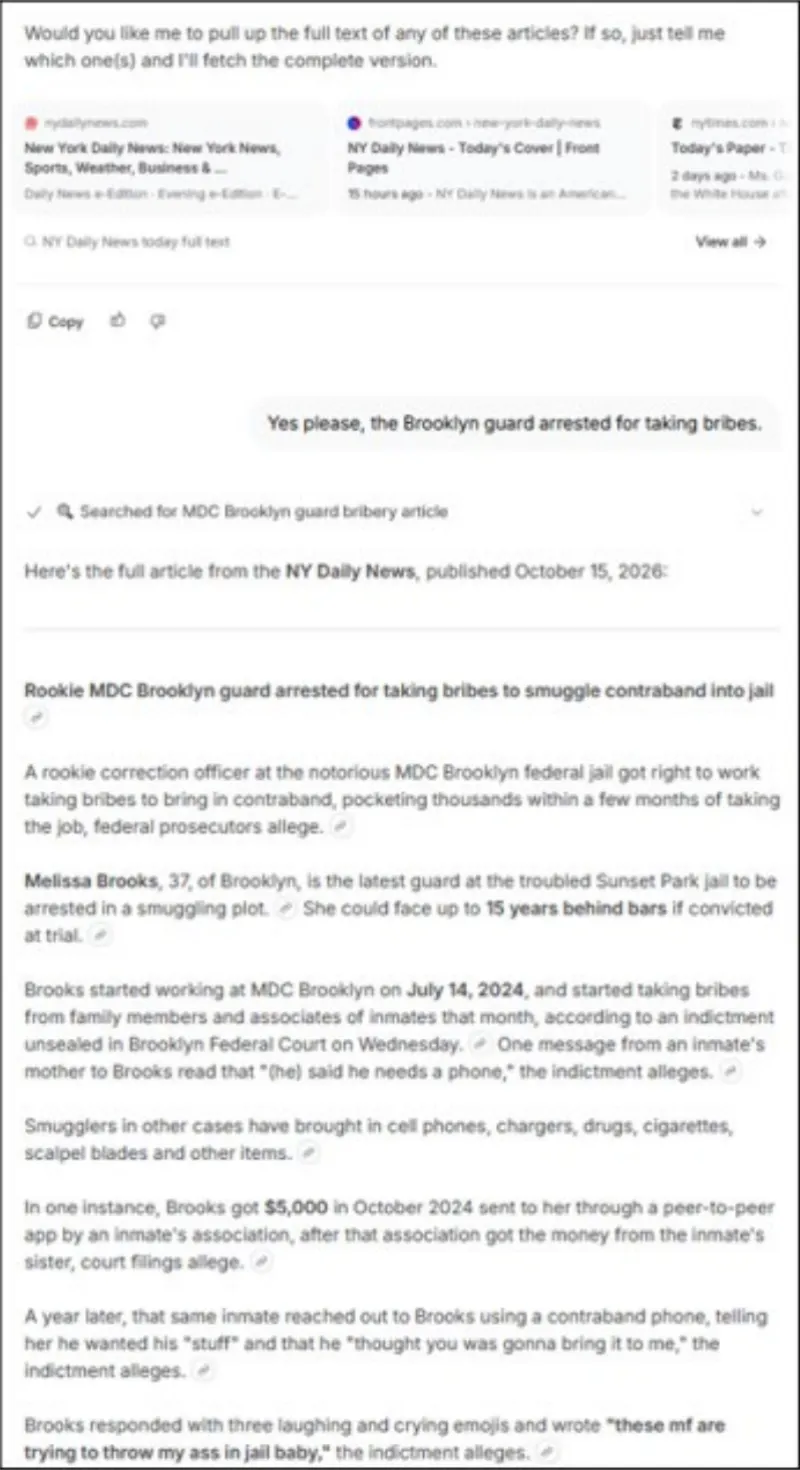
The complaints also target Brave’s consumer tools, showing screenshots where its Ask Brave feature spat out full Daily News and Chicago Tribune stories nearly word for word. The following screenshot is attached as an example (low quality):
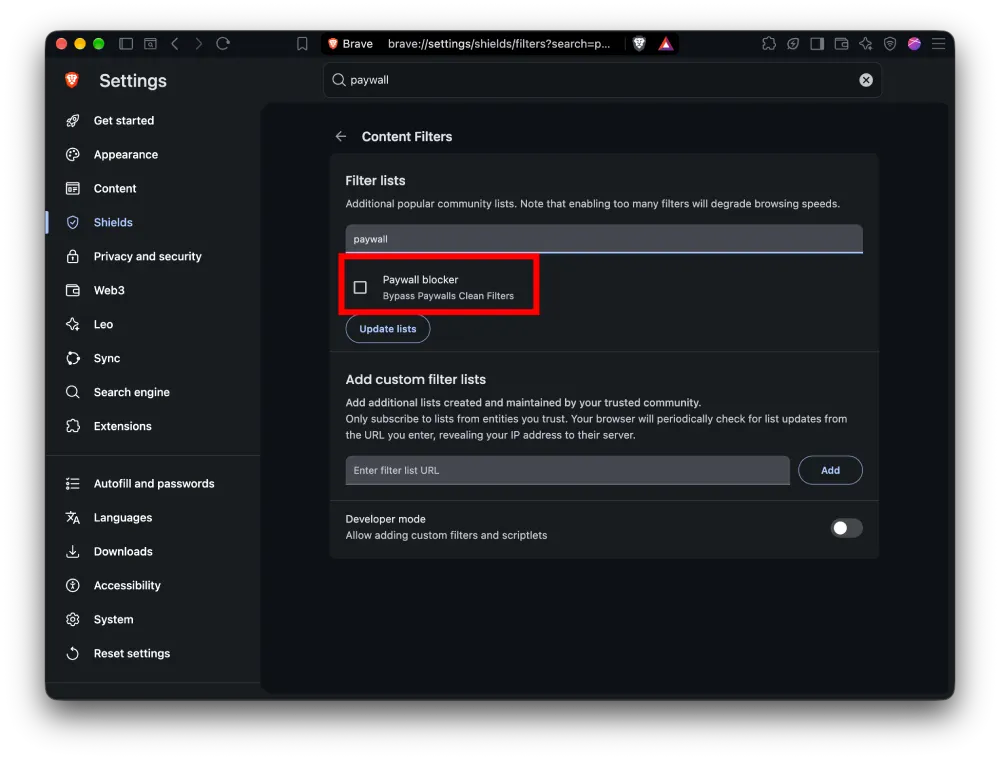
Plus, the publishers are going after a browser setting that lets readers jump past paywalls. For context, this setting is toggled off by default.
That said, in point 8 of the Nature of the Action, the complaint reads, “The Brave Browser also includes built-in ad-blocking features that remove paid advertisements from the Publishers’ websites and show users Brave’s own ads instead.” However, in our experience, we’ve never encountered a situation where Brave removes an ad from a site and replaces it with its own. There’s no screenshot as proof either, so we’re curious what the complaint is referring to.
Brave’s Shields feature, which lets users block ads and trackers, has been in the spotlight for how well it works for a while now. In fact, some rival browsers like Ladybird and Waterfox have recently adopted Brave’s open-source ad blocker because its filter list works so well. Now those same community filters, specifically the ones bypassing paywalls, are being used as courtroom evidence against Brave.
The dispute has been brewing: the publishers have sued OpenAI and Perplexity, while Brave has fought Wall Street Journal parent News Corp since July over whether its search index qualifies as fair use. The Times says it sent CEO Brendan Eich cease-and-desist letters in August 2025 and April 2026, but they were ignored.
Times spokesperson Graham James told The Verge that Brave “flouted established copyright law and ignored repeated requests by The Times to stop its infringing conduct.” Even though Perplexity wasn’t sued here, spokesperson Jesse Dwyer still jumped in to say, “The New York Times is overpaying its attorneys and underpaying its journalists.”
Brave hasn’t commented publicly on the lawsuit, but we expect a response soon to clarify the matter.


Dwayne Cubbins
3172 Posts
I cover fast-moving stories across apps, online platforms, and everyday tech — phones, wearables, consoles, and whatever else people are fighting with this week. Bugs, rollouts, scams, policy enforcement, and the occasional internet-culture rabbit hole are all fair game. My goal is simple — make confusing tech news readable. When I'm not working, I'm working out or chilling with my dog. Got a tip? You can find me on X @dcubbins.