





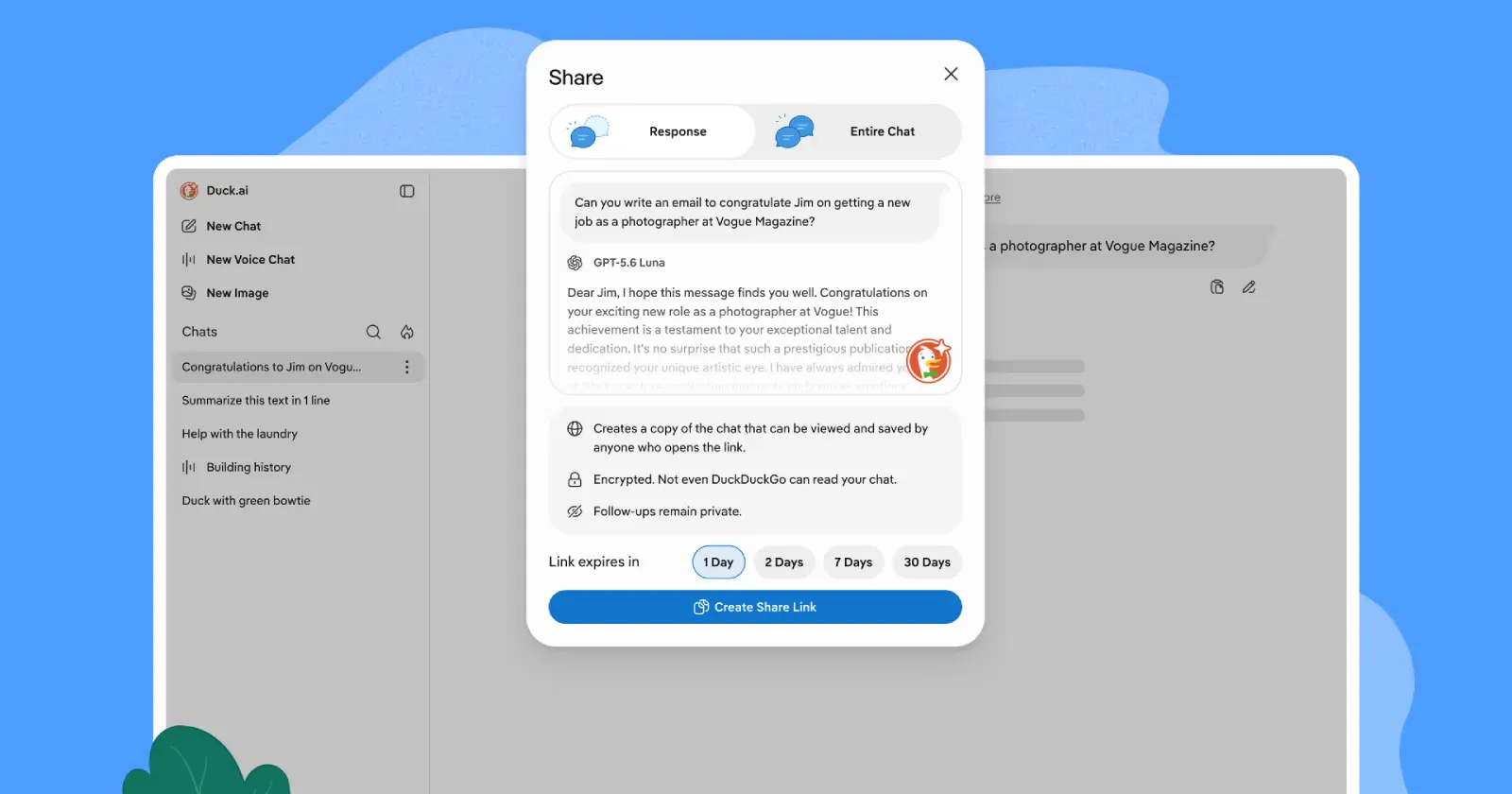
Sharing an AI chat shouldn’t mean pasting a wall of text into a message or leaving a public link floating around forever. DuckDuckGo seems to get that, and now they’re rolling out a new way to share chats on Duck.ai.
The new feature gives you a link you can send to anyone. They can open the chat, keep the conversation going, or save a copy, and they don’t even need a DuckDuckGo account. But the interesting part is what goes on behind the scenes.
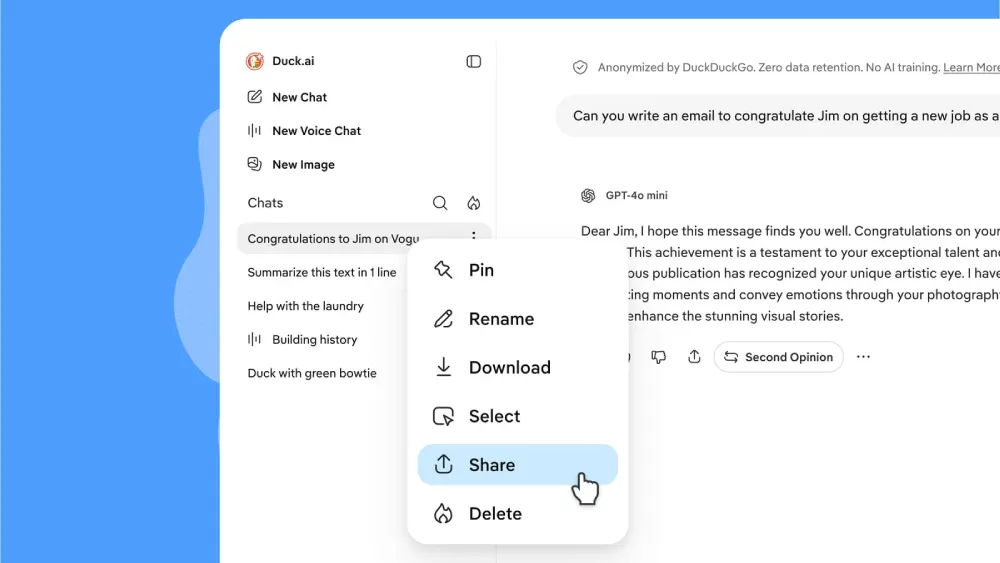
DuckDuckGo says chats get encrypted right in your browser before anything gets uploaded. The key to unlock the chat sits in the part of the link after the # symbol. Since browsers don’t send that bit to the server, DuckDuckGo never sees the key.
So DuckDuckGo can host your encrypted chat, but they can’t actually open it. It’s kind of like storing a locked box for you, but only you and the person you share the key with can open it.
They’re also making sure these shared chats don’t show up in search results. The pages are blocked from being indexed, so your private conversations shouldn’t pop up on Google or anywhere else by accident.
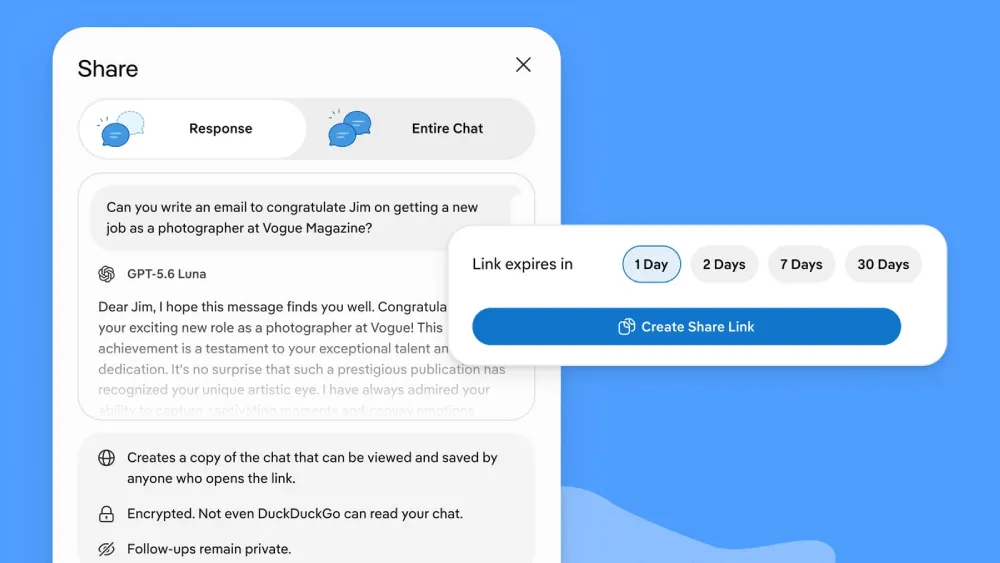
Another nice touch: these links don’t last forever. By default, shared chats expire after 48 hours, but you can pick anywhere from one day up to 30 days. Once time’s up, DuckDuckGo says the encrypted file is wiped from their servers.
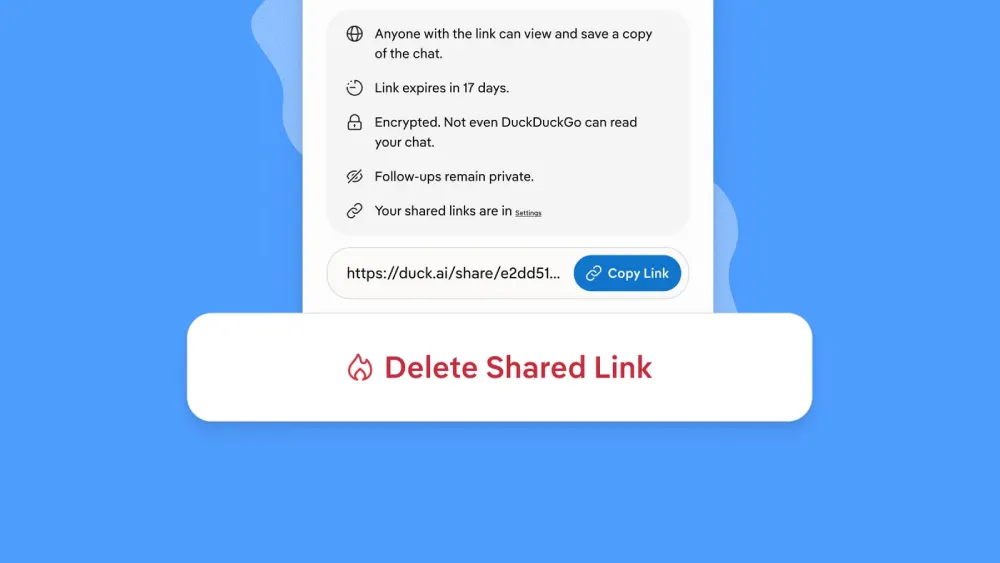
If you want to pull the plug sooner, you can just use DuckDuckGo’s Fire Button to delete the link early.
The move comes after several high-profile privacy concerns involving AI chat sharing. Shared ChatGPT and Claude conversations have previously appeared in Google results, with some containing names and other personal information that was never intended to become publicly searchable.
That’s a problem, especially since people tell AI assistants stuff they wouldn’t even share with friends or family. DuckDuckGo has pointed this out in their privacy research, so adding temporary, encrypted sharing to Duck.ai just makes sense.


Dwayne Cubbins
3095 Posts
I cover fast-moving stories across apps, online platforms, and everyday tech — phones, wearables, consoles, and whatever else people are fighting with this week. Bugs, rollouts, scams, policy enforcement, and the occasional internet-culture rabbit hole are all fair game. My goal is simple — make confusing tech news readable. When I'm not working, I'm working out or chilling with my dog. Got a tip? You can find me on X @dcubbins.