





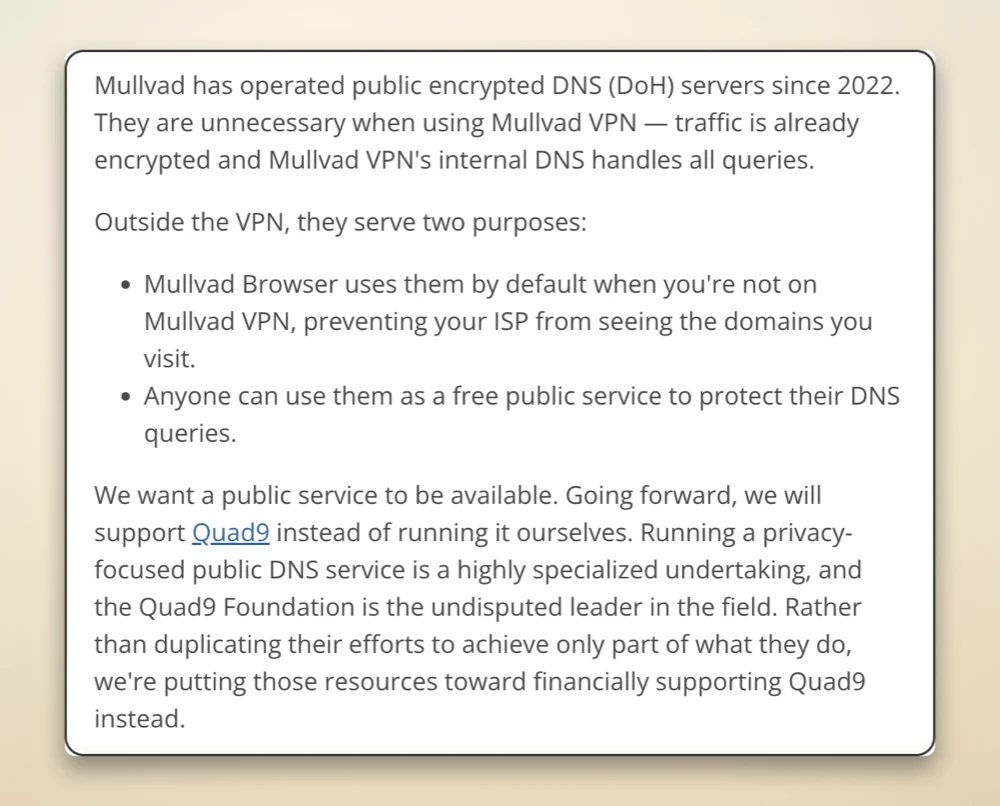
Mullvad has confirmed that the company is shutting down its public DNS servers. This decision comes four years after they launched the service, and they are now choosing to partner with Quad9 instead of handling the infrastructure on their own.
This change will affect Mullvad Browser users directly, since the browser relies on encrypted DNS out of the box. It means that your internet provider cannot easily snoop on the websites you visit, even if you’re not using a VPN at the time.
That built-in protection is a big reason why Mullvad Browser comes out on top when it comes to privacy tests.
Still, rather than put a lot of effort into competing with dedicated resolver networks, the company is instead redirecting its funding to the Quad9 Foundation. In the announcement, Mullvad explained that running a privacy-first public resolver is a massive undertaking, and dubbed Quad9 the “undisputed leader in the field.” So duplicating their setup didn’t make sense anymore.
Encrypted DNS is only one piece of the privacy puzzle, though. Even if your DNS lookups are hidden, trackers can still use things like browser fingerprinting to keep tabs on you. Still, keeping your ISP out of your DNS requests is a pretty important starting point.
For most Mullvad Browser users, there is nothing to change. If you are using the browser with its default settings or the regular ad-blocking option, it will switch over to Quad9 automatically in the background.
Things get a little different if you have manually changed the DNS settings. Anyone who added Mullvad’s custom DoH addresses themselves, or installed Mullvad’s standalone DNS profiles on macOS or iOS, will need to make a change before November 2. Those profiles will stop working after that date.
So, if you fall into that group, it is worth checking your network settings before the deadline. You can switch back to the defaults or install Quad9’s profiles instead. Otherwise, you could end up wondering why websites have suddenly stopped loading.


Dwayne Cubbins
3092 Posts
I cover fast-moving stories across apps, online platforms, and everyday tech — phones, wearables, consoles, and whatever else people are fighting with this week. Bugs, rollouts, scams, policy enforcement, and the occasional internet-culture rabbit hole are all fair game. My goal is simple — make confusing tech news readable. When I'm not working, I'm working out or chilling with my dog. Got a tip? You can find me on X @dcubbins.