





While experimenting in Chrome Canary 154.0.8020.2 today, I stumbled upon a newly added experimental flag called privileged-web-contents. The description says nothing more than that it enables infrastructure for privileged web contents.

However, I grew curious about the actual content Google was working on, so I decided to dive into the Chromium Gerrit source code and found some interesting details, which tie the flag to GEiC.
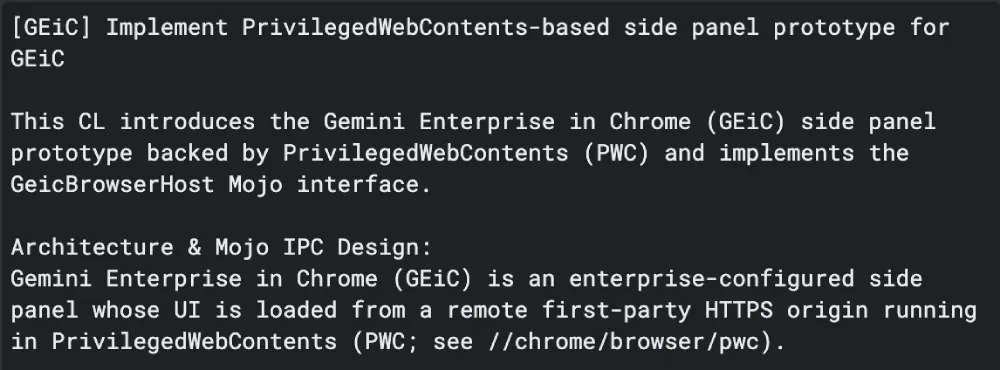
Unsurprisingly, GEiC stands for Gemini Enterprise in Chrome. So basically, Google is preparing a side panel that will host the Gemini Enterprise search interface. It means that instead of using Gemini Enterprise as a standalone app or website, corporate users will be able to use a Chrome-first workspace sidebar, which can read the contents of the current page.
For those not following, this comes hot on the heels of Google’s recent announcement of Gemini in Chrome for Android and the appearance of a dedicated history tab for auditing the AI assistant’s activity. So this is just another step in Google’s ongoing effort to integrate Gemini into Chrome wherever possible. However, this latest development will remain available primarily for work accounts and organizations.
The details shared in the Chromium commit stated that Gemini Enterprise in Chrome (GEiC) is an enterprise-configured side panel, and its UI is expected to be loaded from a remote first-party HTTPS origin.
Furthermore, the documentation highlights that each tab hosts its own independent copy of the panel to isolate the UI and prevent crashes from affecting other Chrome tabs. Essentially, context switching between workspaces should not impact Gemini Enterprise in Chrome, which will have its own isolated and separate environment.
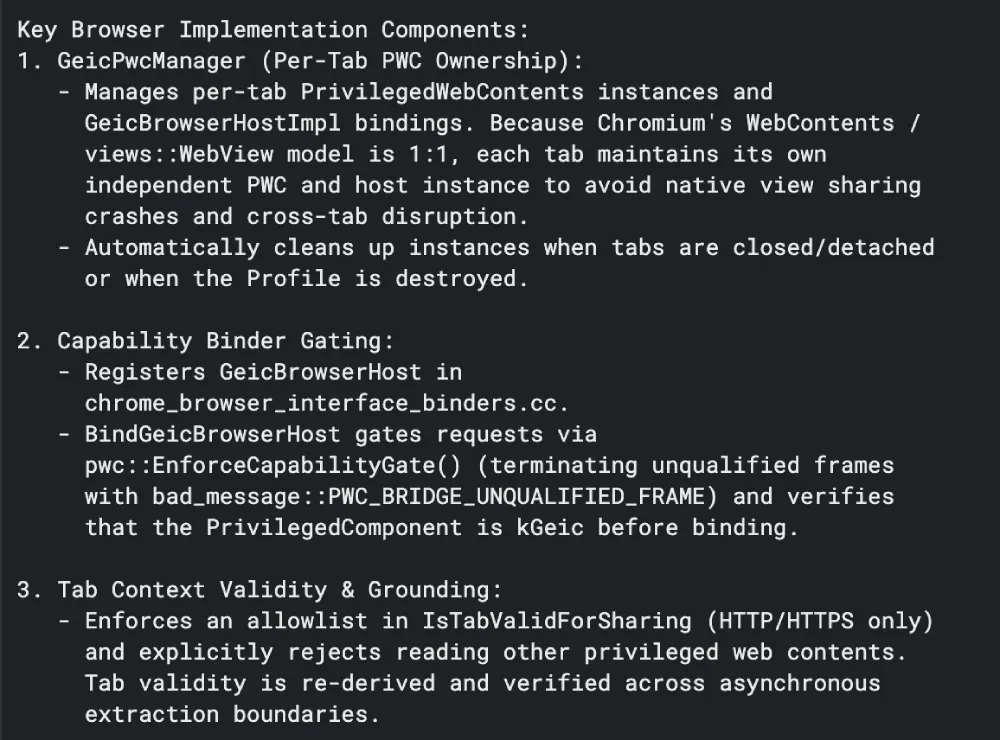
Crucially, the implementation notes mention that tab validity checking is limited to web pages, meaning that Gemini Enterprise in Chrome will not be able to access internal browser states or other enterprise tabs.
However, users who are running Chrome Canary with the privileged-web-contents flag enabled will not see any changes for now. That is because Google Workspace administrators must first enable the feature for their respective organizations, and the panel UI needs to be loaded from a remote server before anything can appear in the side panel.
Still, seeing the actual code reference in Chromium gives us a glimpse of what to expect with Gemini Enterprise in Chrome.


Dwayne Cubbins
2952 Posts
I cover fast-moving stories across apps, online platforms, and everyday tech — phones, wearables, consoles, and whatever else people are fighting with this week. Bugs, rollouts, scams, policy enforcement, and the occasional internet-culture rabbit hole are all fair game. My goal is simple — make confusing tech news readable. When I'm not working, I'm working out or chilling with my dog. Got a tip? You can find me on X @dcubbins.