Helium has now removed its repository mirrors from Codeberg, leaving the code available only on GitHub. This is because of new rules from Codeberg.
This information comes directly from a post on X by @uwukko, the lead developer of the Helium browser project.
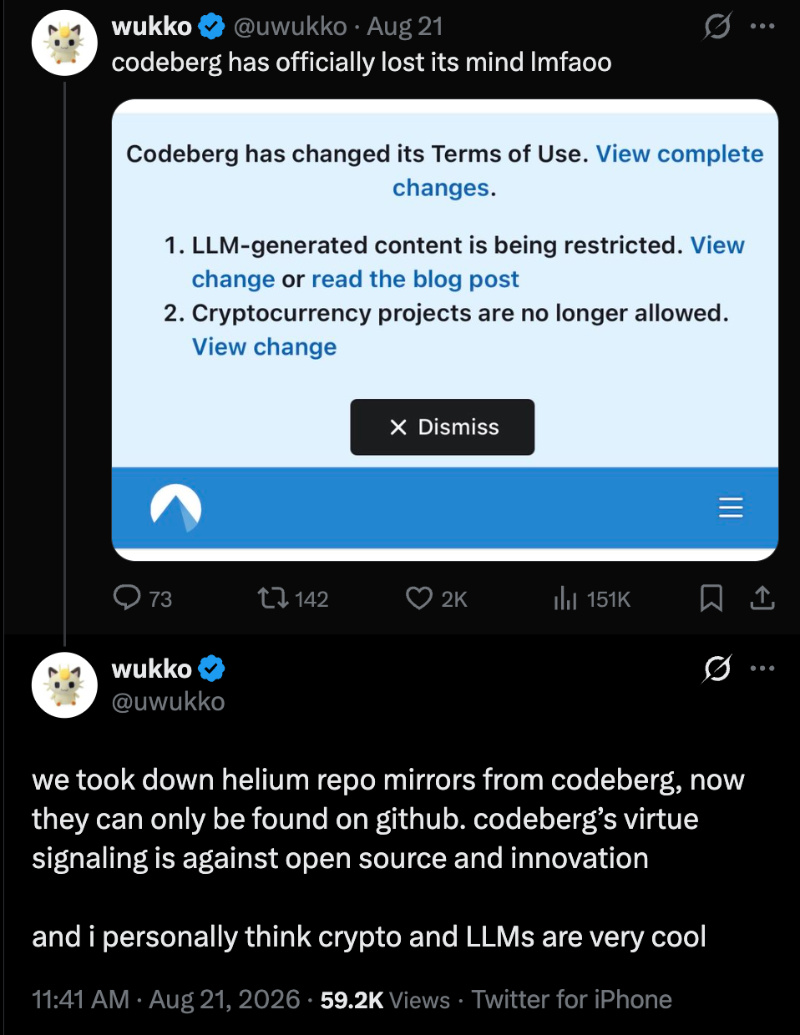
In the post, the developer shared a screenshot of a notice from Codeberg. It explains recent changes to the platform’s Terms of Use. According to the notice, Codeberg is now restricting LLM-generated content and is no longer allowing cryptocurrency projects.
For those unaware, Codeberg is a non-profit alternative to GitHub that’s community-run. It provides free Git repo hosting, and markets itself as privacy-friendly and non-commercial.
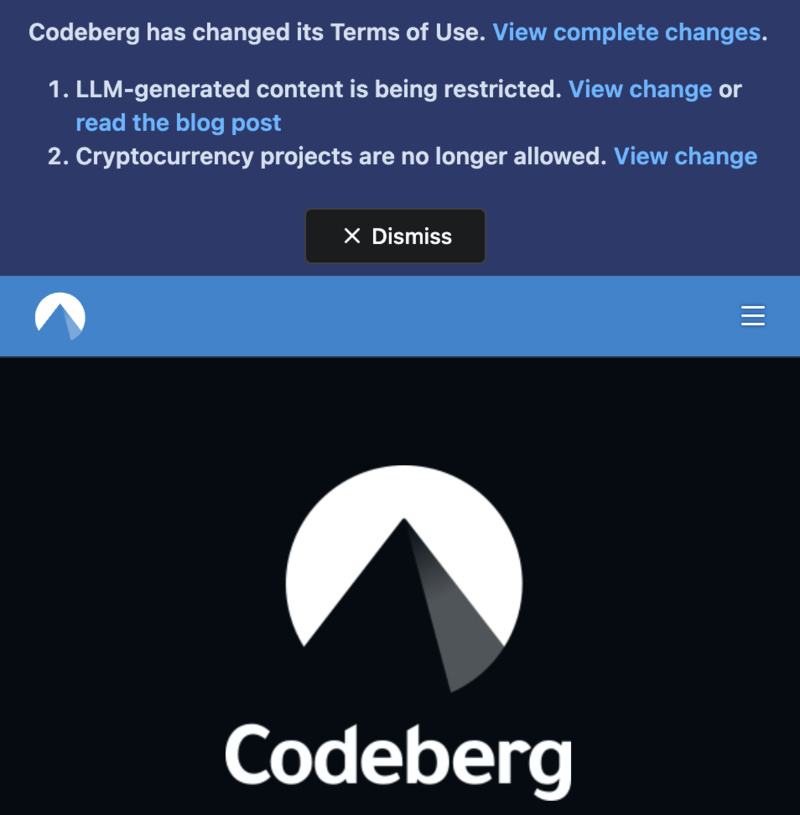
Immediately after visiting the Codeberg website, I was hit with a banner at the top that explains the new terms as well. Projects that consist ‘mostly’ of code written by generative AI tools are no longer allowed, and it targets vibe-coded projects. Crypto projects are also no longer permitted, since they “harm the reputation of Codeberg.”
If you’re a developer and have a crypto-related project or a largely LLM-generated project stored on Codeberg, I’d recommend moving it elsewhere immediately.
The developer of Helium reacted by saying that Codeberg has “officially lost its mind.” A follow-up reply to the original post confirms that the Helium repo mirrors were taken down from Codeberg.
As a result, Helium’s repositories are now available only on GitHub. The developer went on to describe Codeberg’s new rules as “virtue signaling” that goes against open source and innovation. He also stated that he is personally fond of crypto and LLMs.
It’s also not that easy to identify the difference between LLM-generated code and human-written code, so it’s interesting to observe how Codeberg will go about implementing these changes, and what detection systems would be used.
So, for enthusiasts who want to contribute to the Helium browser project, this means the project’s code is now centered on GitHub. The move was a direct response to Codeberg’s updated rules and doesn’t mean there’s any change to the Helium browser itself.
Reactions to the situation online were mixed. Some people agreed with the developer, but others claimed that Codeberg made the right decision because Codeberg is a non-profit, and that it’s difficult for them to manage LLM code, which also theoretically raises concerns about quality.

This situation aside, Helium is on a roll lately. The developer teased an upcoming iOS and Android app, and there’s an experimental flag that lets you bypass heavy internet censorship. More on that here.
Disclaimer: This article is purely informative. PiunikaWeb maintains a neutral position and doesn’t endorse or oppose any of the parties/decisions involved.


Sudhanshu K
311 Posts
I have been a consumer technology enthusiast for over 5 years. Thanks to my experience in software beta testing and product reviews, I've understood and learnt a lot about what bugs and issues bother people, and I spend time trying to simplify their solutions. I cover smartphones, software, social media, apps, AI, and most consumer tech gadgets. Actively pursuing a Computer Science bachelor’s degree. I'm mostly active on Twitter/X (@TechWhirlUlt), drop a DM or tag me if you want to share info or connect!
Next article View Article