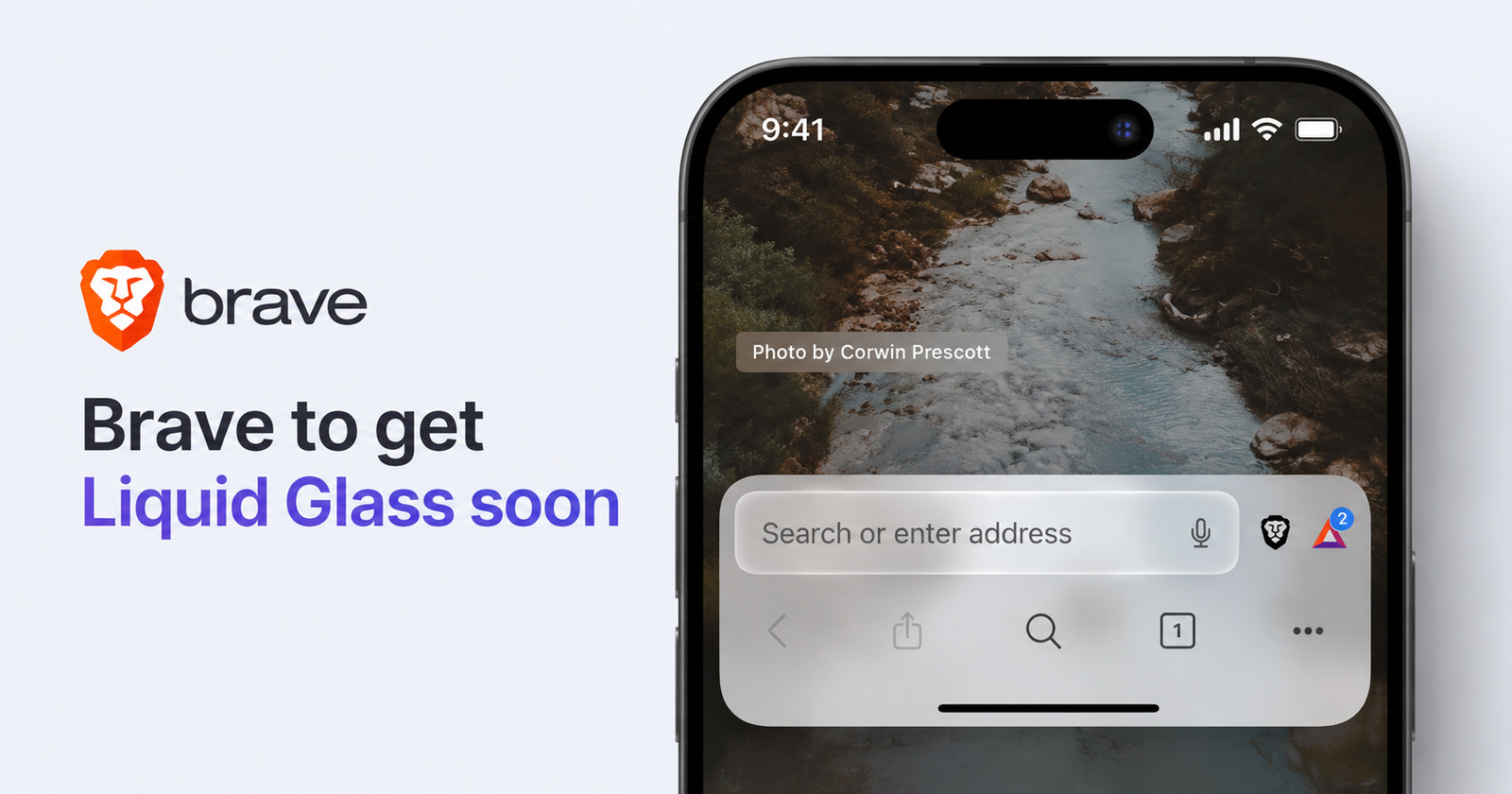
Among the popular apps on iOS that still don’t use Apple’s Liquid Glass design elements, Brave is one of them. Firefox and Chrome have implemented some glass elements, while Brave still doesn’t have any. However, that could change soon.
Agustín Ruiz, a design engineer at Brave, recently revealed that “something is in the works” to bring Liquid Glass elements to Brave.
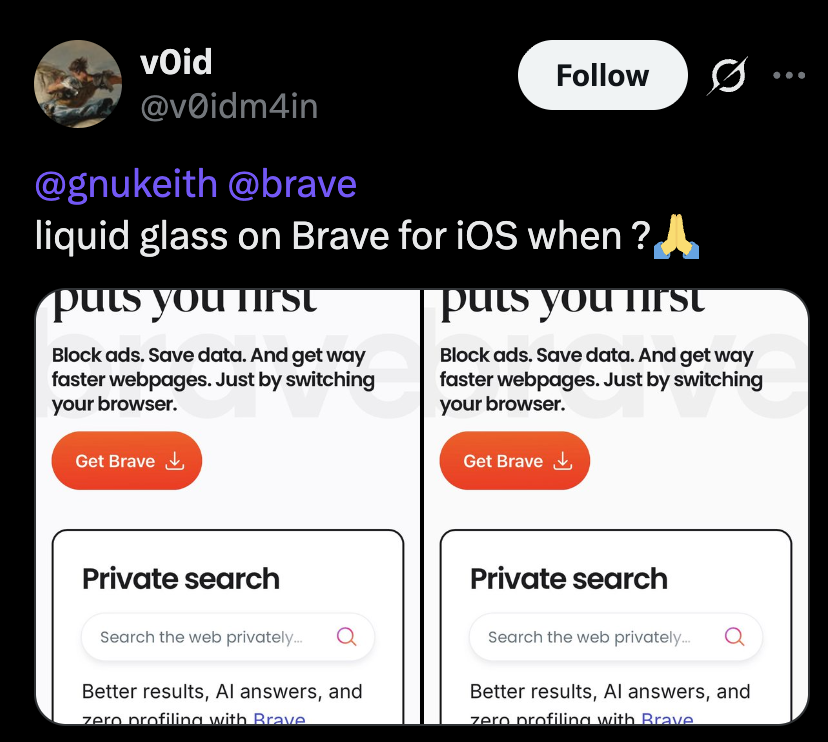
It all started when someone enquired about the status of Liquid Glass on Brave through a post on X.
Replying to the post, Brave’s PM tagged the design engineer, who later responded that Brave is currently working on bringing it, but there’s no specific ETA at the moment.
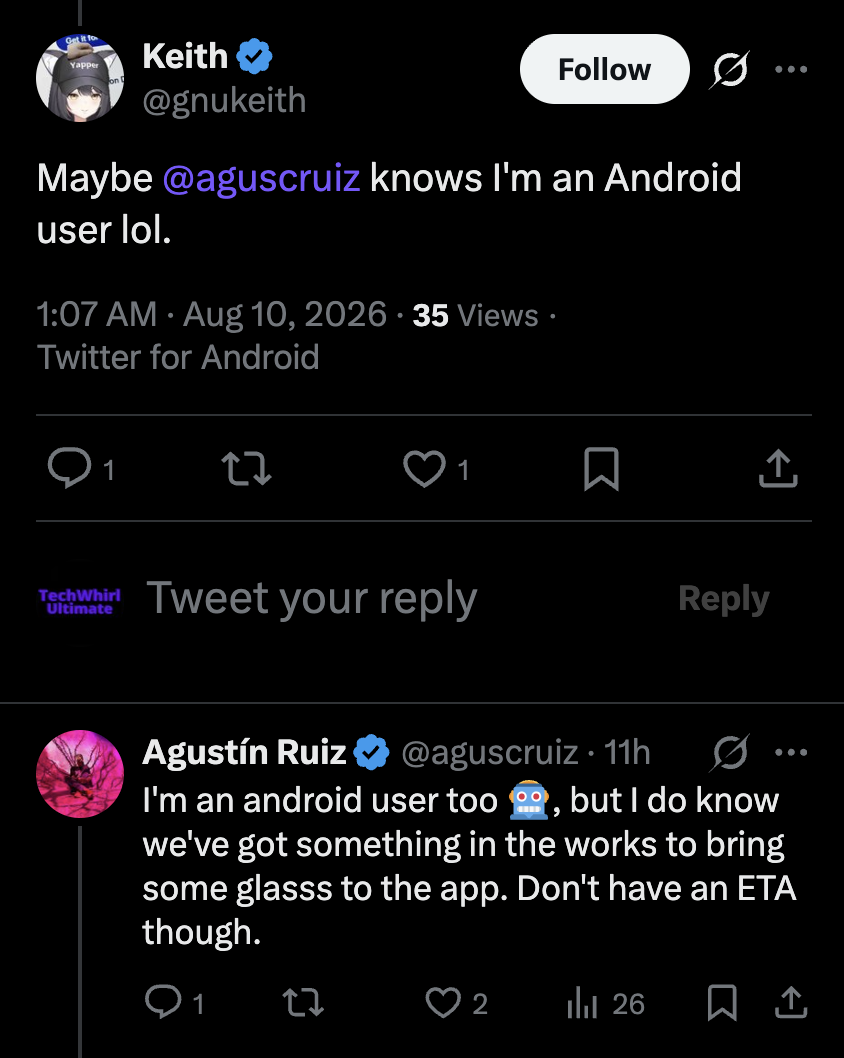
Since the reply mentions “some” glass, I wouldn’t expect something as dramatic as Apple’s Safari.
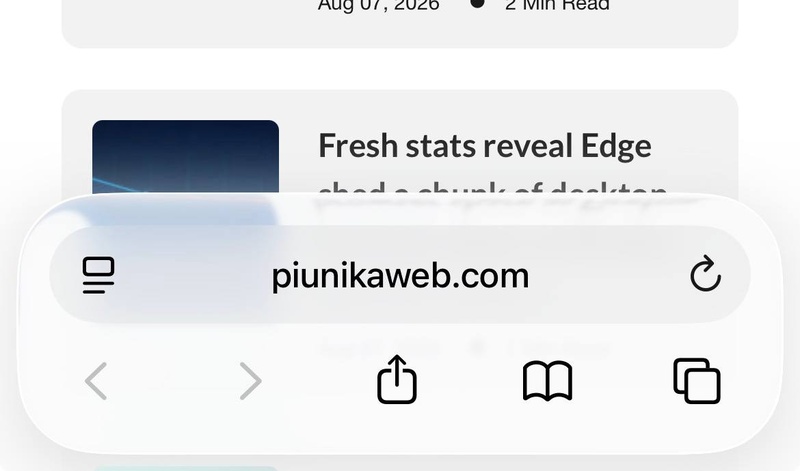
The implementation will likely be more subtle, like Chrome and Firefox have done.
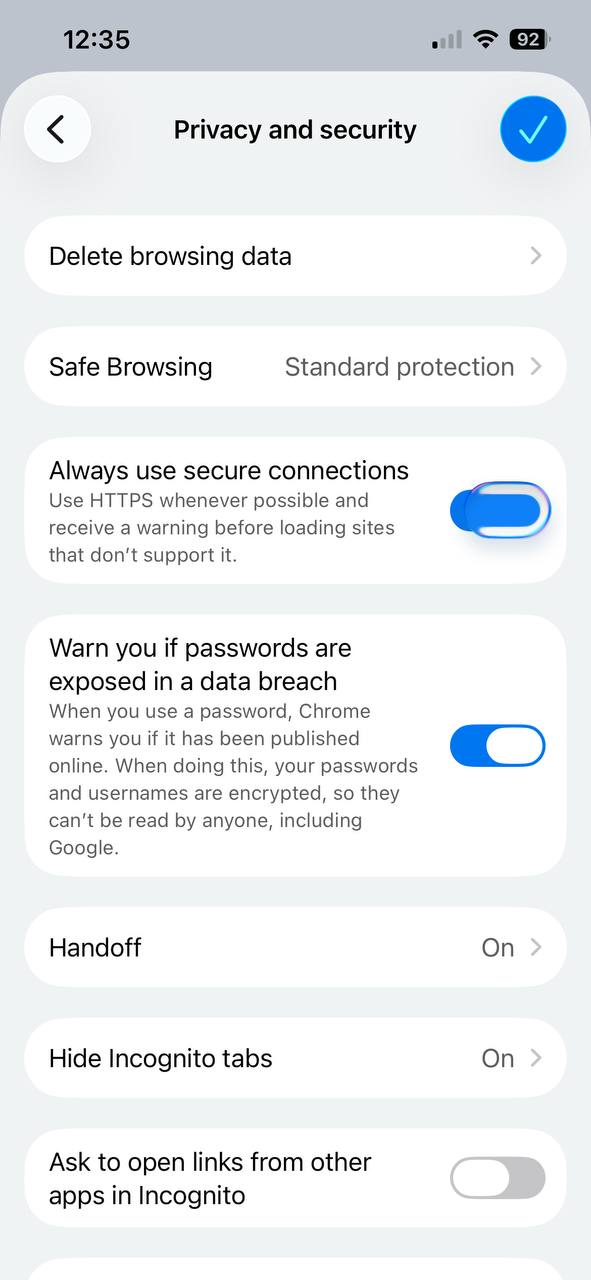
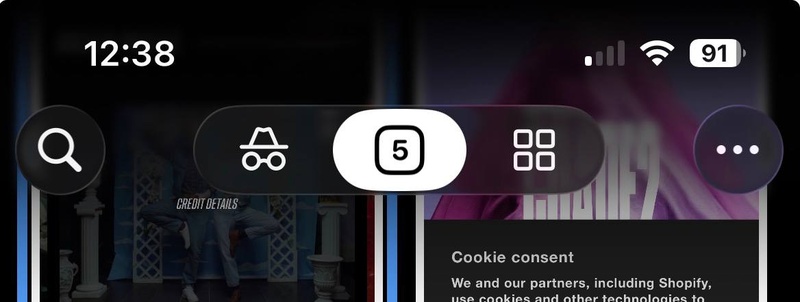
For example, on Chrome, there are more rounded corners, the toggles in the Settings menu have the Liquid Glass design, and the tab switcher also has some semi-transparent elements.
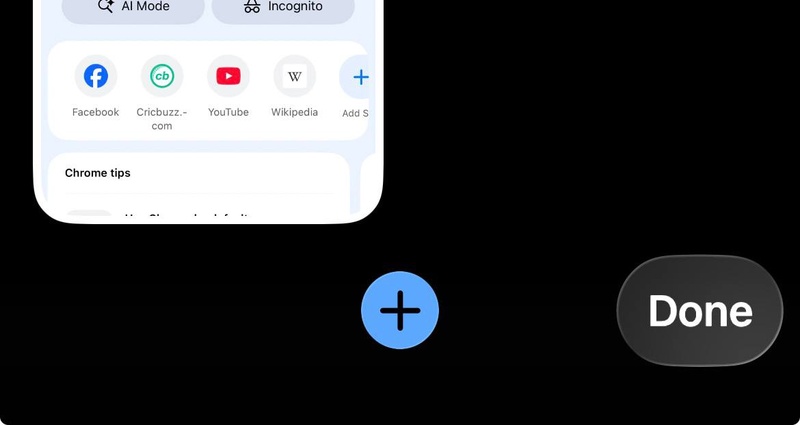
Some buttons such as “Done” incorporate it as well. Despite that, everything remains perfectly readable, and it’s not overdone. The application of glass in the design is rather minimal.
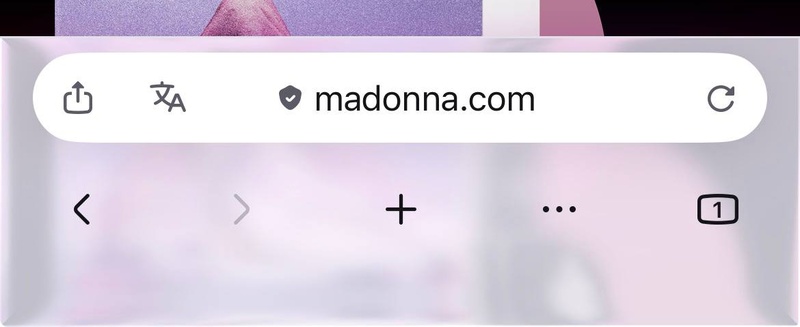
On Firefox, the address bar contains the translucent element of Liquid Glass. When the address bar is minimized, you’ll find that the background color is present. It also shows up when it’s maximized. Both browsers have the light effects around the borders of certain UI elements.

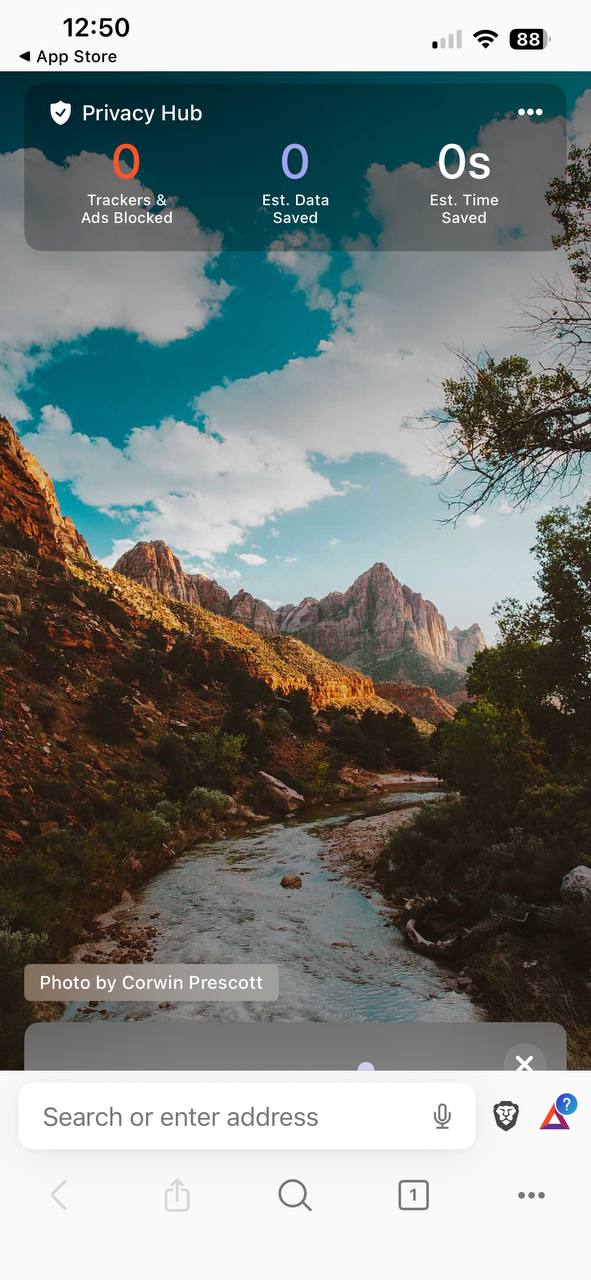
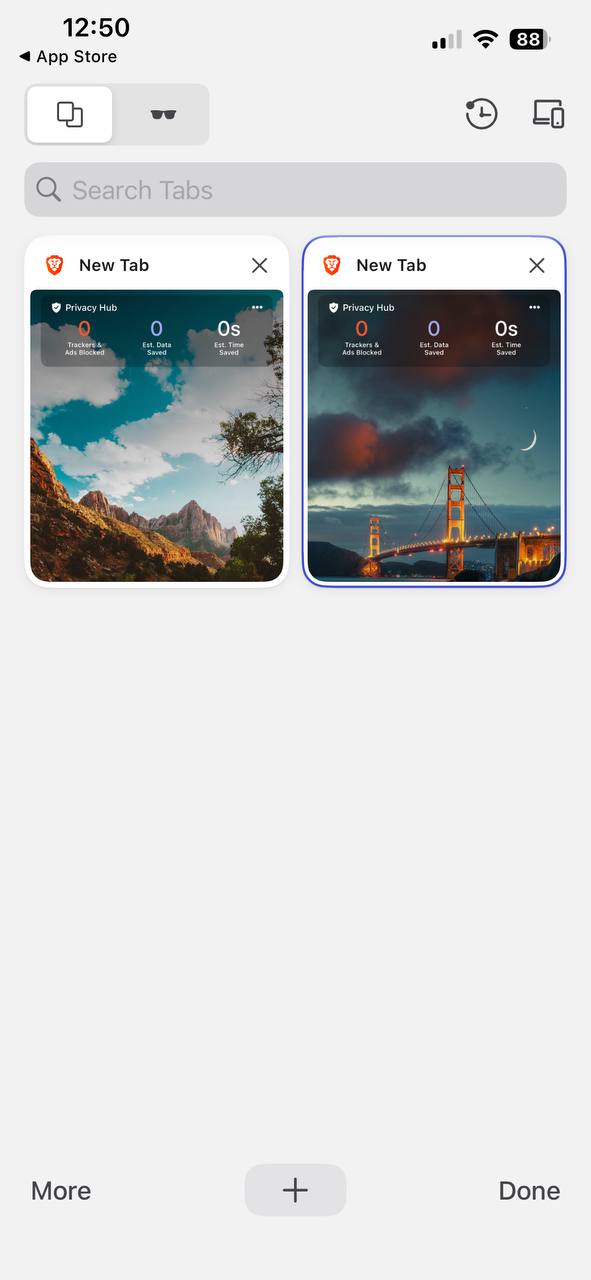
The screenshots below show the current UI on Brave, which doesn’t look as modern as Chrome, Safari, and Firefox. So, I’d expect more rounded corners, light effects on the borders, fancier buttons, and glass/translucent effects in an upcoming update.
While the iOS version is long overdue for a design refresh, the latest update on Android has finally added a Search Bar for the Settings page. More on that here.
Featured image: AI


Sudhanshu K
263 Posts
I have been a consumer technology enthusiast for over 5 years. Thanks to my experience in software beta testing and product reviews, I've understood and learnt a lot about what bugs and issues bother people, and I spend time trying to simplify their solutions. I cover smartphones, software, social media, apps, AI, and most consumer tech gadgets. Actively pursuing a Computer Science bachelor’s degree. I'm mostly active on Twitter/X (@TechWhirlUlt), drop a DM or tag me if you want to share info or connect!
Next article View Article