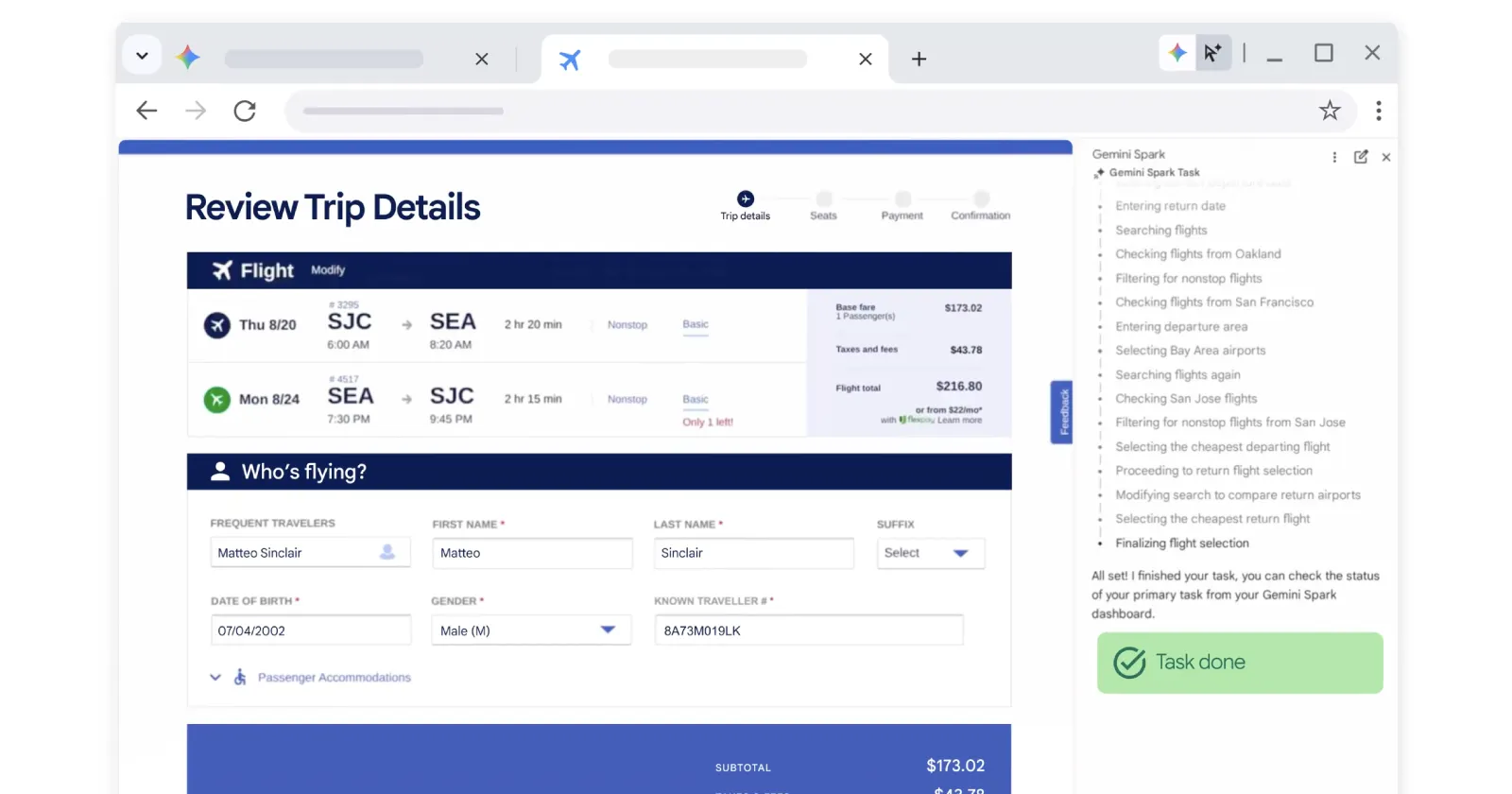
Google is giving Gemini Spark another upgrade, this time by letting it work more closely with Chrome.
Until now, Spark handled web tasks using a remote browser managed by Google. With this update, it can use Chrome running on your computer instead. After you give it permission, Spark can access websites where you’re already signed in, use your saved passwords, and continue tasks without asking you to log in again.
Google also says it has built safeguards to protect against prompt injection attacks while Spark is browsing the web. This is a serious security concern with AI browsers, as we’ve highlighted in multiple reports recently.
In its announcement, Google said Spark can now take care of “tedious web errands” such as scheduling apartment viewings you’ve already been researching or looking up flights and getting the booking process started. Once Spark reaches a step that requires your approval, it hands control back to you instead of completing the action on its own.
Chrome itself has been picking up more Gemini features over the past few months, including Auto Browse, which was introduced earlier this year. This update connects that capability to Gemini Spark, so the AI agent can carry out tasks directly in your own browser instead of relying on a separate browsing environment. When Spark is actively using Chrome, you’ll also see an indicator in the browser’s toolbar so you know it’s working on your behalf.
But that’s not all. Google is even expanding access to Gemini Spark itself. Starting today, Google AI Pro subscribers in more than 160 additional countries can begin using Spark, following its earlier rollout in the US.
The deeper Chrome integration, however, is currently limited to Google AI Pro and AI Ultra subscribers in the US, with Google saying it plans to bring it to more regions over time.
I checked whether the feature had reached my account in India, but I couldn’t get Gemini Spark to appear in Chrome version 151.0.7922.72, despite having an active Google AI Pro subscription. It’s likely that Google is enabling the rollout in batches, so even eligible users may have to wait a little longer before they see it.
Meanwhile, Google also rolled out Gemini for Chrome on Android this month. It’s also testing an AI-powered virtual try-on feature in Chrome. So it’s clear that the search giant is ramping up its efforts to bring AI in all shapes and sizes to Chrome.


Dwayne Cubbins
3066 Posts
I cover fast-moving stories across apps, online platforms, and everyday tech — phones, wearables, consoles, and whatever else people are fighting with this week. Bugs, rollouts, scams, policy enforcement, and the occasional internet-culture rabbit hole are all fair game. My goal is simple — make confusing tech news readable. When I'm not working, I'm working out or chilling with my dog. Got a tip? You can find me on X @dcubbins.
Next article View Article