If you use LibreWolf, then you should go ahead and install the latest version. LibreWolf 153 is out now, and it pulls in pretty much everything that shipped with Firefox 153.
We’ve already highlighted everything new with Firefox 153. The headline feature here is native Containers. This lets you split your browsing into separate boxes, so your work logins, your banking, your shopping, and your personal stuff all stay walled off from each other. Each container keeps its own cookies and site data. That means you can be signed into two accounts on the same site at once, and sites have a much harder time following you around.
Here’s a screenshot of the feature in action on LibreWolf 153:
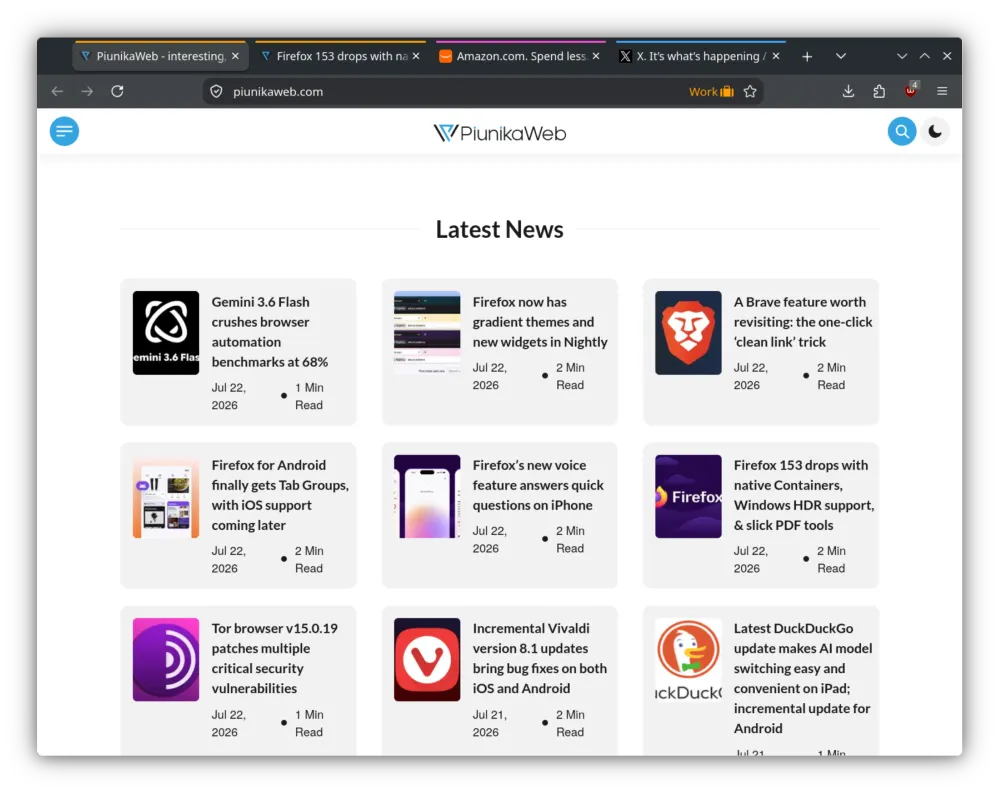
The two yellow-marked tabs are in the Work container. The Amazon tab is in the Shopping container, while the X tab is in the Personal container.
Apart from this, the PDF tools got a nice bump too. You can now merge documents by dragging one PDF into the sidebar of another, and you can drop images straight into a PDF as new pages using the built-in editor. This means you can ditch the third-party tools and just use the built-in PDF editor for the most part.
But that’s not all. There are a bunch of other improvements and tweaks scattered around.
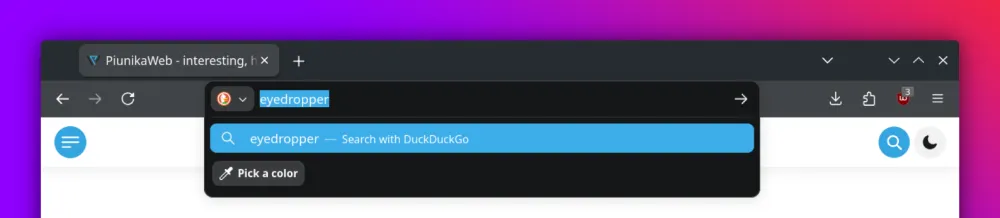
You can turn any open page into a QR code by right-clicking the tab and picking Share, then Generate QR Code. There is a new color picker you trigger by typing something like “eyedropper” into the address bar.
Windows users also get HDR video playback, as long as HDR is switched on in their display settings.
On the privacy side, which is really LibreWolf’s whole thing, Firefox 153 added a red indicator that pops up whenever a site is actively grabbing your location. Extensions also can no longer poke around your local files unless you specifically allow it. These sit on top of the hardened defaults LibreWolf already ships with, so you are getting a stricter setup out of the box.
Worth flagging that this release is a straight rebase on Firefox 153, so there is nothing LibreWolf-specific that is brand new this time. Builds are available now for Windows, macOS, and Linux on both ARM64 and x86_64.


Dwayne Cubbins
2975 Posts
I cover fast-moving stories across apps, online platforms, and everyday tech — phones, wearables, consoles, and whatever else people are fighting with this week. Bugs, rollouts, scams, policy enforcement, and the occasional internet-culture rabbit hole are all fair game. My goal is simple — make confusing tech news readable. When I'm not working, I'm working out or chilling with my dog. Got a tip? You can find me on X @dcubbins.
Next article View Article