
If you’ve been pulling your hair out over Helium browser randomly nuking your logged-in sessions and extensions, we finally have some good news for you. Earlier this month, we highlighted this exact issue, noting that developers were completely stumped and unable to reproduce the bug. Now, thanks to detailed user sleuthing, the root cause has been cornered, and a permanent fix is actively in the works.
The breakthrough happened over the weekend when a macOS user running Helium version 0.14.5.1 detailed a massive profile migration failure. After restarting the browser for an update, all their authenticated sessions instantly vanished, even though their history, extensions, and saved passwords remained untouched. A dive into the cookie database revealed an automated bulk deletion—essentially, the browser treated existing encrypted cookies as stale and wiped them out.
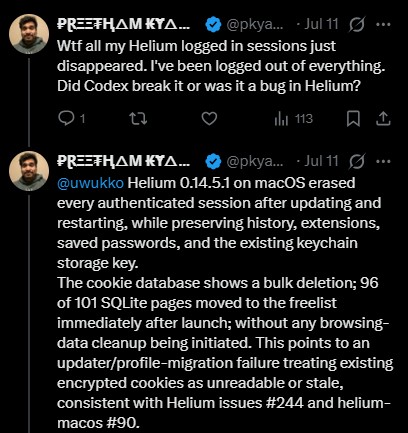
We’ve been monitoring the resulting discussions around these Helium issues, and a developer has stepped in to explain exactly what is breaking. The actual culprit is Chromium’s built-in anti-tampering system. The developer candidly described these upstream security measures as unpolished and “way too nuclear,” noting that they frequently misfire even in standard Chromium builds.
When you update Helium, the previous browser process occasionally holds onto the SQLite lock for a split second too long. The newly launched process tries to access your encrypted cookies, encounters this temporary lock, and mistakenly equates the delay to a total encryption key loss. Panicking, the browser wipes your encrypted data entirely and generates a new key, which immediately logs you out of every website. The developer noted that temporary unavailability of the oscrypt service triggers the exact same catastrophic wipe.
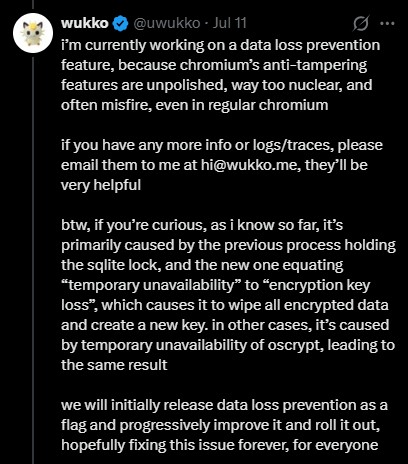
To stop Chromium from destroying user data, the Helium team is currently coding a custom data loss prevention feature. Because they want to test it thoroughly, this safeguard will initially launch as an experimental browser flag. The team plans to progressively refine the feature before rolling it out widely, which should finally put an end to these frustrating update wipes.
If you happen to catch this bug in the act and can grab the crash traces or logs, the team is still asking users to forward them to [email protected] to help bulletproof the upcoming fix.


Hillary Keverenge
2723 Posts
Tech has been my playground for over a decade. While the Android journey began early, it truly took flight with the revolutionary Lollipop update. Since then, it's been a parade of Android devices (with a sprinkle of iOS), culminating in a mostly happy marriage with Google's smart home ecosystem. Expect insightful articles and explorations of the ever-evolving world of Android and Google products coupled with occasional rants on the Nest smart home ecosystem.
Next article View Article