Chrome’s Ad Privacy settings have quietly disappeared in Chrome 150.
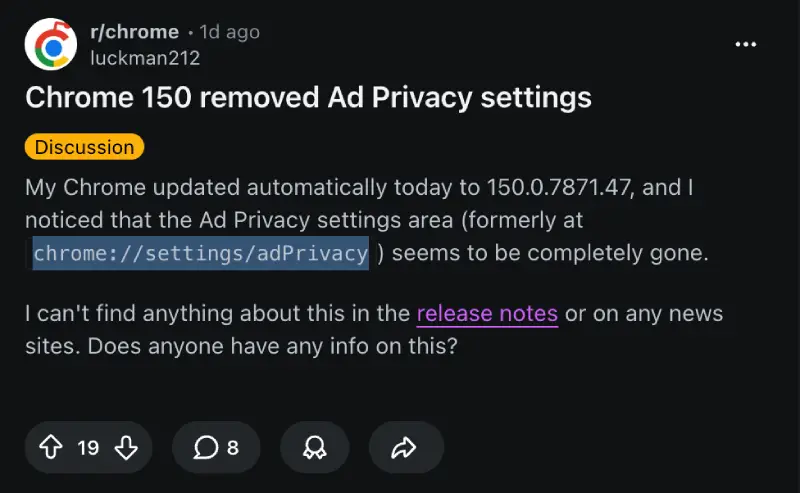
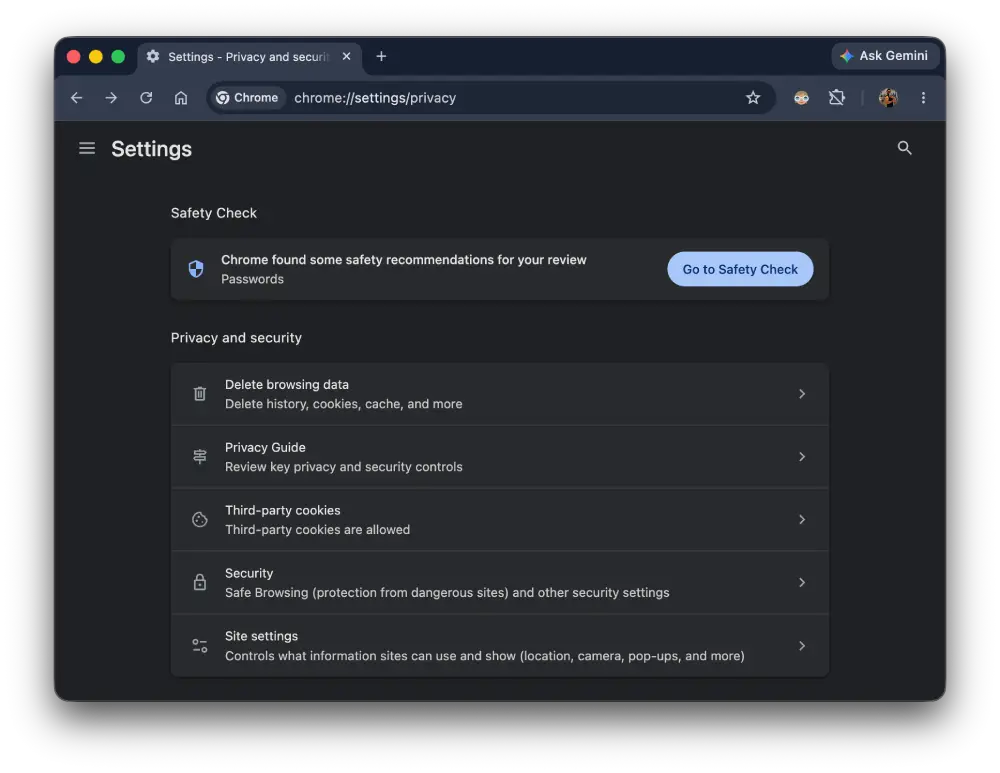
There’s been no announcement from Google, no mention in the release notes, and most users probably won’t even notice. But if you try to open chrome://settings/adPrivacy now, you’ll simply be redirected back to the main Settings page.
The change was first spotted by a Reddit user after updating to Chrome 150.0.7871.47. We checked it ourselves and can confirm the page is gone.
If you’ve never used the feature, the Ad Privacy page let users manage Google’s Privacy Sandbox settings. It included controls for things like Ad Topics, Site-suggested ads, and Ad measurement, all of which were introduced as part of Google’s plan to reduce reliance on third-party cookies.
That plan never really worked out.
Google first introduced Privacy Sandbox several years ago as a replacement for third-party cookies. The idea was to let advertisers show relevant ads without tracking users across the web in the traditional way.
The proposal faced criticism almost from the beginning. Regulators questioned whether it would give Google even more control over online advertising, while many companies in the ad industry were slow to adopt the new APIs. After multiple delays, Google confirmed last year that it would no longer remove third-party cookies from Chrome. A few months later, it also announced that most of the Privacy Sandbox project would be retired.
With the underlying features being phased out, the Ad Privacy page no longer served much of a purpose. Chrome 150 appears to be the release where Google finally removed the leftover settings.
We, however, noticed that Google’s own support documentation hasn’t caught up yet. The help page still tells users to open Settings > Privacy and security > Ad privacy to manage those controls, even though that menu no longer exists in Chrome 150. The documentation will likely be updated at some point.
The removal isn’t one of the headline changes in Chrome 150, but it does mark the end of a feature Google spent years developing.
The same Chrome release also completed the transition away from Manifest V2, leaving many users looking for temporary workarounds after uBlock Origin stopped working in the browser.
For most people, the missing Ad Privacy page won’t change how they use Chrome. Still, its removal quietly closes the chapter on Privacy Sandbox, one of Google’s biggest browser projects that ultimately never gained the traction the company had hoped for.


Dwayne Cubbins
3060 Posts
I cover fast-moving stories across apps, online platforms, and everyday tech — phones, wearables, consoles, and whatever else people are fighting with this week. Bugs, rollouts, scams, policy enforcement, and the occasional internet-culture rabbit hole are all fair game. My goal is simple — make confusing tech news readable. When I'm not working, I'm working out or chilling with my dog. Got a tip? You can find me on X @dcubbins.
Next article View Article