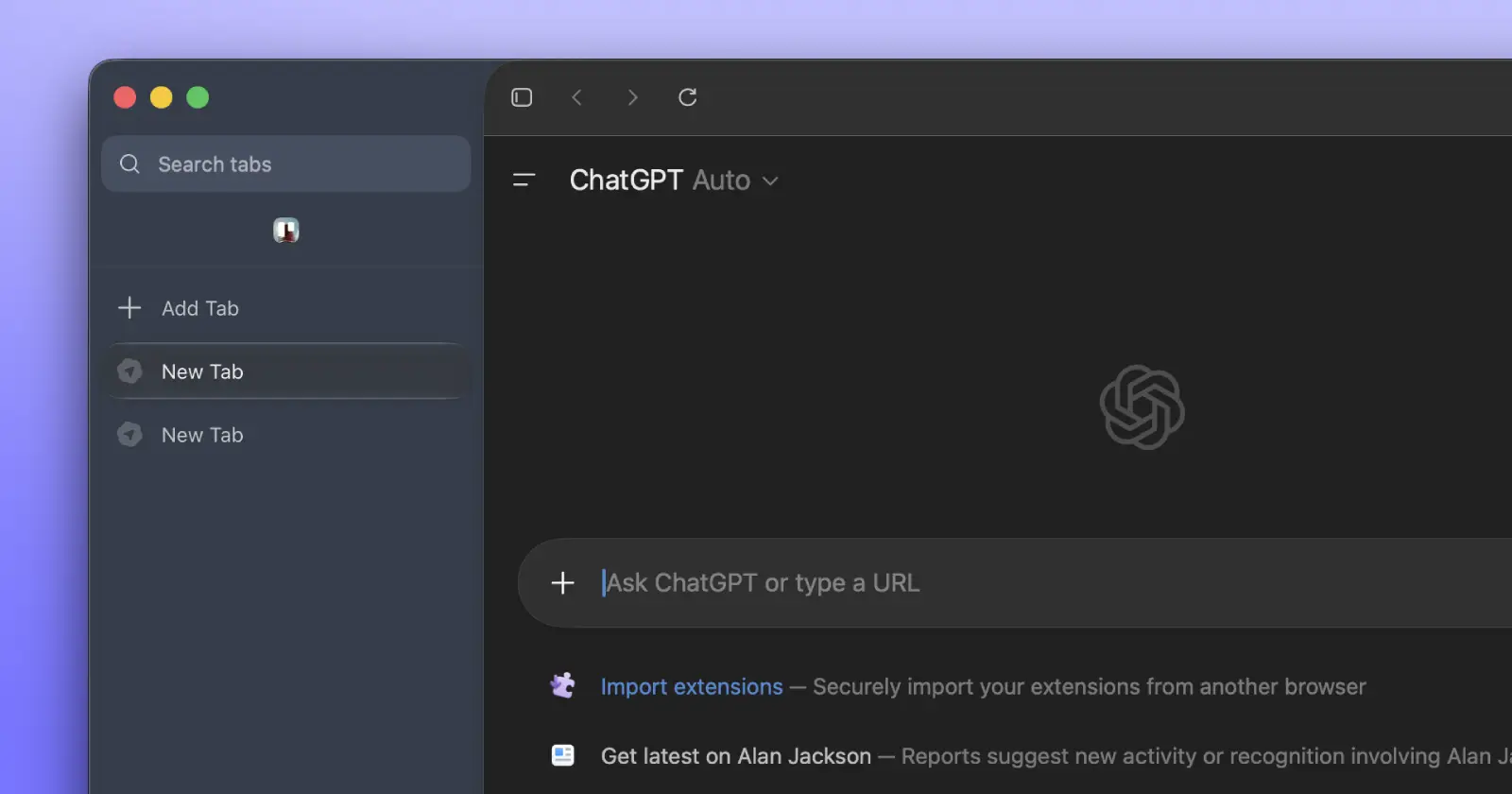
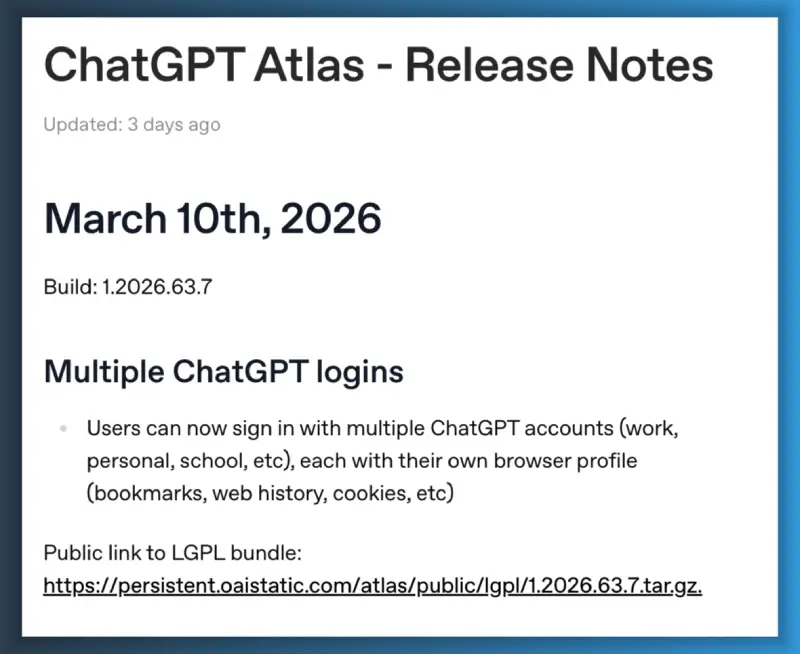
OpenAI’s ChatGPT Atlas browser looks abandoned at first glance. The official release notes haven’t been updated since March 10, which naturally makes it seem like development has gone quiet. But after digging a little deeper, the picture isn’t quite that simple.
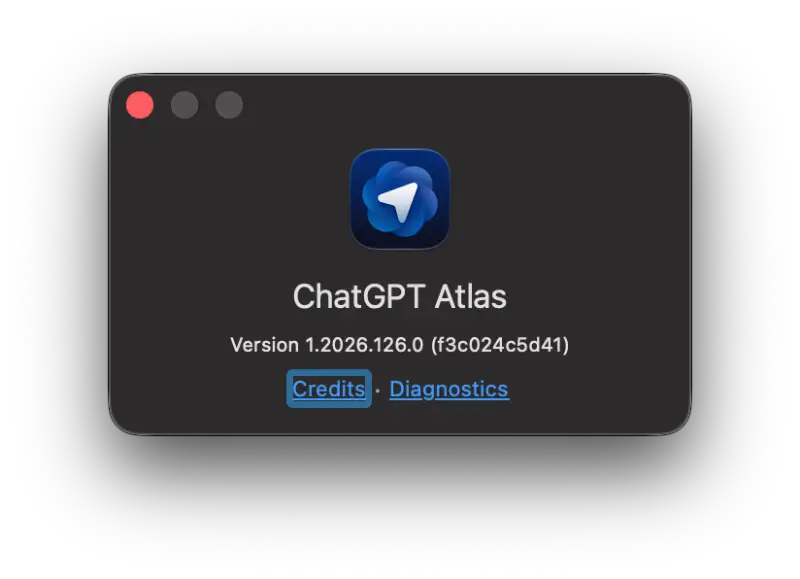
The browser’s About page currently reports Version 1.2026.126.0 on my Mac, well ahead of the last documented release, 1.2026.63.7. So Atlas is clearly still receiving builds.
The bigger question is why OpenAI has stopped telling users what’s actually changing.
This sudden lack of activity in the browser’s development does stand out when you consider that Atlas started out with a lot of momentum and frequent updates.
January and February were packed. OpenAI shipped tab groups, saved prompts, tab renaming, auto-organized tabs, a redesigned tab search, better Agent Mode, smarter search switching, profile improvements, performance fixes, keyboard shortcut changes, DevTools updates… almost every week there was something new to try.
March 10 brought Build 1.2026.63.7, adding support for multiple ChatGPT accounts so work, school, and personal profiles could each keep their own cookies, bookmarks, and browsing history.
Then the public release notes stopped. The builds, apparently, didn’t.
Atlas is now on Version 1.2026.126.0, suggesting OpenAI has continued updating the browser behind the scenes. What’s missing is any explanation of what those newer builds actually contain. There are no published changelogs after March 10, leaving users to guess whether they’re getting security fixes, bug fixes, or new features.
Maybe the team is working on something much bigger. That’s entirely possible. But browsers aren’t like note-taking apps or image editors where you can disappear for months without raising eyebrows.
Security alone makes long gaps uncomfortable, and Chrome keeps proving why. Just a few days ago we covered Google’s latest update that fixed 18 security vulnerabilities across Windows, macOS, and Linux. Earlier this month there was another emergency release after a zero-day vulnerability was found to be actively exploited in the wild.
Every other browser worth its salt has been shipping similar security updates at least once a month, if not more often. Another AI browser, Dia, even gets weekly updates, often with useful new features too.
Atlas, on the other hand, just leaves users guessing about what’s actually being fixed or added (if anything at all).
Even if security wasn’t part of the conversation, Atlas feels surprisingly limited now.
I’ve been testing AI browsers almost nonstop over the past few months, partly for work and partly because I enjoy seeing where this space is heading. Atlas is one of the few browsers that still can’t do something I end up using every single day elsewhere: Throwing multiple tabs into the same AI conversation.
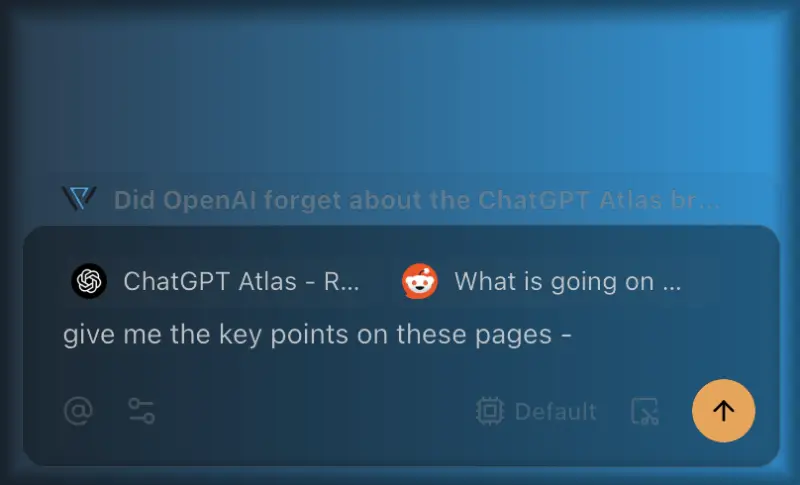
It still isn’t possible to throw five or ten open tabs into one conversation and ask the AI to compare them, summarize them, or pull information across all of them. It sounds like a niche feature until you actually start researching with AI. Then it becomes one of those things you miss immediately when it isn’t there. Which is precisely why I’ve not used Atlas for more than a few short sessions.
OpenAI is arguably the biggest AI company in the world, yet nearly every AI browser I’ve tested already supports some variation of this.
Perplexity’s Comet isn’t exactly moving at breakneck speed either, so Atlas isn’t alone there. But Comet still feels more capable once you start using it seriously.
The newer, lesser known browsers are moving even faster.
I wrote about Aside just a few days ago, and it already feels like a more complete vision of what an AI browser should be. Tabbit, is also in the same ballpark, and it’s currently the browser I’m using while writing this article. Not because it’s perfect. It isn’t. But it’s still a lot better to test and use than Atlas.
Even Chrome has pulled ahead in areas that matter.
Ask Gemini keeps getting better, Google’s browser continues receiving frequent security updates, and the underlying browser itself remains incredibly polished. Atlas was supposed to challenge browsers like Chrome, yet today it feels like it’s still trying to catch up (if OpenAI is even trying anymore).
OpenAI had the momentum. Millions of ChatGPT users were ready to try an AI-first browser. For a while, Atlas looked like it might become one of the company’s next big products. But it now looks like the company is focusing elsewhere.
And it’s not just me who’s noticing what appears to be an abandonment of Atlas. Folks who use the browser have been running into bugs and issues, with seemingly no proper timeline from the company for any fixes.
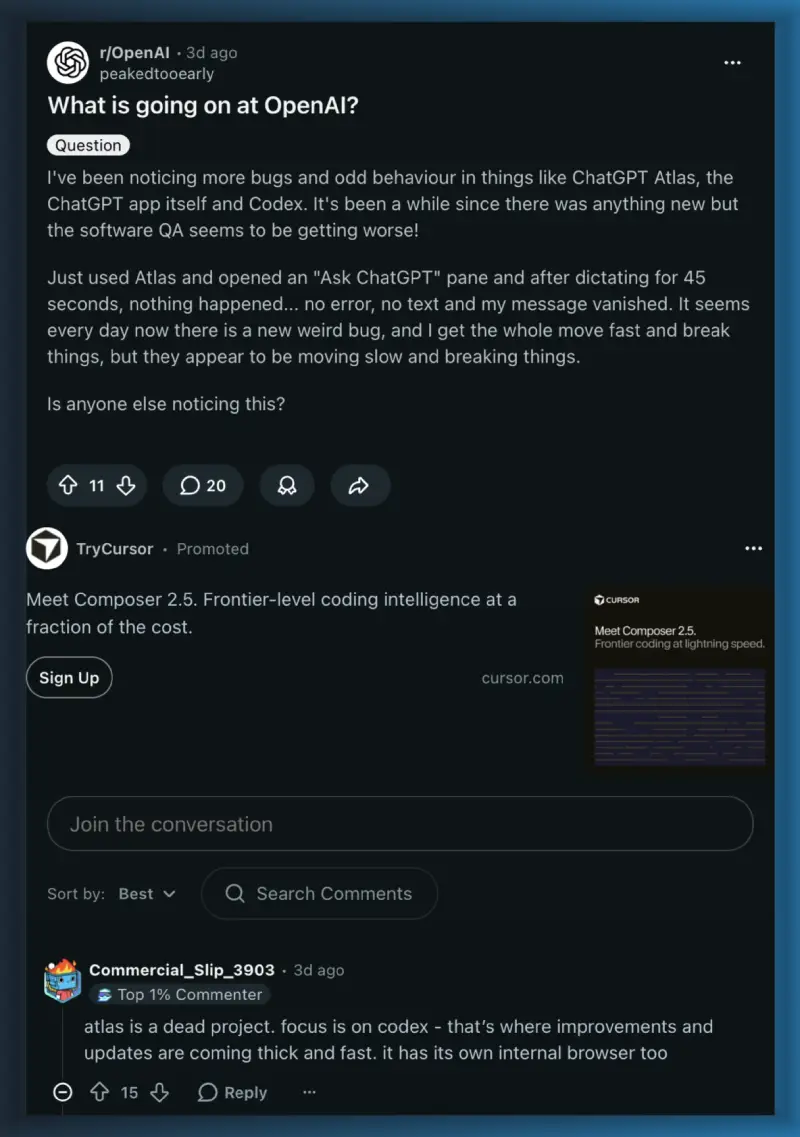
Still, there’s always a possibility that Atlas comes back with a massive update next month and makes this article look premature.
If that’s the case, keeping users in the dark probably isn’t helping. Right now the browser feels like it’s treading water while competitors such as Aside, Tabbit, Comet, and even Chrome continue moving forward with features that people can actually see and use.


Dwayne Cubbins
3079 Posts
I cover fast-moving stories across apps, online platforms, and everyday tech — phones, wearables, consoles, and whatever else people are fighting with this week. Bugs, rollouts, scams, policy enforcement, and the occasional internet-culture rabbit hole are all fair game. My goal is simple — make confusing tech news readable. When I'm not working, I'm working out or chilling with my dog. Got a tip? You can find me on X @dcubbins.
Next article View Article